

Designing Parts for Cost, Quality, and Production at Scale
Transitioning from CNC machining to casting isn’t just a process change; it’s a design shift. While CNC is ideal for prototyping and low-volume production, scaling efficiently with casting requires rethinking geometry, materials, and manufacturing constraints.
CNC-to-casting transitions often fall short when parts aren’t properly redesigned for casting, process selection is unclear, or key tradeoffs aren’t evaluated early. This guide breaks down how to avoid these pitfalls, so you can reduce cost, improve manufacturability, and scale with confidence.
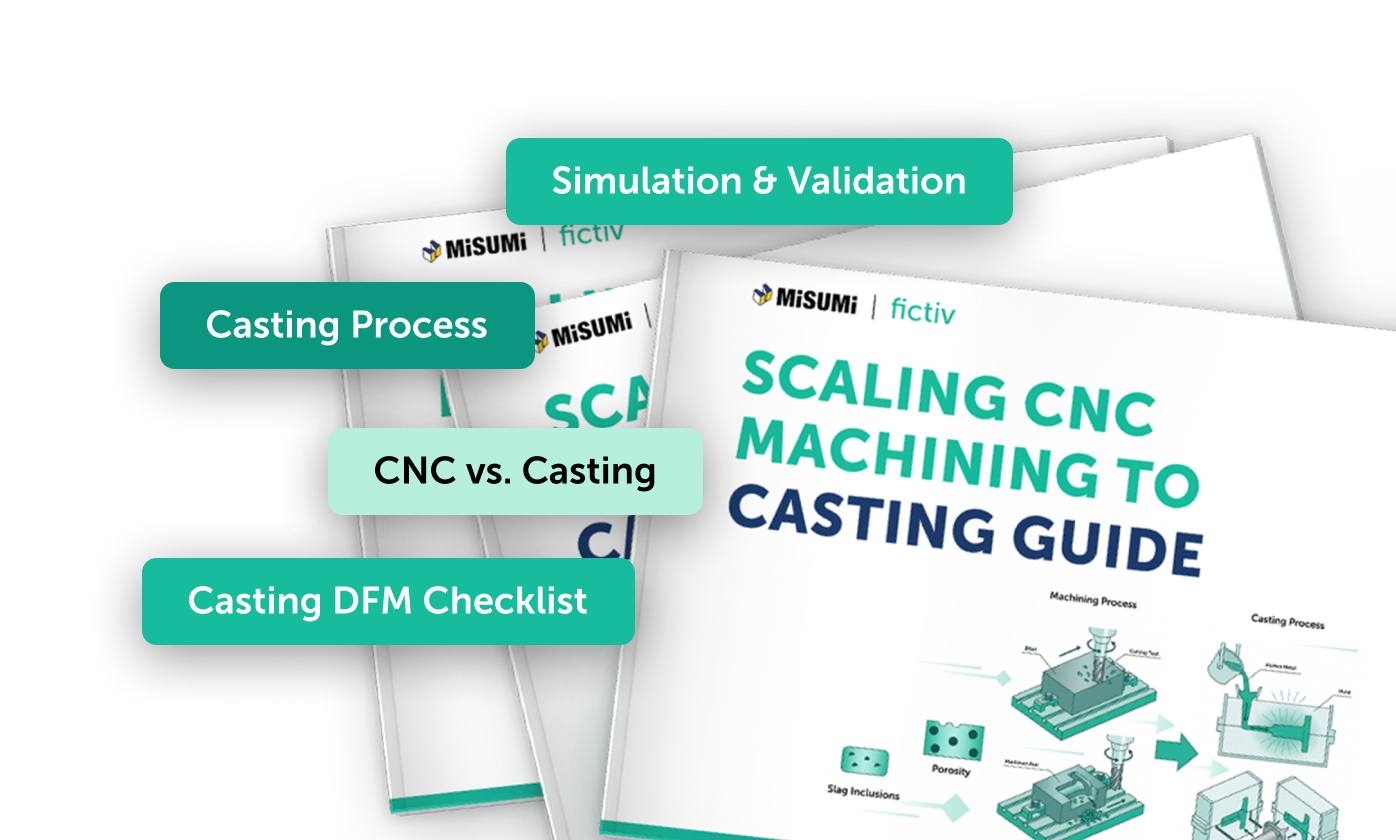
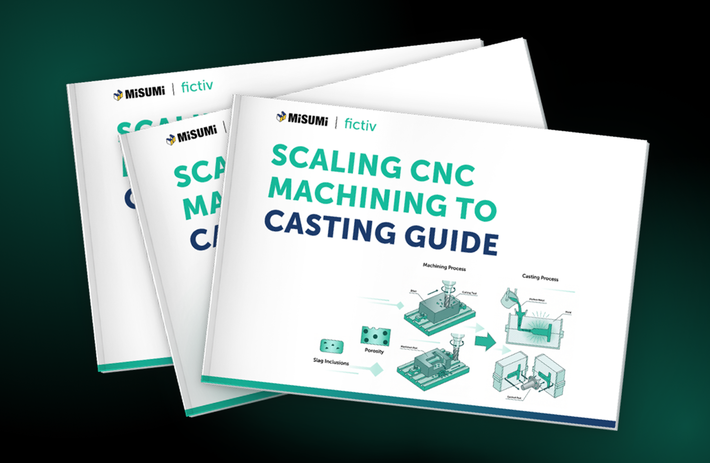
What You Get With the CNC to Casting Guide
Get a practical, engineering-focused overview of how to transition from CNC machining to casting—without costly redesign cycles or production delays.
In this guide, you’ll learn:
- When it makes sense to switch from CNC machining to casting based on volume, cost, and geometry
- How different casting processes (like die, investment, sand, and permanent mold) compare and when to use each
- Key DFM principles for casting, including wall thickness, draft, and solidification design
- Common casting defects and how to design parts that avoid them
- How to evaluate cost tradeoffs and identify opportunities for part consolidation
Start optimizing your parts for production at scale. Get your free guide now.
 Download