






CNC Machining Materials

Copper

At a glance

Processes

CNC Mill
CNC Lathe

Lead Time

As fast as 3 days

Finishing Options

Available as-machined, media blasted, or hand-polished

Tolerance

ISO 2768

Price

$$$

Applications

Bus bars, gaskets, wire connectors, and other electrical applications

Alloys

101, 110

About the Material

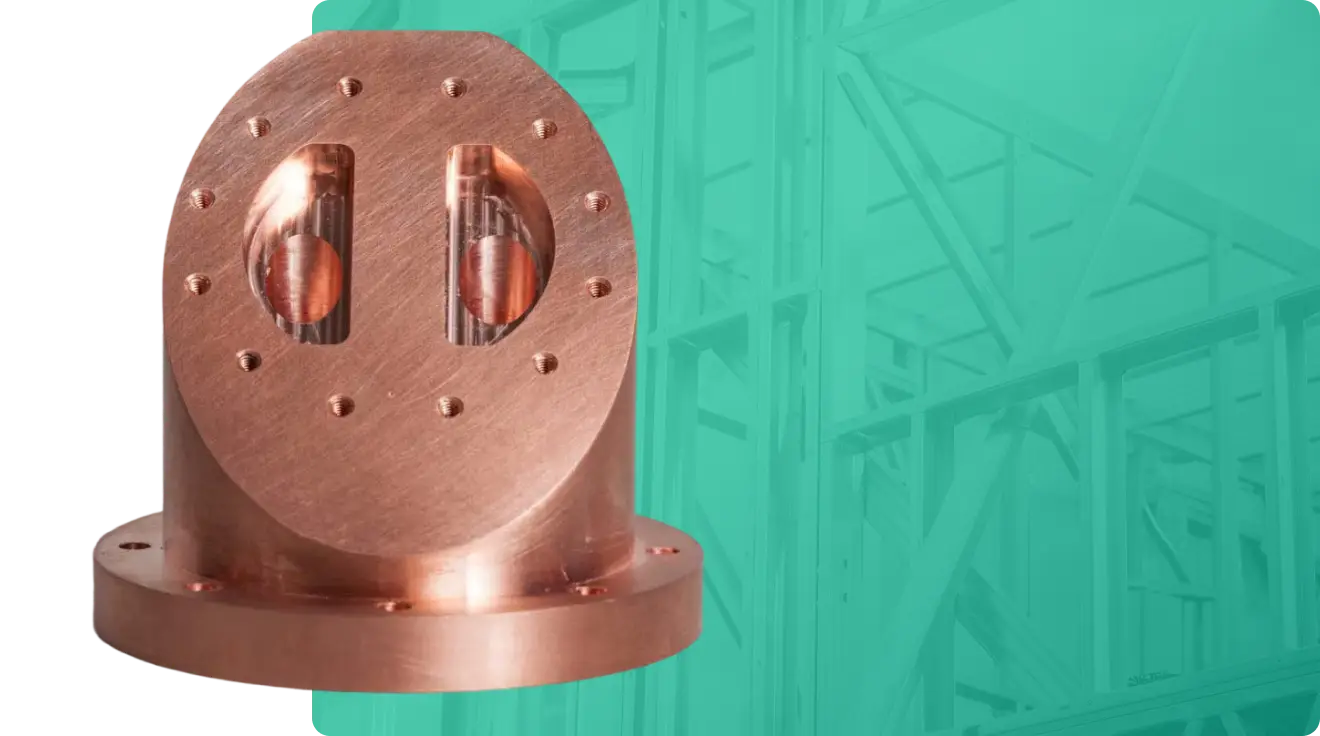
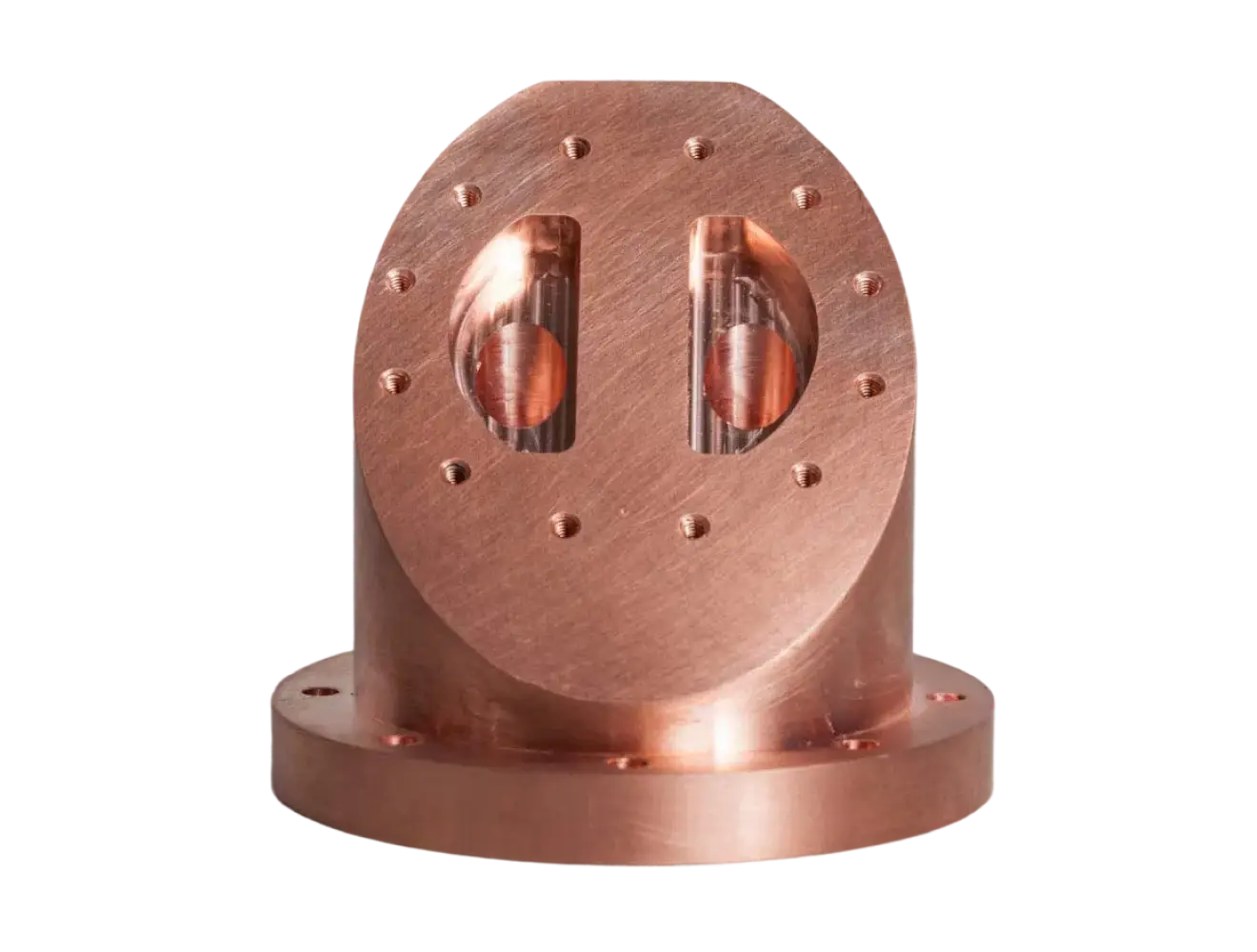
101 and 110 copper alloys offer excellent thermal and electrical conductivity, which make them natural choices for bus bars, wire connectors, and other electrical applications. While 101 (also known as super-conductive copper) offers higher conductivity due to its purity (99.99% copper), 110 is generally easier to machine and thus more cost-effective.

Material Properties

110 Copper

Tensile Strength

42,000 psi (1/2 hard)

Elongation at Break

20%

Hardness

Rockwell F40

Density

0.322 lbs / cu. in.

Maximum Temp

500° F

101 Copper

Tensile Strength

37,000 psi (1/2 hard)

Elongation at Break

14%

Hardness

Rockwell F60

Density

0.323 lbs / cu. in.

Maximum Temp

500° F

Material Finish

Copper has a shiny reddish-orange finish, which varies slightly based on the surface finish method. Copper can be media-blasted and polished to achieve many different cosmetic surface finishes.

Design Recommendations

Min Wall Thickness

0.5 mm

Min End Mill Size

0.8 mm (0.03 in)

Min Drill Size

0.5 mm (0.02 in)

Max Part Size

1200 x 500 x 152 mm [x,y,z] (mill)
152 x 394 mm [d,h] (lathe)

Undercuts

Square profile, full radius, dovetail profiles

Radii : Depth

Depth must not exceed 12x drill bit diameter.
For end mills, depth must not exceed 10x tool diameter.

Cost Saving Tip

To reduce costs, limit the number of part setups, the number of inspection dimensions or tight tolerances, and deep pockets with small radii.

Copper FAQs

YOU MIGHT ALSO BE INTERESTED IN

First Article Inspection (FAI): The Guide for Engineers and Manufacturers

In manufacturing, quality control is engineered and measured. Before production launch, you need proof that your design can be built repeatedly as intended. That data comes from a verification process called First Article Inspection (FAI). During product development, engineers put considerable effort into ensuring the design is near perfect—from dialing in dimensions and tolerances to […]

Learn More

How On-Demand CNC Manufacturing Accelerates New Product Introduction (NPI)

As manufacturers across the U.S. and Canada bring production closer to home, the fastest teams are winning launch windows. Compressing the “design → make → test” cycle isn’t just about efficiency—it’s now a core competitive advantage. On-demand CNC machining, by intelligently routing precision parts to pre-vetted suppliers across regions, enables faster prototyping and pilot production […]

Learn More