


Time to read: 10 min
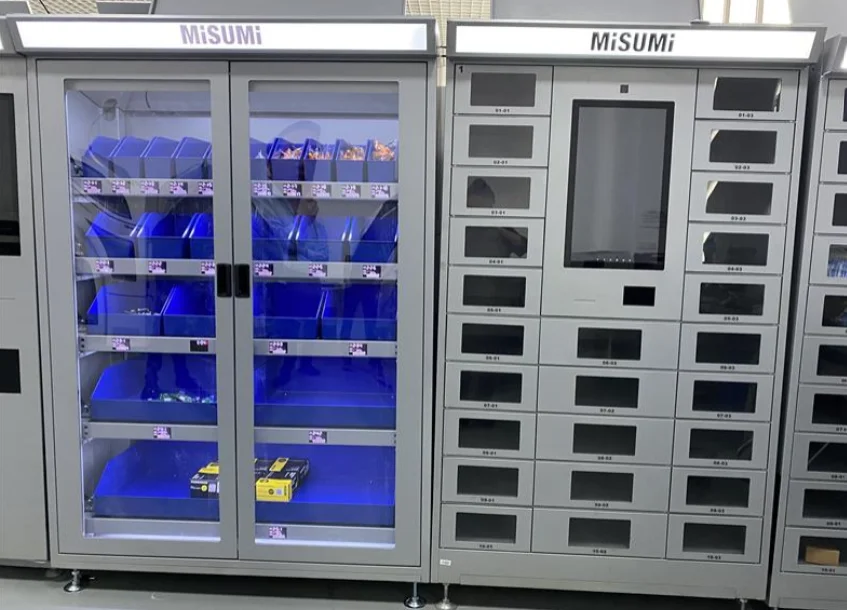
Walk through almost any modern factory, and you may find a vending machine stocked not with snacks, but with fasteners, cutting tools, gloves, and other essential supplies. At first glance, these machines might seem like a convenience upgrade. But in reality, they are a sign of something bigger: a fundamental shift in how manufacturers source, manage, and optimize their MRO supply chains.
By connecting inventory systems, vending machines, digital procurement platforms, and real-time usage data, manufacturers are reducing downtime, improving inventory visibility, and streamlining maintenance, repair, and operations (MRO) workflows. Platforms like MISUMI floow represent a growing shift toward automated, demand-driven supply chains designed to reduce manual purchasing and improve operational efficiency.
The Hidden Challenge of MRO
MRO parts rarely get the same attention as direct materials, but they play a critical role in keeping production running. These components include:
- Cutting tools
- Safety equipment
- Fasteners
- Consumables
- Maintenance supplies
Individually, these items are relatively inexpensive, but collectively, they can create a significant operational burden. What makes MRO especially difficult to manage is its scale and unpredictability. Teams are often juggling thousands of SKUs with inconsistent demand, sourced from a fragmented supplier base and managed through manual workflows.
As covered in Fictiv’s overview of MRO parts, the real issue isn’t just the cost of these parts—it’s the time, labor, and inefficiency required to manage them.
Why Traditional MRO Supply Chains Break Down
Most MRO systems weren’t intentionally designed—they evolved over time. Procurement teams still rely on:
- Manual ordering across multiple vendors
- Overstocking to avoid stockouts
- Emergency purchasing when inventory runs out
- Employees walking the floor to locate parts
The result is a system that’s labor-intensive, reactive, and lacking visibility. This creates a familiar paradox: companies carry excess inventory while still experiencing shortages. Without a connected system that links demand, inventory, and supply in real time, that cycle is hard to break.
The Industry Shift in MRO Management
MRO is moving from fragmented, manual workflows toward integrated systems that connect inventory, procurement, supplier networks, and real-time consumption data.
This shift is driven by the need to reduce operational overhead, improve supply chain resilience, and increase visibility into indirect spend. Instead of managing MRO through isolated transactions, companies are beginning to treat it as a continuous, data-driven flow.
The Bigger Picture: Autonomous MRO Supply Chains
Vending machines are just the surface-level indicator of a larger change. The long-term direction is toward demand-driven supply chains, where:
- Inventory adjusts automatically based on usage
- Orders are triggered based on inventory levels and usage patterns
- Suppliers are integrated into a connected digital ecosystem
In this model, traditional steps—like ordering, tracking, and restocking—begin to disappear. Parts are consumed, usage is detected instantly, and replenishment happens automatically. This is the foundation of an autonomous supply chain.
Adoption of these systems is increasingly supported by real-world case studies, with measurable improvements in procurement efficiency, inventory control, and workforce productivity.
What Is MRO Automation?
MRO automation is the use of connected systems, inventory tracking, procurement software, and automated replenishment workflows to manage maintenance, repair, and operations supplies with minimal manual intervention.
Instead of relying on spreadsheets, manual purchase orders, or disconnected suppliers, these systems contribute to that shift by improving visibility into indirect material usage and connecting physical inventory to digital workflows.
Common MRO automation technologies include:
- Industrial vending machines
- RFID and barcode inventory tracking
- Automated replenishment systems
- Digital procurement platforms
- ERP-integrated inventory management software
- Usage analytics and demand forecasting tools
These systems help manufacturers reduce procurement labor, minimize stockouts, improve inventory visibility, and better align inventory levels with actual production demand.
MISUMI floow: A Smarter Model for Automated MRO Sourcing
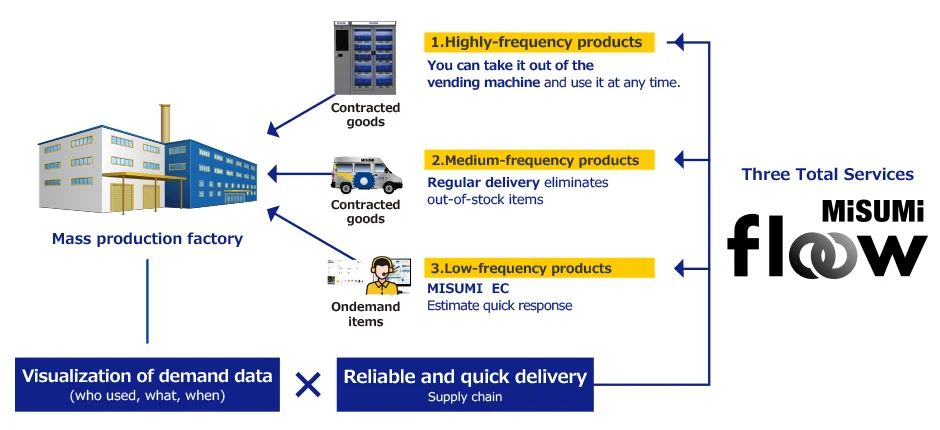
MISUMI’s floow platform approaches MRO as a coordinated system rather than a series of transactions. At its core is the idea that different types of demand require different sourcing strategies:
- High-frequency items are stocked on-site via vending machines for immediate access at the point of use.
- Medium-frequency items are handled through scheduled replenishment, creating predictable and optimized delivery cycles.
- Long-tail items are sourced through eCommerce, providing broad access without holding excess inventory.
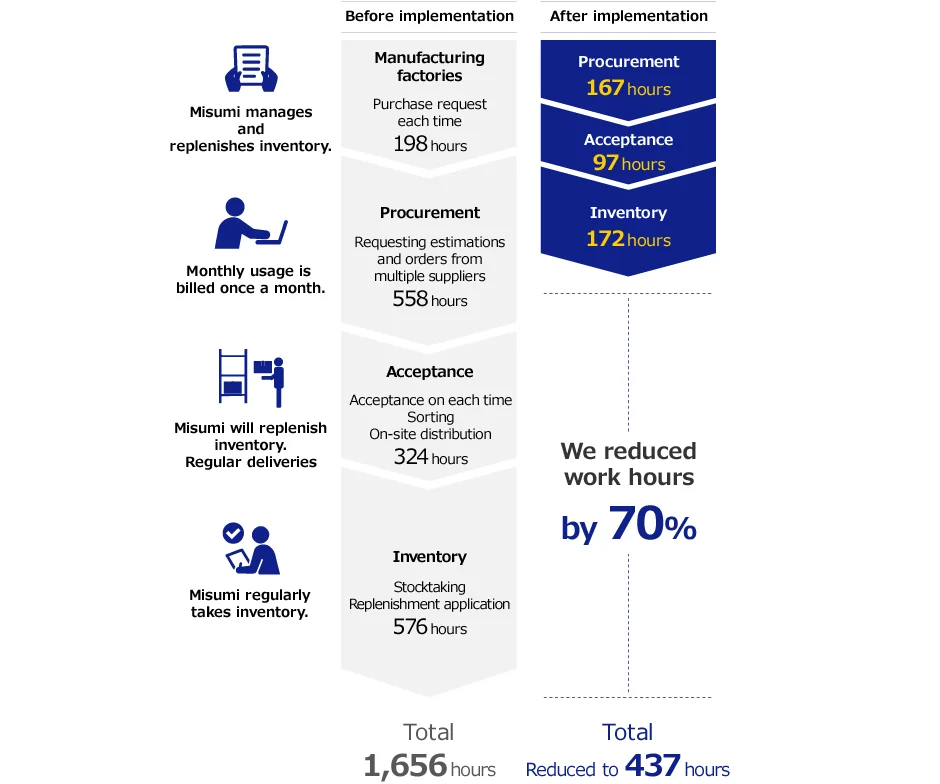
Aligning supply with actual usage patterns reduces excess inventory while streamlining procurement workflows. In some cases, companies have reduced procurement time by up to 70%.
The Role of Vending Machines: Last-Mile, Not the Whole System
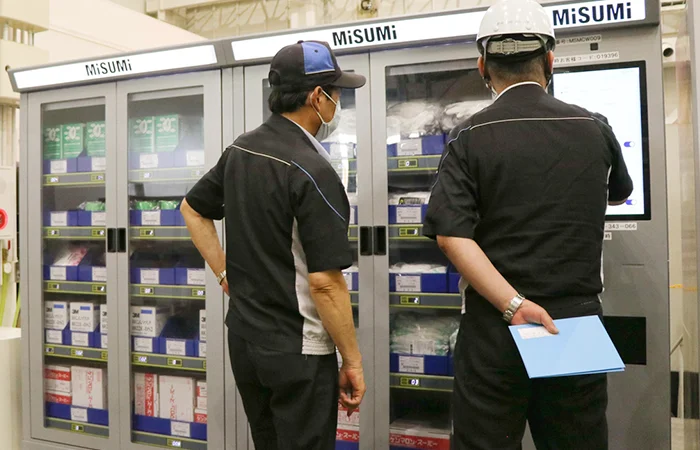
Vending machines are the most visible part of this shift, but they’re not the strategy itself. They function as the last mile of distribution, placing inventory exactly where it’s needed. This reduces downtime, eliminates unnecessary stockroom trips, and ensures access to critical supplies around the clock.
Just as importantly, vending machines introduce real-time supply chain visibility. Every transaction is tracked across teams and workflows—what’s used, when it’s used, and how frequently. That data feeds back into the broader system, enabling continuous refinement of inventory levels and sourcing strategies.
In some implementations, these systems connect to digital touchpoints such as QR-based material access. Physical inventory usage links directly to documentation, procurement workflows, and user-level data.
Why Manufacturers Are Investing in MRO Automation
Manufacturers are under increasing pressure to operate more efficiently amid labor shortages and ongoing supply chain volatility.
Automating MRO sourcing directly addresses these challenges by delivering:
- Time savings as procurement teams spend less effort managing orders
- Inventory optimization, reducing both overstocking and stockouts
- Cost control through usage-based purchasing and reduced waste
- Data visibility for better forecasting and decision-making
- Workforce productivity, allowing employees to focus on higher-value work
Challenges When Implementing MRO Automation Systems
While MRO automation can significantly improve operational efficiency, implementation is not always straightforward. Many manufacturers still operate with fragmented procurement systems, inconsistent inventory data, and supplier workflows that evolved organically over time.
Common implementation challenges include:
- Cleaning and standardizing SKU data
- Integrating with ERP or procurement systems
- Identifying appropriate vending machine inventory
- Balancing inventory reduction with stockout risk
- Aligning maintenance, procurement, and operations teams
Successful MRO automation programs typically start with high-usage consumables and expand gradually as usage patterns and replenishment workflows become more predictable.
Where Vending Machines Alone Can Fall Short
Despite their advantages, vending machines aren’t a complete solution. They work best for high-volume, standardized items with predictable consumption patterns—less so for large, irregular, or highly specialized parts.
Successful implementation also depends on more than just installing machines. Thoughtful SKU selection, shelf layout planning, and cross-functional coordination all determine whether high-usage items are stocked efficiently at the point of use. Clean usage data, supplier integration, and organizational alignment are equally critical to creating an effective system.
How MRO Automation Fits Into Smart Manufacturing
MRO automation is increasingly becoming part of broader smart manufacturing initiatives. As factories adopt connected systems, manufacturers are looking for ways to integrate procurement, inventory management, production data, and supplier networks into a more unified operational model.
Automated MRO systems contribute to this shift by creating real-time visibility into indirect material usage and connecting physical inventory to digital workflows. Instead of treating maintenance supplies as isolated operational expenses, manufacturers can incorporate MRO data into larger analytics, forecasting, and supply chain optimization efforts.
In many facilities, these systems now overlap with ERP and MES integrations, predictive maintenance initiatives, digital procurement platforms, inventory analytics tools, and broader smart factory programs.
This broader connectivity helps manufacturers improve operational resilience while reducing manual administrative work across procurement and maintenance teams.
Rethinking MRO as Part of a Larger Sourcing Strategy
Instead of treating MRO as a secondary function, leading organizations are integrating it into a broader sourcing strategy that includes direct materials, custom manufacturing, and digital procurement platforms.
While solutions like MISUMI floow optimize indirect spend, manufacturers still need:
- Agile sourcing for custom parts
- Resilient supplier networks
- Visibility across all procurement categories
Automated factory inventory is just the starting point. The end goal is fully orchestrated supply chain systems that connect every part of the sourcing process.
Connecting MRO to the Broader Supply Chain
As manufacturers adopt MRO automation strategies, many are looking for ways to connect direct and indirect sourcing through more unified digital systems. With MISUMI and Fictiv together, teams can streamline both MRO procurement and custom manufacturing workflows through a more unified sourcing approach.
For manufacturers, the opportunity is clear: those who treat MRO as a strategic function rather than a cost center will be better positioned to improve efficiency, strengthen resilience, and stay competitive. In that future, vending machines won’t stand out—they’ll just be part of how things work.
Fictiv has now joined MISUMI to provide a full-BOM digital manufacturing solution for custom and off-the-shelf parts. Contact us to learn more about MRO solutions for your supply chain.
Common Questions About Automated MRO Systems
What are automated MRO systems?
Automated MRO systems use connected inventory management tools, procurement software, usage tracking, and replenishment workflows to manage maintenance, repair, and operations supplies with less manual effort. These systems help manufacturers improve inventory visibility, reduce stockouts, streamline purchasing, and better align inventory levels with production demand.
What is a MISUMI vending machine?
A MISUMI vending machine is an automated inventory system designed to store and distribute MRO supplies directly on the factory floor. These machines provide point-of-use access to frequently used items such as cutting tools, fasteners, PPE, and consumables while also tracking inventory usage in real time.
What is MISUMI Floow?
MISUMI Floow is an integrated MRO supply management platform that combines vending machines, scheduled replenishment, and eCommerce sourcing into a single procurement ecosystem. The system is designed to reduce manual purchasing workflows, improve inventory visibility, and automate replenishment based on actual usage patterns.
How do industrial vending machines improve supply chain efficiency?
Industrial vending machines improve efficiency by placing critical inventory closer to production areas, reducing downtime and minimizing time spent searching for supplies. They also provide usage tracking and inventory data that helps manufacturers optimize stock levels, reduce waste, and streamline procurement processes.
Are vending machines enough to fully automate MRO sourcing?
No. While vending machines are an important part of modern MRO systems, they are only one component of a broader digital supply chain strategy. Effective MRO automation also requires supplier integration, inventory planning, procurement software, real-time data visibility, and coordinated replenishment workflows.