





Time to read: 9 min
MRO (maintenance, repair, and operations) parts are the replacement components, spare parts, and consumables used to keep manufacturing equipment and facilities running. While they are not part of the final product, MRO parts directly impact uptime, maintenance efficiency, and overall production reliability. Effective MRO sourcing ensures that critical components are available when needed—reducing downtime, controlling costs, and improving operational resilience.
Despite its importance, MRO is often overlooked as a priority because its costs are not directly tied to the final product. Instead, they are typically grouped into overhead or operational expenses, and depreciation of capital investments is not always properly accounted for.
This article explores MRO parts, the supply chain challenges associated with sourcing them, and practical strategies for improving responsiveness and reliability.
What Are MRO Parts?
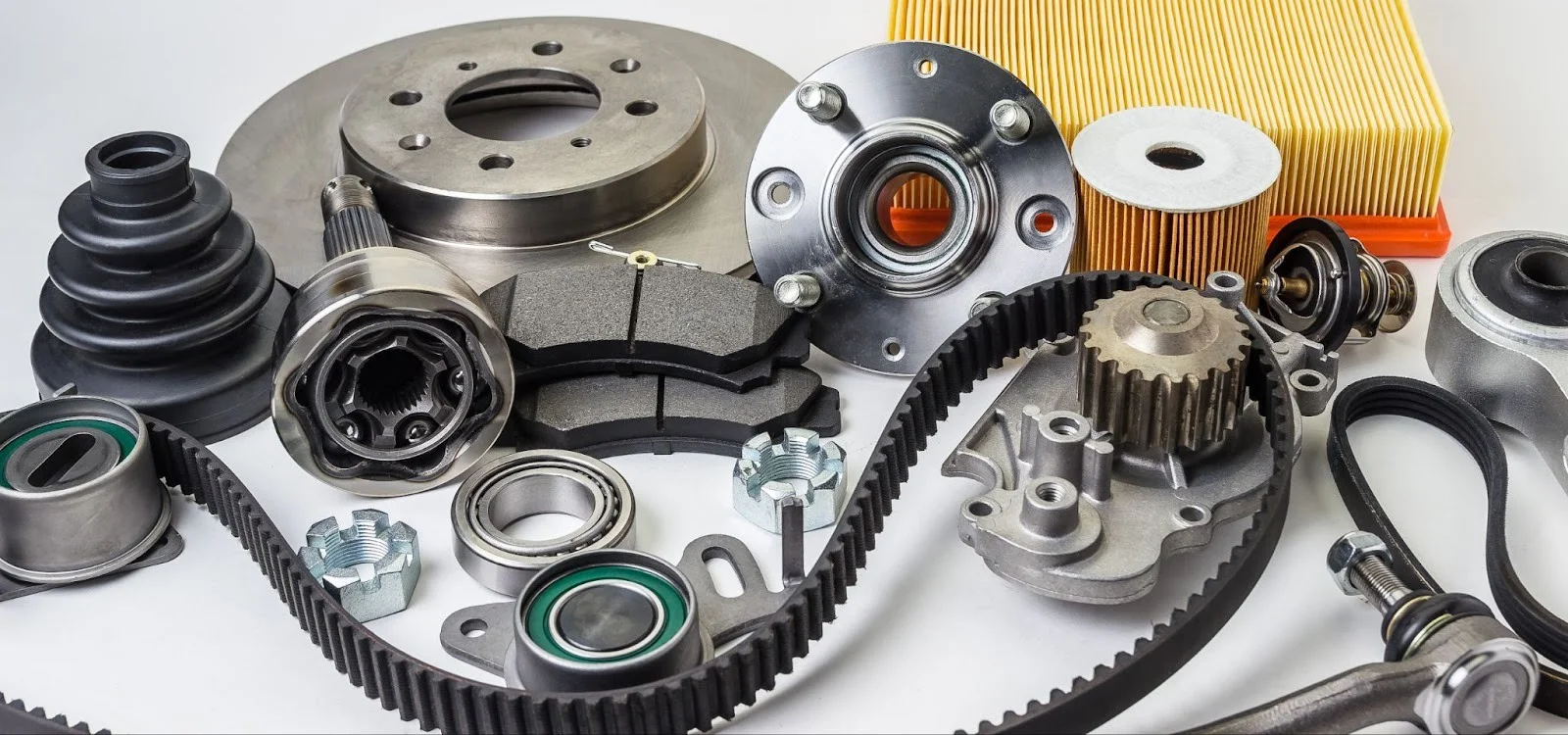
MRO parts are the replacement components, spare parts, and consumables used to maintain or restore manufacturing equipment and facility systems to proper working condition. This includes production machinery and supporting infrastructure such as electrical systems, compressed air systems, lighting, and utilities.
These parts are used when equipment components wear out, fail, or fall outside acceptable performance limits. They are not incorporated into the final consumer product.
- Mechanical components such as bearings, gears, belts, and couplings
- Electrical components such as motors, sensors, relays, and wiring
- Fluid system components such as valves, pumps, seals, and fittings
- Fasteners and general hardware
- Tooling, fixtures, and maintenance aids
- Custom or legacy replacement parts for older or specialized equipment
While individual MRO parts such as fasteners are often low-cost, their availability directly impacts production continuity. When a critical component fails, such as a bearing or seal, the delay in sourcing a replacement can stop equipment and disrupt output. In these situations, lead time, sourcing, and reliability matter more than unit price.
MRO Parts vs. Production Parts
MRO parts are often confused with production materials, but they serve a fundamentally different role.
- MRO parts support equipment and facility operations
- Production parts are incorporated into the final product
While production materials are typically forecasted based on demand, MRO parts are driven by equipment condition, wear rates, and failure events. This makes MRO sourcing less predictable—and often more time-sensitive.

Move faster with a partner built for regulated programs.
Upload your part and get a compliant quote—from a team with the systems, workflows, and experience to keep your program on schedule.
See what your part would costTypes of MRO Supplies and Materials
MRO spans a wide range of components and consumables. These categories typically include both off-the-shelf (OTS) components and custom or engineered replacement parts, depending on equipment requirements.
Spare Parts and Replacement Components
These are the primary items used to repair or replace worn or failed equipment and to maintain appropriate stock levels for critical components. Some are standardized components that can be sourced quickly. Others are custom or machine-specific parts, particularly in older systems where original manufacturers no longer provide support.
Maintenance Supplies & Consumables
Maintenance supplies are consumables used to preserve equipment performance and reduce the likelihood of failure. These include lubricants, coolants, adhesives, cleaning agents, and corrosion inhibitors. These materials are low-cost and easier to plan for and stock. Their consistent use helps reduce wear and extend service intervals.
Tools and Equipment
Maintenance activities depend on access to appropriate tools and diagnostic equipment. This ranges from basic hand tools to specialized instruments for alignment, vibration analysis, or electrical testing. Tool availability directly affects repair time, accuracy, and repeatability.
Operational and Safety Supplies
These include items that support facility operation and worker safety, such as personal protective equipment, signage, and general facility supplies. While not tied to specific machines, they are necessary for maintaining a safe and compliant operating environment.
Standard vs. Custom MRO Parts
MRO parts can be either standard off-the-shelf components or custom-manufactured replacements.
- Standard MRO parts (bearings, fasteners, motors) are widely available and easy to source
- Custom MRO parts are often required for legacy equipment, specialized machinery, or obsolete components
In many cases, maintaining uptime requires a combination of both—using standard components where possible while leveraging custom manufacturing for hard-to-source or discontinued parts.

Why MRO Matters in Manufacturing
In well-run manufacturing environments, MRO is a planned and structured function, not a reactive one. Its value is most apparent when facing unexpected supply delays or system failures. Proactive MRO strategies prevent unexpected disruptions, keeping your operations running predictably.
- Directly Affects Equipment Uptime: When a required replacement part is unavailable, equipment remains offline. The financial impact of downtime varies by industry, but it is often substantial and adds up quickly.
- Supports Asset Longevity: Planned maintenance reduces wear, delays major failures, and extends equipment’s useful life. This helps reduce the need for frequent replacement of expensive capital equipment and improves return on investment in the current assets.
- Operational Safety: Equipment that is maintained within design limits is less likely to fail in ways that create hazards for operators or surrounding systems, or cause expensive warranty problems and customer dissatisfaction.
- Cost Control: Preventive maintenance and planned sourcing are typically less expensive than emergency repairs, expedited shipping, and unplanned downtime.
- Uptime: In many operations, maintaining uptime is directly tied to revenue protection.
In some cases, MRO is under-prioritized not only because of cost visibility, but because the long-term impact of equipment wear and capital depreciation is not fully accounted for in operational decision-making. This can lead to deferred maintenance and reactive sourcing patterns that increase total lifecycle cost over time.
As a result, MRO is increasingly viewed as a strategic lever—not just a maintenance function—impacting production uptime, supply chain resilience, and overall operational efficiency. In many manufacturing environments, even a single missing MRO component can halt production—making availability and lead time more critical than unit cost.
The Low-Volume Injection Molding Guide
 Download Now

MRO as a Strategic Lever for the Supply Chain
Unlike production materials used to manufacture finished goods, which are forecast based on production demand, MRO requirements are influenced by equipment condition, usage patterns, and wear rates. While effective maintenance planning and historical data can improve forecasting, variability remains, especially for less frequent or unexpected failures. Critical MRO parts are typically identified using failure impact analysis and reliability metrics, including downtime cost, safety risk, and mean time between failures (MTBF).
If organizations do not maintain a sufficient inventory of critical spare parts, they risk unplanned downtime when failures occur. If they overstock, they tie up capital in rarely used components. Balancing these risks becomes an inventory optimization problem in which decisions depend on part criticality, lead time, and failure frequency.
Several factors make this balance more difficult:
- Long or uncertain lead times: Specialized or low-volume components are often not stocked and may take weeks to source or manufacture.
- Limited standardization across equipment: Many production systems are custom-built or configured, which means replacement parts are not always interchangeable across machines. This increases part variety and reduces the ability to consolidate inventory.
- Fragmented inventory visibility: In larger operations, spare parts may be distributed across multiple sites, departments, or storage systems, making it difficult to quickly determine what is available and where it is located.
- Time-sensitive procurement: When failures occur, sourcing decisions must be made quickly, often with limited supplier options, which can lead to higher costs and longer delays.
Although MRO typically represents a smaller share of total spend, its operational impact depends on how effectively these challenges are managed. The goal is not simply to hold more inventory or to minimize it, but to improve responsiveness. This includes better forecasting for critical components, clearer visibility into available stock, and faster, more flexible sourcing options when needed.
Increasingly, manufacturers are combining digital sourcing with localized inventory solutions. For example, on-site vending systems and factory automation solutions—such as MISUMI’s industrial vending machines—provide immediate access to commonly used off-the-shelf components, reducing downtime for routine replacements while complementing broader sourcing strategies for custom or less predictable parts.
Challenges in Sourcing MRO Parts
Sourcing MRO parts differs from sourcing materials used in production because it is often driven by time-sensitive requirements rather than steady production demand. In many cases, parts are needed to address immediate equipment issues, which places pressure on availability, lead times, and coordination across teams.
Some common challenges in sourcing MRO parts include:
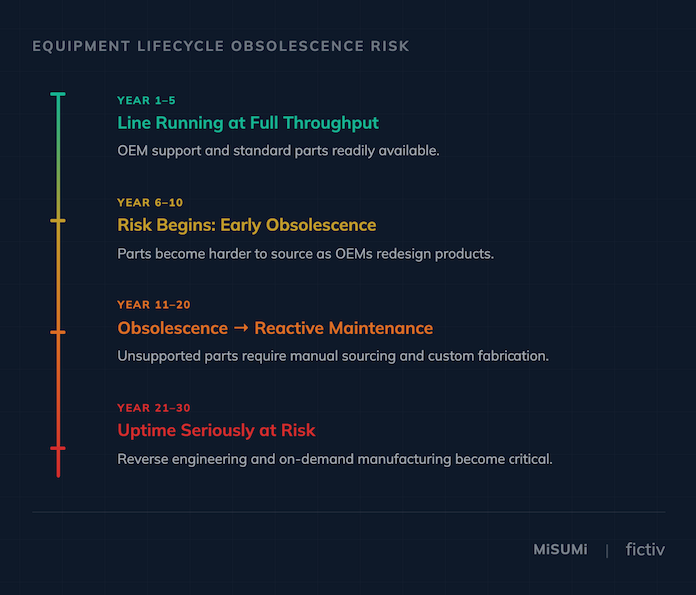
- Obsolete or Legacy Components: Older equipment may rely on parts that are no longer in production, or for which no specification is available. Maintaining uptime often requires a mix of reverse engineering, custom fabrication, and strategic component substitution to meet technical requirements.
- Lead Times: Low-volume or specialized components are not always stocked in large quantities, and sourcing them can take time. Without proper planning or access to responsive suppliers, longer lead times can extend equipment downtime.
- Supplier Variability: Differences in quality, responsiveness, and delivery performance across suppliers can affect repair timelines and long-term reliability.
- Procurement Workflows: Sourcing often involves emails, spreadsheets, and manual coordination across teams. While widely used, these processes can slow response times and reduce visibility into sourcing status.
- Emergency Sourcing Conditions: When equipment fails unexpectedly, sourcing decisions must be made quickly, often with limited options and time for evaluation.
- Liability and Performance Risk: In some cases, particularly with custom or reverse-engineered components, questions arise around responsibility if a replacement part fails. This can create hesitation among engineering teams to approve non-OEM or reverse-engineered parts due to uncertainty around performance and reliability. Clear specifications, validation processes, and supplier accountability are important to ensure performance and reduce risk in critical applications.
How To Choose the Right MRO Sourcing Strategy
Modern MRO sourcing focuses on balancing planned inventory with flexible, responsive supply options. Instead of relying solely on stocking parts or sourcing reactively when issues arise, effective strategies combine inventory planning based on part criticality and lead time with access to on-demand production and reliable suppliers. This often involves access to a distributed supplier network and multi-process manufacturing capabilities to support a wide range of part types and requirements.
On-Demand or ‘Just-In-Time’ Manufacturing
Parts are produced when needed rather than held in large quantities. On-demand manufacturing (or Just-In-Time manufacturing) is especially useful for custom, low-volume, or highly complex components.
Shorter Lead Times
Reducing the lead time for replacement parts mitigates downtime. This agility is driven by a network of pre-qualified suppliers and localized production options, supported by optimized sourcing workflows that accelerate execution for mission-critical parts.
Distributed Supplier Networks
Relying on multiple vetted suppliers improves flexibility and reduces dependence on a single source. While this introduces some variability, it can be managed through supplier qualification, consistent specifications, and performance tracking.
Digital Workflows
Digital sourcing processes improve coordination, traceability, and speed. Centralized platforms enable instant quoting, design feedback, order tracking, and supplier coordination, reducing manual effort and improving response times.
Advanced Manufacturing Methods
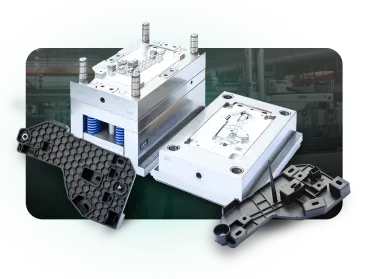
Processes such as CNC machining support precise, on-demand fabrication of replacement parts, particularly for custom or legacy components. Injection molding is typically used where part volumes justify tooling investment and repeat production.
The goal is not to eliminate inventory, but to optimize it with flexible sourcing, improved visibility, and faster production. Engineering support—including reverse engineering, design optimization, and material substitution—is often required to ensure replacement parts meet performance requirements.
Best Practices for MRO Management
While not every organization requires major structural changes, refining processes around sourcing and inventory can significantly improve reliability and cost control.
- Rationalize part variety by aligning specifications where feasible during equipment upgrades, replacements, or future procurement cycles, which simplifies long-term sourcing and reduces dependence on unique components.
- Balance supplier strategy by combining a stable core group of reliable vendors with access to alternative and specialized suppliers to avoid over-dependence while maintaining consistency.
- Improve inventory transparency by ensuring ERP or inventory systems reflect real-time stock levels, locations, and usage trends to support faster and more informed decisions.
- Modernize procurement workflows by integrating digital request, approval, and ordering systems to reduce delays, improve traceability, and minimize manual coordination.
- Strengthen supplier collaboration by working with partners that can support both standardized supply and custom fabrication, helping bridge gaps when standard parts are unavailable.
Platforms like Fictiv (now part of MISUMI) combine on-demand manufacturing with a global network of vetted suppliers, making it easier to source both standard and custom MRO parts quickly and reliably —helping reduce downtime, simplify procurement, and improve supply chain resilience.
FAQs About MRO Parts
What are MRO parts in manufacturing?
MRO parts are replacement components, consumables, and supplies used to maintain or repair manufacturing equipment and facilities. They are not part of the final product but are essential for keeping operations running efficiently.
What are examples of MRO supplies?
Common MRO supplies include bearings, motors, belts, lubricants, cleaning agents, fasteners, safety equipment, and replacement components for machinery and facility systems.
How do companies manage MRO inventory effectively?
Companies manage MRO inventory by balancing stock levels with demand uncertainty, using strategies such as criticality classification, service level targets, preventive maintenance planning, and on-demand sourcing for low-frequency parts.
Why is MRO important in manufacturing operations?
MRO directly impacts equipment uptime, operational safety, and production efficiency. Poor MRO management can lead to unplanned downtime, increased costs, and reduced equipment lifespan.
What is the difference between MRO and OEM parts?
OEM parts are original components made by the equipment manufacturer, while MRO parts may include OEM, third-party, or custom replacements used to maintain or repair equipment.
Can MRO parts be custom manufactured?
Yes. Custom manufacturing is often used for obsolete, legacy, or specialized MRO parts that are no longer available off the shelf, helping maintain equipment uptime without redesigning systems.

Injection Molding Design Guide
Download Now