

Time to read: 10 min
Prototyping lead time is often framed as a simple question: “How long will it take to get my part?” In reality, the answer is rarely determined by machine time alone. A prototype expected in days can easily take weeks—not because of production constraints, but because of delays in quoting, design iteration, manufacturability feedback, and supplier coordination.
For mechanical engineers and product teams, prototyping speed is less about choosing the fastest process and more about reducing friction across the entire system—from CAD to physical part. The fastest teams don’t just optimize machining time; they minimize iteration loops, align design with manufacturing early, and streamline sourcing workflows.
Prototyping lead times typically range from same day to several weeks, depending on the manufacturing process and the efficiency of the surrounding workflow. In practice, most delays come from design iteration, quoting, and logistics—not machine time.
This article breaks down what actually drives prototyping lead time, how long different processes take, and—more importantly—how to reduce overall time to validated parts.
What Makes Up Prototyping Lead Time?
Prototyping lead time is defined as the total elapsed time from design submission for manufacturing to receipt of a usable physical part. This typically involves a number of factors, the significance and relative burden of which can vary considerably:
- Design review and RFQ iteration: Early DFM feedback triggers updates that can delay the release of final data needed to enable manufacturing.
- Manufacturing preparation (programming, setup, tooling): Time cost is relatively low for additive manufacturing and relatively high for CNC processes. Molding requires more time up front for tooling.
- Production (cycle) time: Can vary by process, but isn’t always the most significant factor.
- Post-processing and finishing: Ranges from minimal (part cleaning) to more extreme for applications requiring highly cosmetic finishes. Includes hand finishing and painting, and coatings.
- Inspection and quality control: Should be a moderate time burden in most cases, depending on requirements.
- Shipping and logistics: Varies from “walk to the supplier” to international shipping and its associated risks.
The total prototyping timeline is determined by the number of iterations × the lead time per iteration. For example, 4 iterations, each taking 5 days = a 20-day total schedule.
Prototype iteration is driven by the following:
- DFM feedback: Insufficient DFM alignment can cause errors that could have been caught in CAD or simulation to be carried straight into the physical prototype.
- Late-stage design changes: Occur as a feature of agile engineering, but they amplify the risk of errors that waste prototype iterations.
- Incomplete testing criteria: Can create design surprises when the unboxed reality doesn’t match the model.
- Supplier miscommunication: All too common and can compromise prototype validity.
What Are Typical Lead Times for Rapid Prototyping?
Rapid prototyping typically refers to producing parts in 1–3 days using processes like 3D printing or expedited CNC machining. However, true speed depends less on the process itself and more on minimizing delays in quoting, design iteration, and supplier coordination.
How Long Prototyping Takes for Each Manufacturing Process
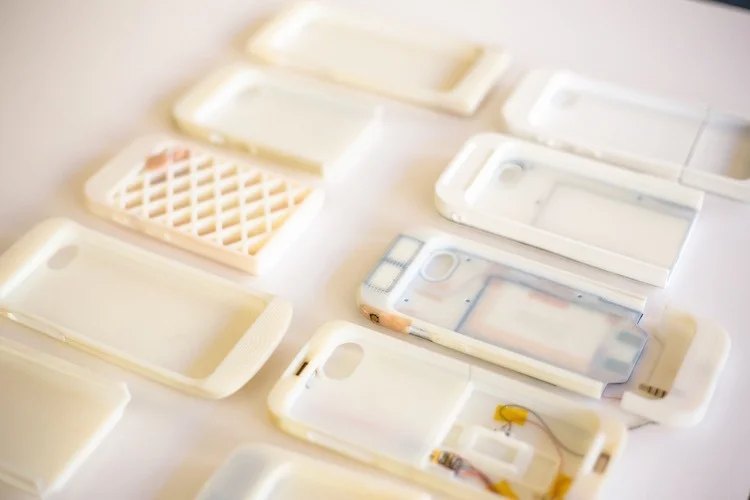
3D Printing
Lead times for additive manufacturing—one of the most common rapid prototyping methods—typically range from the same day to 3 days. Most delivery schedules reflect service capacity, rather than build time. What actually drives fast prototyping is:
- Layer height: Finer resolution means slower build times.
- Build volume utilization: Suppliers prioritize machine utilization over supply speed.
- Orientation: Affects support structures and total print time.
- Post-processing: Support removal, curing, and surface finishing all add time.
Queue time in shared machines and manual finishing steps can extend even a “fast print.” 3D printing is truly fastest at the early-stage concept validation and for complex geometries without tight tolerances.
CNC Machining
CNC machining can support rapid prototyping, but lead times vary dramatically based on:
- Geometry class: Prismatic parts mean faster programming, faster machining, and simpler equipment requirements. Organic shape or internal channels may require parts to be split into assemblies and constructed, which can slow prototyping.
- Feature scale: Large features enable faster material removal. Micro-features require slow feeds and specialized tooling.
- Material selection: Softer metals like aluminum allow faster processing. Stainless steel and titanium require longer cycle times to accommodate hardness and work hardening. Engineering polymers are generally fast to process, but turnaround time depends on the stability of the part/feature, as flexibility slows material removal.
CNC machining can take 3 to 10 days, but can be as fast as 1 to 3 days with prototyping-specialized suppliers.
Additional factors are:
- Toolpath complexity: Deep pockets, higher tolerances, and better surface finish requirements mean slower cutting and more passes. Each tool change adds non-cut time, and complex parts may require repeated tool change cycles to produce all required features.
- Material removal volume: Cycle time scales with volume removed.
- Workholding and setup: Complex fixturing takes time to plan and execute. Multiple setups increase cycle time.
- Tolerance and finish requirements: Tight tolerances and higher-grade finishes require slower passes and more inspection steps.
For simple prismatic parts, CNC prototyping can even be faster than 3D printing—particularly when no post-processing is required, material is readily available, and the supplier can schedule work quickly.
Urethane Casting (Vacuum Casting)
Prototyping using urethane casting can typically be completed in 5 to 15 days, depending on part complexity and volume. This process involves creating a silicone mold from a master pattern (often 3D-printed), then casting polyurethane resin under vacuum.
Lead time is driven by:
- Master pattern production: The initial pattern must be produced and finished to a high standard, as it defines final part quality.
- Mold fabrication: Silicone molds require curing time and have a limited lifespan, so multiple molds may be needed for higher quantities.
- Casting and curing: Parts are produced in batches, with throughput limited by mold availability and curing time.
- Post-processing: Includes trimming, finishing, and optional cosmetic treatments, which can extend timelines.
Urethane casting is well-suited for low-volume production (10–100 units), functional prototypes with improved surface finish, and pre-production validation. However, it carries more setup time than direct processes like 3D printing or CNC machining, making it less efficient for single-part prototypes.
Injection Molding (Prototype Tooling)
Prototyping using injection molding can be completed in 2 to 6+ weeks. This relatively lengthy lead time is caused by:
- Tool design iteration: DFM feedback loops are required before cutting steel.
- Tool machining and assembly: A complex process regardless of part simplicity.
- Sampling and validation: T0 and T1 runs add time before parts are approved.
Cooling time dominates the molding cycle, but actual molding time is insignificant compared with the tooling creation process.
Prototype tooling using injection molding is recommended when production validation is essential. This is not always possible via additive or CNC prototype parts, particularly for multi-part, real-world validation/testing with close-to-final production geometry.
Prototyping Lead Time by Process
| Process | Typical Lead Time | Best For | Hidden Time Drivers |
| 3D Printing | Same day – 3 days | Concept models, complex geometry | Queue time, post-processing |
| CNC Machining | 1 – 10 days | Functional prototypes, metals | Setup, toolpaths, material removal |
| Urethane Casting | 5 – 15 days | Low-volume (10–100 units), cosmetic parts | Mold creation, curing, batch limits |
| Injection Molding | 2 – 6+ weeks | Production validation, multi-part assemblies | Tooling, sampling, DFM iteration |
What Impacts Prototyping Lead Time?
There is no universally fastest method—only the fastest fit for your design state.
Fastest Prototype Method by Design Scenario
| Scenario | Fastest Method |
| Concept model, complex geometry | 3D Printing |
| Functional element testing (strength required) | CNC Machining or 3D printing with engineering materials (i.e., SLS nylon) |
| In-R&D production/assembly validation | Urethane casting |
| Market evaluation sample (for controlled use) | Urethane casting |
| Metal components | CNC machining, or metal additive manufacturing |
| Functional plastic testing (multi-units) | Injection molding with soft/prototype tooling |
Prototyping Lead Time Factors
This selection above reflects typical outcomes, but in practice, lead time is driven by a range of underlying factors such as:
- Design complexity: The primary driver of prototyping time, setup, and inspection. Complex geometry can multiply lead time, not just increase it.
- Material availability: Standard stock means immediate readiness. Specialty alloys and polymers may cause sourcing delays if unavailable.
- Process selection: Mismatch between geometry and process creates delays. In some cases, incorrect process selection can necessitate a full repeat cycle.
- Tolerances and surface finish: Tight tolerances introduce additional machining passes and inspection bottlenecks. High-quality surface finishes require additional post-processing.
- Supplier capability and workflow: Digital workflows reduce RFQ latency, and advanced shops parallelize setup and programming. Supplier capability and readiness are among the biggest influences on the delivery schedule.
- Logistics and geography: Shipping often adds at least 1 to 5 days, with extended timelines for overseas suppliers. Cross-border customs delays can exceed manufacturing time many times over.
Machines rarely cause delays. System friction does. File errors, process compatibility issues, and low-agility supply chains can all increase the time it takes to receive your prototype. The highest-impact hidden delays often stem from RFQ iteration loops, DFM feedback latency, spikes in programming complexity, inspection bottlenecks, and supplier fragmentation.
Where Prototyping Time Is Actually Spent
| Stage | Typical Impact |
| RFQ & DFM iteration | High |
| Programming & setup | Medium–High |
| Production time | Medium |
| Post-processing | Medium |
| Inspection | Low–Medium |
| Shipping & logistics | Variable (can dominate) |
How to Reduce Prototyping Lead Time
Prototyping lead time can be reduced with the following:
Reduce Iteration Count
Apply DFM early, and validate digitally before cutting material. Select processes and suppliers with care/experience to ensure outcome fitness.
Simplify Geometry Strategically
Avoid deep pockets and thin, unsupported features. Reduce tool changes when possible. Create “prototype only” designs that compensate intelligently for process capability and material limitations, while still enabling meaningful design validation.
Use Standard Materials
Prototyping with standard materials that are more readily available reduces the risk of procurement delays. Avoid exotic alloys unless absolutely required.
Relax Noncritical Tolerances
Only tighten dimensions that affect function. Design assemblies to allow open tolerances where possible—prototypes rarely need to meet precision or durability requirements that production parts will.
Match Process to Design Stage
3DP works well for concept, fit, and limited functionality. 3DP SLS nylon offers high strength, but expect moderate accuracy and surface quality. CNC is better suited to functional validation, though some feature compromises may be required. Molding is typically necessary for real production validation.
Consolidate Suppliers
Reduce coordination time and overhead by enabling parallel workflows and consolidating shipments. Divide sets for parallel shipping, as insurance against logistics issues.
Engage Early with Manufacturers
Toolpath and fixturing feedback prevents rework. Responding promptly to supplier DFM feedback typically pays off in schedule time.
Using an Online Digital Manufacturing Platform for Prototyping
Modern digital manufacturing platforms reduce these delays by combining instant quoting, automated DFM feedback, and access to distributed supplier networks—allowing teams to move from CAD to parts significantly faster.
In-House vs. Outsourced Prototyping Lead Time
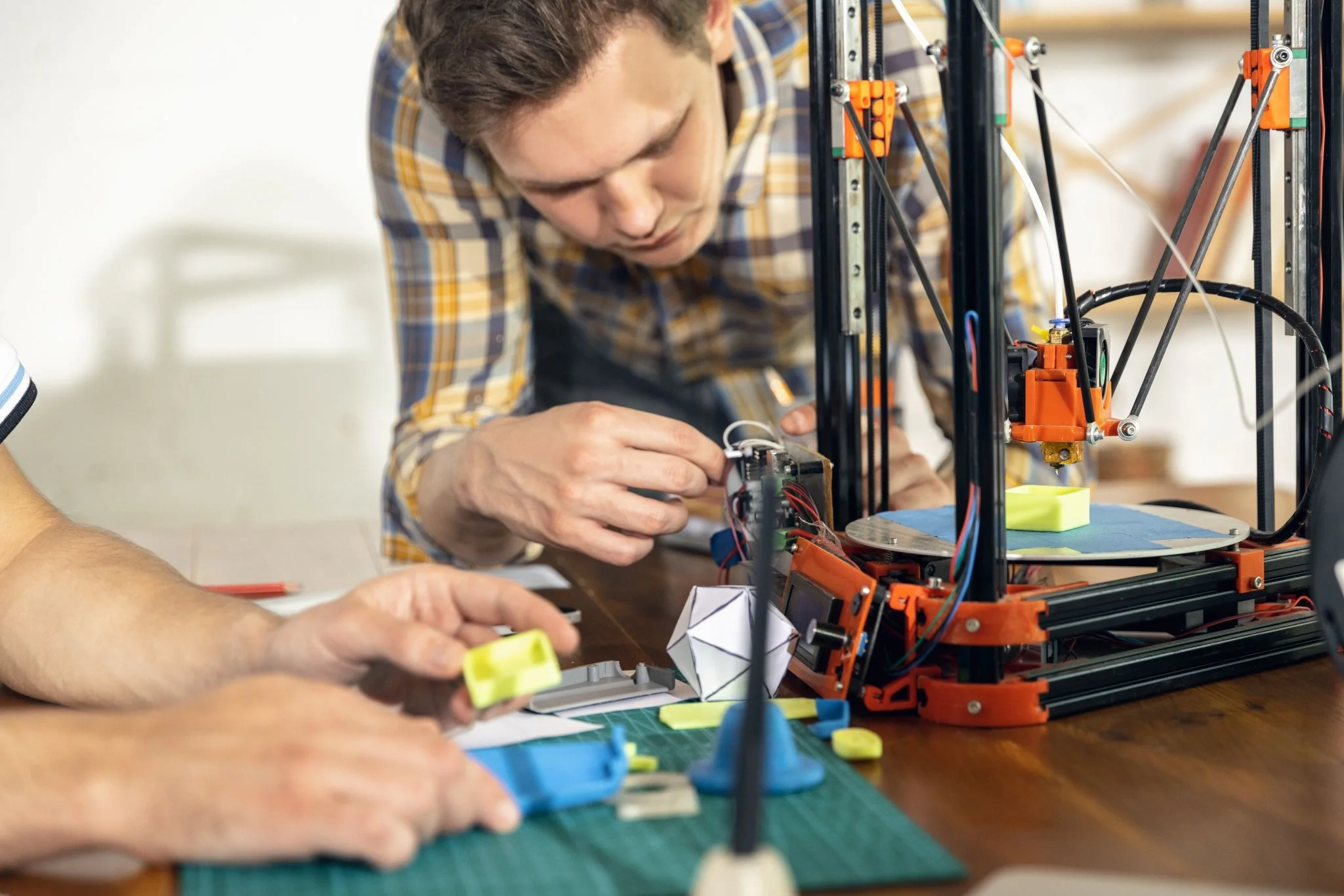
When it comes to prototyping in-house vs. outsourcing, a hybrid strategy is often the most effective. If available, use in-house resources for rapid prototyping cycles that require quick iterations and evaluation. Use outsourced prototyping for complex geometries, specialist materials, or production-grade parts.
Benefits and Limitations of Prototyping In-House vs. Outsourcing
| Approach | Strength | Limitation |
| In-house | Immediate start | Limited capability, capacity, or in-house budget creates pressure to prototype with lower quality to justify historical CAPEX |
| Outsourced | Scalable, specialized | RFQ and logistics delays |
Balancing Speed vs. Cost vs. Quality
Prototyping always operates within a three-way constraint. Choose the trade-offs that suit your situation:
- Faster is almost always more expensive.
- Cheaper is almost always slower.
- Better quality requires more iteration or slower processes.
The real optimization target is the minimum overall time to validate the design, not the minimum cost or lead time per iteration.
Accelerate Prototyping Speed with Advanced Manufacturing Networks
Prototyping speed is determined by a cascade of decisions, rather than a single factor. The fastest teams minimize iteration loops, align design with process early, cut coordination time, and choose the right process at the right stage.
Digital manufacturing platforms like Fictiv reduce RFQ delays through instant quoting, automated DFM feedback, distributed supplier networks, and real-time production tracking—reducing pre-production friction before it compounds.
Upload your CAD today to get started
Frequently Asked Questions About Prototyping Lead Time
How long does it take to get a prototype made?
Prototyping timelines range from same-day to several weeks, depending on the manufacturing process and part complexity. 3D printing can take hours to a few days, CNC machining can take 1–10 days, and injection molding typically takes 2–6+ weeks due to tooling.
What is the fastest way to get a prototype?
The fastest way to get a prototype is to match the manufacturing process to your design stage. 3D printing is typically fastest for concept validation, CNC machining is better for functional testing, and injection molding is used when production validation is required.
Why is my prototype taking longer than expected?
Prototype delays are often caused by RFQ cycles, DFM revisions, complex geometry, supplier coordination issues, material availability, inspection requirements, and shipping delays. In many cases, process friction causes more delay than manufacturing time itself.
What factors have the biggest impact on prototyping lead time?
The biggest factors are design complexity, material availability, manufacturing process selection, tolerance requirements, supplier responsiveness, and the number of design iterations. Reducing iteration loops is often the fastest way to reduce total prototyping time.
How can I speed up my prototyping process?
You can reduce prototyping lead time by applying DFM early, simplifying geometry, using standard materials, relaxing noncritical tolerances, choosing the right process for your design stage, and working with suppliers that provide fast quoting, DFM feedback, and reliable production tracking.