






Latest articles

Article

Anisotropic vs. Isotropic Materials: What Engineers Need to Know

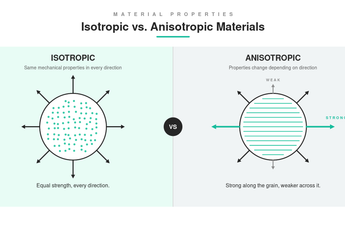
Here’s a common mistake: an engineer designs a structural bracket using FDM 3D printing, runs FEA with the tensile strength from the material datasheet, and predicts a comfortable factor of safety. The printed part fails at a fraction of the predicted load. The material and analysis were correct, but the FEA assumed isotropic material properties […]

Article

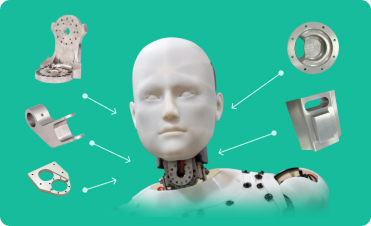
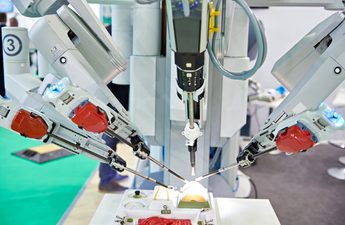
Surgical Robotics Hardware: Manufacturing Precision Components for Robotic Surgery Systems

A surgical robotic system can consist of thousands of individual parts. The instruments that enter the patient’s body need to withstand dozens to hundreds of sterilization cycles, operate through submillimeter ranges of motion, and apply tissue-contact forces that can be fractions of a newton. The housing components that contain the drive mechanisms are manufactured to […]

Article

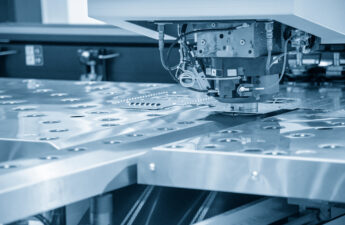
Turret Punching, Laser Cutting, and Combination Machines: A Design and Process Guide

Laser cutting is a very familiar process for most engineers designing sheet metal parts. Despite being an older technology, CNC turret punching is often overlooked at the design stage, even though it remains widely used in production.  Process selection is critical because it can drive feature size, edge appearance, tooling cost, and the types of […]

Article

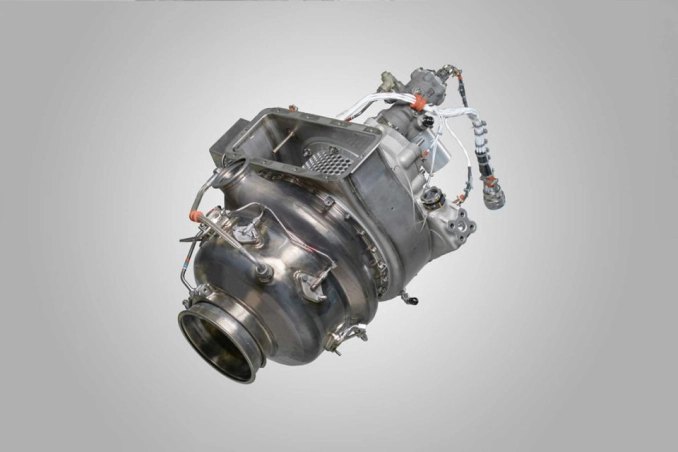
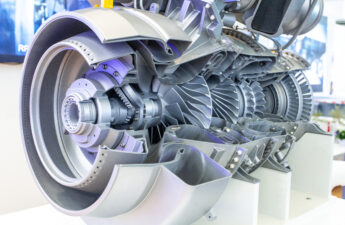
Aerospace Manufacturing: A Guide to Processes, Materials, Quality Standards, and Supply Chain

Aerospace manufacturing operates under a different standard than commercial manufacturing: the finished part, the process that made it, and the paperwork proving both are correct all need to hold up together. Standard industrial production optimizes for cost per unit and throughput. Aerospace production is built around a zero-defect standard for delivered hardware, meaning nothing nonconforming […]

Article

Forging vs. Casting: How to Choose the Right Near-Net-Shape Metal Process

In the design and production of structural metal components, one of the most important decisions the engineer must make is the choice of manufacturing process—and casting vs. forging is a common question. The two differ from each other not just in their approaches but also in terms of what that implies for part performance, costs, […]

Article

Industrial AI in Manufacturing: Applications, Adoption, and What Engineers Need to Know

Artificial intelligence in manufacturing is a grouping of distinct technologies applied across a wide range of production contexts—from computer vision systems inspecting parts on a moving line, to physics-informed AI accelerating structural simulation, and demand-sensing models optimizing supply chain inventory. The term “industrial AI” has emerged to describe the specific subset of these applications that […]

Article

The Ultimate Guide to Injection Molding Tolerances

Injection molding tolerances are acceptable variations in size for part features and overall dimensions. They are expressed as plus or minus (±) values in millimeters or inches and vary by the type of material that’s used and the overall size of the part.  Part designers add tolerances to 2D drawing files to tell an injection […]

Article

Precision Grinding: Processes, Tolerances, and When To Use It

Most engineers have a solid feel for what CNC machining can do. But far fewer have a clear picture of what to do when conventional CNC process capabilities are exceeded by the need for tighter tolerances, finer surface finishes, or hardened work material that quickly wears through machine tools. When that happens, manufacturing engineers move […]

Article

CNC Machining for Medical Devices: Materials, Tolerances, and Design Considerations

CNC machining is commonly used to manufacture various medical devices—surgical instruments, fixtures, structural elements, fluid-handling parts, and components that attach to or form part of a tissue-contacting implant. The machining operations themselves are familiar shop-floor work. The practical difference in medical device machining is that material definition, surface condition, traceability, inspection, and documentation aren’t just […]

Article

MISUMI Americas Launches MISUMI Ventures, a $50 Million Fund Backing the Next Generation of Hardware, Robotics and Physical AI Companies

Silicon Valley–based fund advances MISUMI Group’s $1B Global Investment Vision and gives founders day-one access to a Fortune 500–caliber global manufacturing supply chain OAKLAND, CA and TOKYO, Japan – September 17, 2026 – MISUMI Americas, a specification-driven sourcing partner for mechanical components and assemblies, today announced the launch of MISUMI Ventures, a $50 million venture […]