
Time to read: 4 min
As manufacturers across the U.S. and Canada bring production closer to home, the fastest teams are winning launch windows. Compressing the “design → make → test” cycle isn’t just about efficiency—it’s now a core competitive advantage.
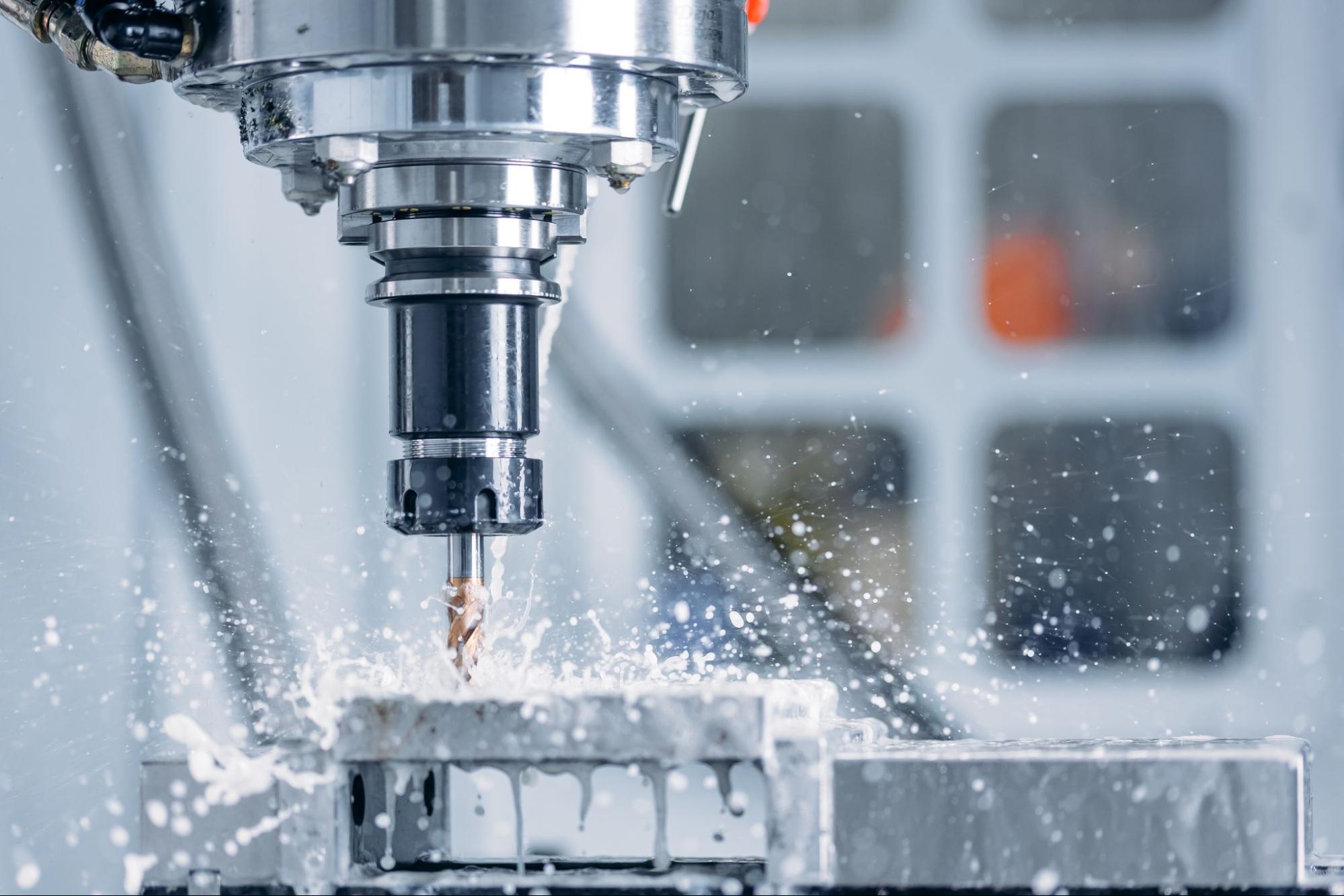
On-demand CNC machining, by intelligently routing precision parts to pre-vetted suppliers across regions, enables faster prototyping and pilot production without long-term commitments. For engineering, operations, and supply chain teams focused on New Product Introduction (NPI), it’s a practical way to improve agility, traceability, and launch speed.
Why Speed Wins During NPI
Reshoring and nearshoring trends are in full swing, but they’ve also exposed the limits of traditional sourcing. Policy uncertainty, material shortages, and logistics volatility make the time to get finished parts a critical KPI.
By trimming even a few days from the “make” step, NPI teams can benefit from earlier revenue recognition through faster validation cycles, fewer late-stage design changes and tooling delays, and improved schedule reliability across product and manufacturing teams.
In short, speed drives ROI. Every day saved compounds downstream, reducing engineering idle time and accelerating go-to-market execution.
Learn how Fictiv helps teams move faster in product development cycles.
Common Bottlenecks in Modern NPI Sourcing
When companies diversify beyond a single offshore hub, familiar friction points reappear:
- Production-oriented shops with long prototype queues
- Capability mismatches (for example, shops skilled in aluminum but not specialty metal or tight-tolerance work)
- Duplicated supplier qualification across multiple regions
An on-demand CNC platform like Fictiv’s Digital Manufacturing Ecosystem helps solve these problems by pre-vetting suppliers through standardized DFM and inspection protocols, providing CMM reports for critical feature measurements, and maintaining predictable logistics with full visibility into lead times. The result is a digitally managed, multi-region manufacturing network that scales to your NPI needs without new onboarding cycles.
How On-Demand CNC Manufacturing Speeds Up NPI
On-demand CNC platforms streamline each stage of the manufacturing cycle:
- Right-Fit Sourcing: Automated matching ensures parts go to manufacturing partners with proven success for similar geometries, materials, and GD&T specs.
- Fast, Guaranteed Lead Times: Prototype queues and defined Service Level Agreements eliminate “soft waits.”
- Full Digital Traceability: Certifications, inspection data, and part history live in one place for easy audit and review.
- Redundant Capacity: If one supplier slows, parts can automatically re-route within the vetted network to maintain efficiency.
These aren’t theoretical advantages—they’re practical tools to help your teams accelerate iteration and de-risk launches.
See how it works with Fictiv’s CNC Machining Services for Prototypes & Production.
Measuring the ROI of Speed in NPI
Quantifying the impact of faster development cycle can be fairly straightforward:
Cycle Time (days) = CAD + Make + Test + Rework time
Cycles per Month = Working Days ÷ Cycle Time
Cost of Delay per Day = (Expected Monthly Revenue × Gross Margin) ÷ 30
If on-demand CNC shortens the “Make” phase by 4–7 days, your team could reclaim 10–20 calendar days per quarter or more. That time directly affects product launch velocity and schedule confidence.
For a deeper dive into the numbers, see our digital manufacturing NPI ROI calculator.
Where NPI Teams See the Biggest Impact
- EVT/DVT Builds: Faster delivery reduces design drift by keeping validation cycles tight.
- Regional Pilot Runs: Manufacturing closer to customers improves responsiveness and service feedback.
- Bridge Tooling for Plastics: Molds machined at tolerances let you confirm geometry before investing in tooling.
- Regulated or Audited Programs: Consistent inspection data and certs speed compliance and customer audits.
How to Move Fast Without Sacrificing Quality
Speed doesn’t mean skipping diligent design and quality control. The most successful NPI teams define assembly datums early—using A/B/C schemes—to control load paths and alignment. They tighten tolerances only on critical-to-function features, and request CMM data and FAI (first article inspection) only on critical dimensions. Throughout production, they track supplier performance by lead time, yield, and PPV against the original quote. These habits protect consistency while enabling flexibility across multiple suppliers.
Learn more about Best Practices for CNC Tolerances and GD&T.
A Simple 30-Day Sprint Pilot Plan for NPI with CNC
Prove the ROI of on-demand CNC manufacturing in a single NPI sprint:
Week 1 — Establish Baseline: Measure current intervals for PO, receipt, inspection, and testing.
Week 2 — Select Key Parts: Choose 3–5 components critical to assembly or validation.
Week 3 — Order and Track: Place CNC orders via Fictiv and request CMM data for key features.
Week 4 — Compare & Commit: Update your cycle time model with real data and define your “fast lane.”
This sprint complements existing suppliers, ensuring each iteration delivers actionable learning while momentum is high.
2026 Outlook: Trends Shaping the Next NPI Cycle
- U.S.–Mexico Corridors: Nearshoring under the USMCA connects engineering teams with regional production without sacrificing collaboration.
- ESG and Traceability: Scope-3 reporting will require transparent, digital supplier data.
- Machining Market Growth: Fragmented capacity will continue to favor flexible, cloud-based manufacturing networks.
Related read: How Digital Manufacturing Platforms Support Supply Chain Resilience.
Frequently Asked Questions About On-Demand CNC
What is on-demand CNC manufacturing?
It’s a digital manufacturing model that connects you to a vetted network of CNC machine shops through a centralized platform, optimizing for speed, precision, and traceability.
How does on-demand CNC support New Product Introduction (NPI)?
It reduces lead times, improves iteration speed, and eliminates the need to qualify multiple suppliers individually—allowing faster design validation and pilot builds.
Is on-demand CNC suitable for production runs or just prototypes?
It’s ideal for prototyping, bridge production, and low- to mid-volume runs that require precision and flexibility.
Can Fictiv help with DFM feedback during NPI?
Yes—our Design for Manufacturability feedback ensures your CAD is optimized before machining begins, saving valuable cycle time.
Final Takeaway
In today’s reshoring-driven manufacturing landscape, speed is the differentiator.
On-demand CNC manufacturing gives engineering and supply chain teams the flexibility to iterate, validate, and launch faster—without sacrificing precision or reliability.
Faster “make” cycles mean faster learning, lower risk, and a measurable competitive edge for new product introduction.
Accelerate your NPI program today: Get an instant CNC quote