




Time to read: 7 min
In today’s technology-driven world, global energy demand is higher than ever—and it continues to grow. From data centers and electric vehicles to electrified manufacturing and smart infrastructure, modern economies rely on a constant, reliable power supply. Energy Storage Systems (ESS) have emerged as critical enabling technologies that make this possible, supporting renewable energy integration, improving grid stability, and accelerating decarbonization across the climate tech sector.
Solar and wind are inherently variable, producing energy only when the sun shines or the wind blows. Energy storage systems store this excess energy and release it when demand is high or generation is low, helping to smooth supply and prevent blackouts. Beyond grid support, energy storage enables microgrids, electric vehicle infrastructure, and flexible energy use, which makes renewable energy practical and reliable at scale.
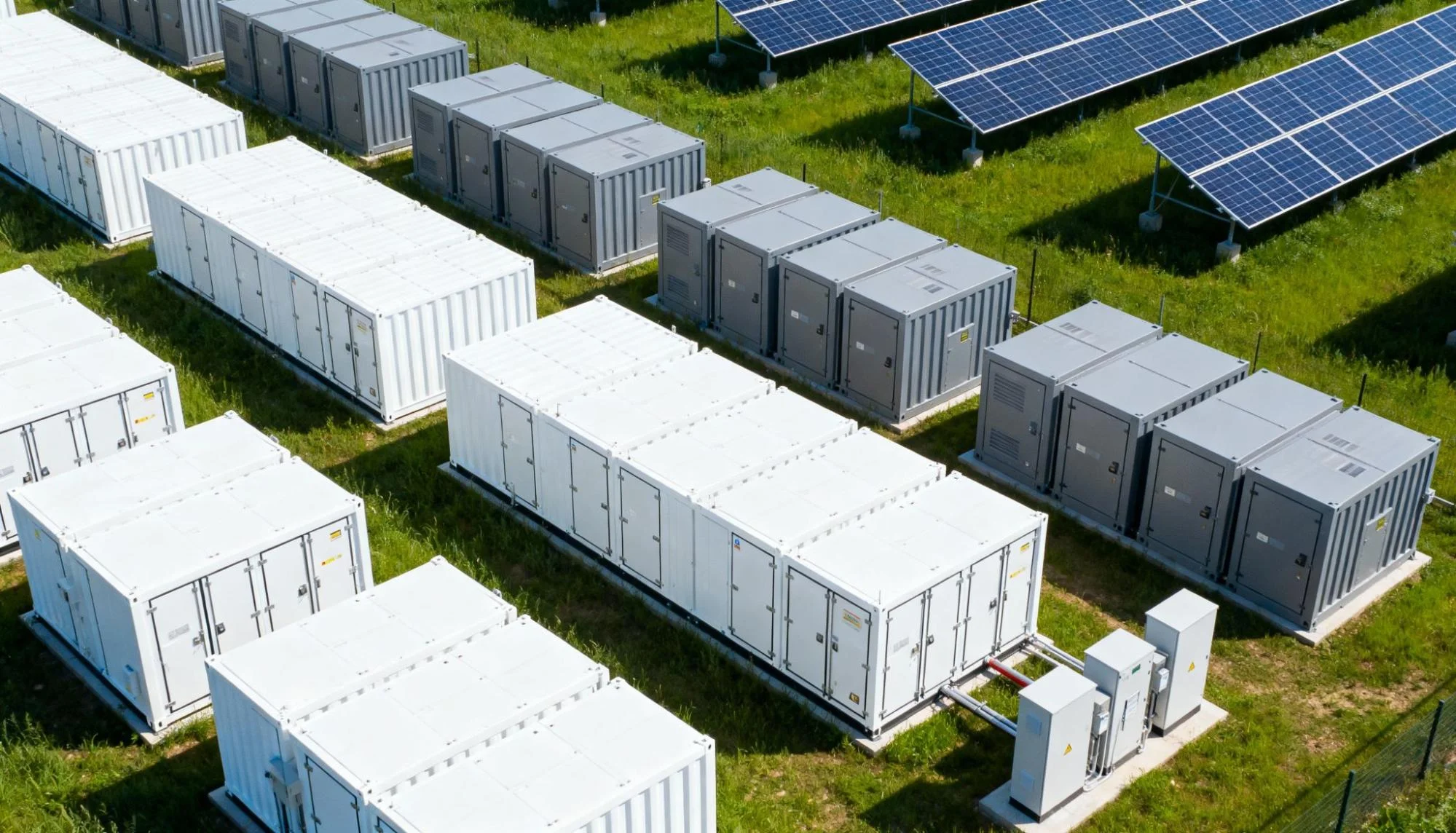
This article will focus mainly on ESS, the different types, and design and manufacturing considerations for energy storage systems.
What Is an Energy Storage System (ESS)?
An Energy Storage System, or ESS, is a system designed to capture electrical energy and store it for later use. Extremely useful for stabilizing the grid, they are often used in conjunction with renewable energy.
Since these storage systems charge when energy is available and discharge when it’s needed, they are mainly used to manage fluctuations in both supply and demand and spikes in variable renewable energy sources like solar and wind, ensuring a smooth power output.
Types of Energy Storage Systems
Energy can be stored in the form of chemical, mechanical, electrochemical, or thermal energy, as well as in electric and magnetic fields. Hybrid energy storage is also possible.
Battery Energy Storage Systems (BESS)
Battery energy storage systems (BESS) use electrochemistry (oxidation-reduction reactions) to store energy chemically, which is then converted to electricity during periods of demand. Many forms of BESS exist, including lithium-ion, lead-acid, sodium-ion, and flow batteries.
Mechanical Energy Storage
Mechanical energy systems store energy as potential or kinetic energy. An advantage of this form of energy storage is that it can be easily stored for long periods. Popular forms of mechanical energy storage include:
- Pumped Hydro Storage (PHS): During times of low electricity demand, water is pumped to an upper reservoir, storing energy as potential energy, and then released through turbines to generate power when demand rises.
- Compressed Air Energy Storage (CAES): Uses surplus electricity to compress air and store it underground, then releases it through turbines to generate power. Traditional CAES systems require supplemental fuel for air reheating, while advanced ones store compression heat to improve efficiency and reduce emissions.
- Flywheels: Store energy in a fast-spinning rotor and subsequently release it by generating electricity, which slows it down.
Thermal Energy Storage
Thermal energy storage systems (TESS) store energy by heating or cooling a material, such as water, molten salt, or phase-change materials, allowing the stored thermal energy to be later used for heating, cooling, or electricity generation. Thermal energy can be stored as sensible heat, latent heat, or in reversible thermochemical reactions.
Hydrogen & Power-to-X Storage
Hydrogen and Power-to-X (PtX) storage technologies convert electrical energy into chemical energy. In these systems, surplus electricity, typically from renewable sources, is used to produce hydrogen through electrolysis. The hydrogen can be stored directly or further converted into synthetic fuels such as ammonia, methane, or liquid hydrocarbons.
Supercapacitors
Supercapacitors store energy through electrostatic charge separation. In practice, supercapacitors are often integrated into hybrid energy storage systems, where they are combined with batteries or other storage technologies to handle fast power fluctuations and extend the lifespan of the primary energy storage system. Their low energy density makes them unsuitable for long-duration storage on their own.
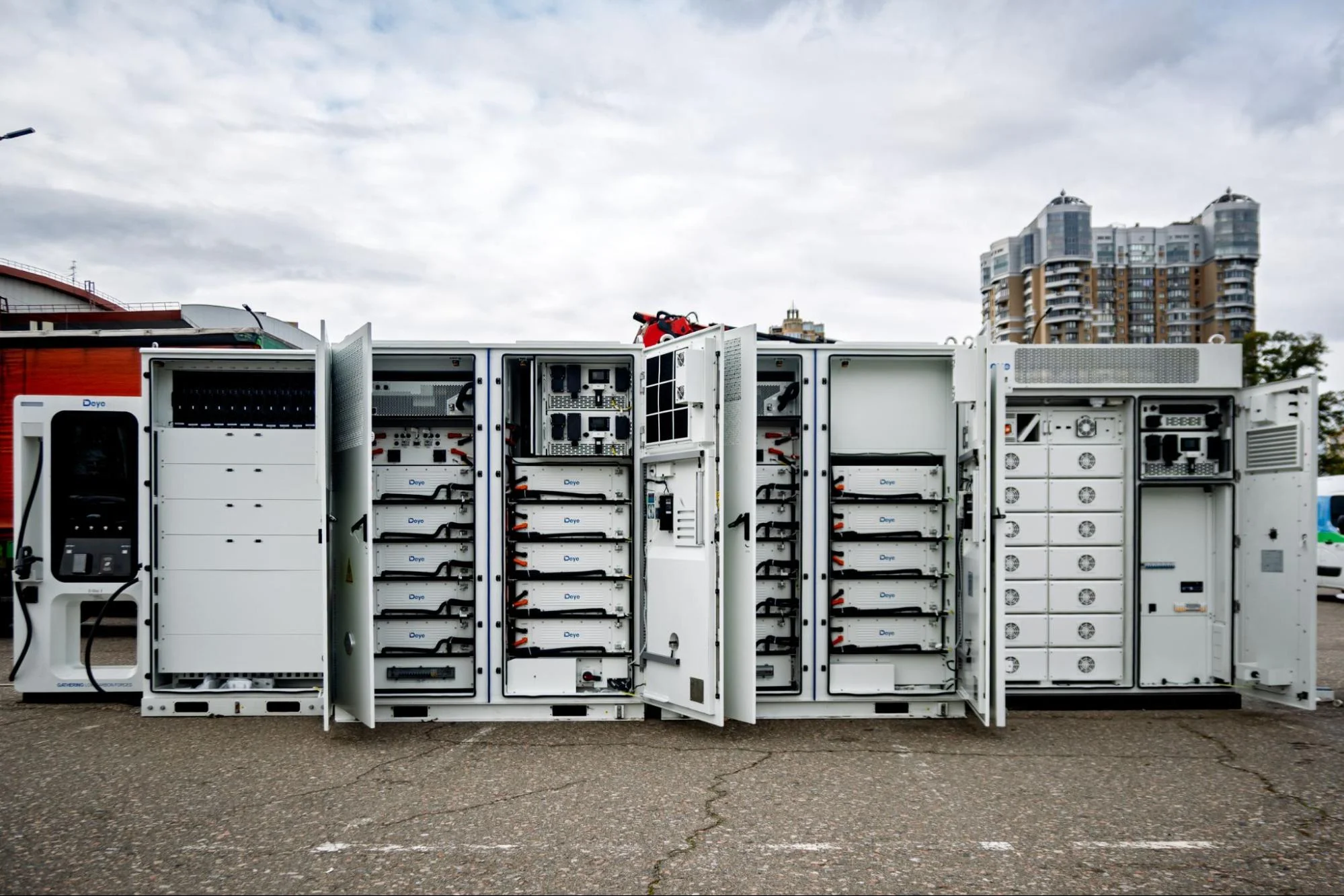
While a single technology may not fit every application, the trade-offs between energy density, power delivery, and duration define where each storage system is best applied.
Comparison Table of Different Energy Storage Systems
| ESS Type | Energy Density | Power Density | Typical Applications |
| Lithium-ion Batteries | High (≈150–300 Wh/kg, cell level) | High | Portable devices, grid storage, electric vehicles |
| Lead-acid Batteries | Moderate (≈50–80 Wh/kg) | Moderate | Backup power, UPS, low-cost grid support |
| Sodium–Sulfur Batteries | High (≈150–240 Wh/kg) | High (~150–230 W/kg) | Large-scale grid storage, load leveling |
| Flow Batteries | Low to Moderate (≈20–70 Wh/kg) | Moderate | Long-duration storage, renewable integration |
| Supercapacitors | Low (≈2.5–15 Wh/kg) | Very High (>100,000 W/kg) | Power smoothing, frequency regulation |
| Flywheels | Low to Moderate (≈20–80 Wh/kg) | High (~1,000–2,000 W/kg) | Short-duration grid support, frequency regulation |
| Pumped Hydro Storage | Very Low (≈0.2–2 Wh/L) | Low | Bulk long-duration storage, peak shaving |
| CAES | Low (≈2–6 Wh/L) | Low | Bulk renewable integration, long discharge |
| TES | Moderate (≈70–210 Wh/L*) | Low | Heating/cooling, industrial heat use |
| *Thermal energy equivalent; not directly comparable to electrical storage without conversion losses. Volumetric energy density for thermal energy storage can vary widely depending on the medium (e.g., molten salt) and storage mode. | |||
Engineering Design Considerations for ESS
Here’s a breakdown of the main considerations engineers must weigh when designing for energy storage systems:
Energy and Power Needs
Before choosing a technology, engineers determine how much energy the system needs to store (kWh) and how much power it must deliver (kW or MW). A system meant for short-term grid balancing may need high power but low energy, while long-duration storage for renewable integration requires large energy capacity.
Electrical Architecture
The following should be considered for the electrical architecture of ESS:
- The voltage levels (high-voltage/low-voltage setup)
- Inverters
- Power conversion systems (PCS)
- DC/DC converters
- The Battery Management System (BMS), where applicable
Mechanical Design & Enclosures
The following mechanical design considerations are critical for ESS:
- Engineers must consider how the mechanical structure supports battery modules, racks, and power electronics.
- Enclosures should be designed to meet appropriate IP or NEMA ratings based on environmental exposure, including dust, moisture/water/ice ingress, and corrosion, for indoor and outdoor environments.
- Shock, vibration, and transport loads must also be accounted for, particularly for containerized and grid-scale systems that are shipped and installed on site.
Thermal Management
Many energy storage systems require thermal management to prevent or delay excessive degradation. The following should be taken into account:
- Cooling Systems: Air or liquid cooling, depending on energy density and power throughput.
- Thermal Gradients: Must minimize degradation and hotspot formation.
- Manufacturability: Cooling channels, fans, or heat exchangers need to be producible at scale.
Safety & Compliance
Safety is a core design requirement for energy storage systems, particularly for high-energy-density battery-based systems. Key considerations include:
- Thermal Runaway Mitigation: Cell and module monitoring, current limiting, physical separation, and fire-resistant materials to prevent cascading failures.
- Fire Suppression and Venting: Integrated suppression systems and controlled vent paths to safely release heat and gases.
- Standards and Certification: Early design alignment with UL 9540, UL 9540A, and IEC 62933.
Energy vs. Power Density Trade-offs
ESS design requires careful consideration of the trade-off between energy and power density, depending on the intended application. Systems designed for fast response and grid balancing prioritize high power output, while long-duration storage applications require higher total energy capacity. Engineers must also account for degradation factors such as depth of discharge (DoD), cycle life, and operating temperature, which influence usable capacity over time.
Manufacturing Considerations for Energy Storage Systems
Material Selection
The correct materials should be selected for the different components in an ESS. Metals such as aluminum, steel, and copper are commonly used for frames, enclosures, bus bars, and thermal components because they are strong and conductive. Plastics like polycarbonate (PC), ABS, and nylon are often used for housings, insulation, and connectors.
Battery Module & Pack Assembly
Battery module and pack assembly requires careful cell matching, bus bar design, and reliable joining methods. This is to ensure thermal stability and electrical balance. Common joining methods are laser welding and ultrasonic welding. Laser welding is typically chosen for high-volume production and high-current applications that use thicker tabs or bus bars and require precise, low-resistance joints. Ultrasonic welding is preferred for thin tabs, dissimilar metals, or heat-sensitive cells, where minimizing thermal impact is important.
Prototyping & Validation
Before scaling to production, ESS designs must be validated through iterative prototyping and testing. This allows teams to verify things like fit and airflow before proceeding to production. Hardware typically progresses through EVT (Engineering Validation Test), DVT (Design Validation Test), and PVT (Production Validation Test) stages to validate performance, durability, and manufacturability. Environmental, electrical, and abuse testing are also needed to validate the design.
Scaling to Production
Scaling an ESS from prototype to production requires careful planning around supply chains, assembly processes, and quality control to ensure repeatable builds. Engineers must consider component availability and lead times, particularly for battery cells and electronics. There’s also the decision between automation and manual assembly, which depends on production volume, system complexity, and cost targets, with many ESS manufacturers using a hybrid approach.
ESS in the Climate-Tech Ecosystem
Energy storage systems play a critical role in the broader climate-tech landscape. They enable renewable energy integration, grid reliability, and flexible energy use. At the grid level, large-scale storage smooths out the variability of solar and wind while helping utilities to manage peak demand and maintain frequency stability. For microgrids and virtual power plants, ESS enables local energy independence and smarter use of distributed resources. It also helps with greater resilience during outages.
How Advanced Manufacturing Accelerates ESS Development
Advanced manufacturing can help teams bring energy storage systems from concept to production faster and more efficiently. This is done through rapid prototyping, precision machining, injection molding of housings and connectors, and coordinating multiple suppliers. ESS enclosure design often relies on sheet metal fabrication for structural strength and EMI shielding, combined with injection-molded components for insulation and connectors.
Rapid prototyping enables engineers to test enclosures, airflow, and accessibility early in the design process, while precision machining ensures that critical components, such as frames and bus bars, meet strict structural and electrical requirements. Injection molding for the energy industry supports reliable, repeatable production of housings and connectors, and coordinating multiple suppliers can help manage complex assemblies and keep production on schedule.
Designing ESS for Performance, Safety, and Scale
Building a successful energy storage system depends on engineering and manufacturing teams working together from the very start. Decisions made early in the design phase have long-term effects on how the system performs, how safe it is to operate, and how much it costs to produce. As ESS adoption accelerates, manufacturers face increasing pressure to design systems that balance performance, safety, and scalability.
Fictiv helps climate-tech teams design, prototype, and manufacture ESS components with safe, scalable, and manufacturable solutions. Get expert DFM support and flexible production. Upload your CAD file to get started.