




Time to read: 11 min
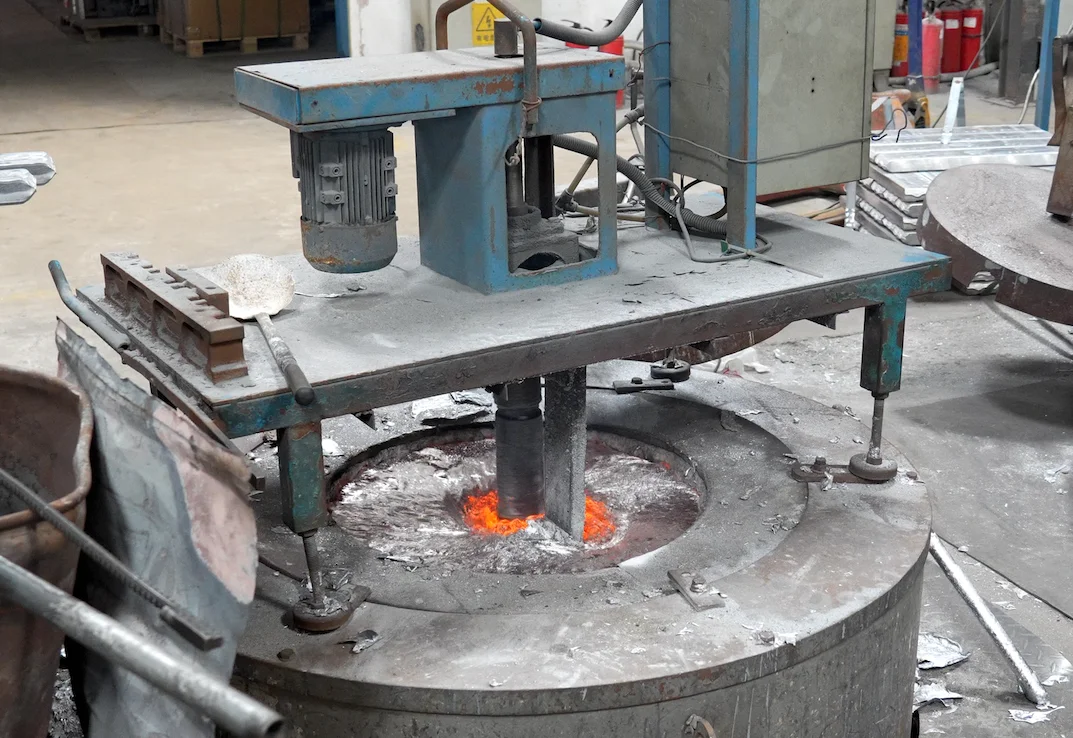
Casting enables the efficient production of complex metal parts, but it also introduces a distinct set of quality challenges. Unlike machined parts, cast components are formed by the flow and solidification of molten metal—meaning defects can appear as a result of fluid dynamics, heat transfer, and material behavior.
Understanding casting defects is critical for engineers looking to improve part quality, reduce scrap, and avoid costly tooling revisions. While defects may appear unpredictable, they’re almost always the result of identifiable interactions between part geometry, process conditions, and material properties.
This guide breaks down the most common casting defects, explains why they occur, and outlines practical strategies to prevent them through better design and process control.
What Are Metal Casting Defects?
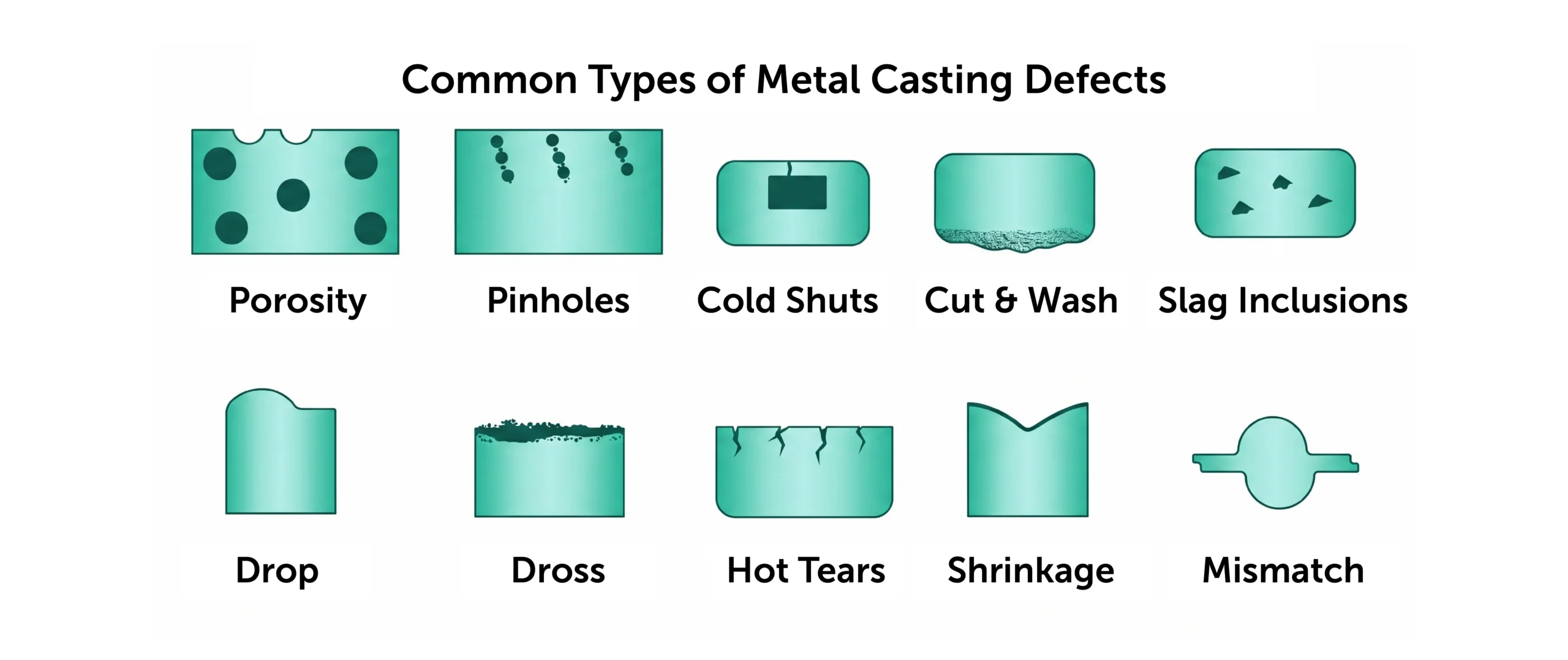
Casting defects are imperfections that occur during the filling, solidification, or cooling of molten metal within a mold. These defects can affect structural integrity, dimensional accuracy, and surface quality.
They’re also not random. Defects are governed by the physics of how molten metal flows into a mold, how it cools, and how it transitions from liquid to solid. Factors such as part geometry, thermal gradients, and flow behavior all play a role in determining whether a defect forms.
As a result, defect prevention is less about fixing issues after they appear and more about proactively designing parts and processes that avoid them in the first place.
Why Metal Casting Defects Occur
Most casting defects can be traced back to three fundamental drivers:
1. Flow Issues
As molten metal enters the mold, it must flow smoothly and completely fill the cavity. Turbulent flow, poor gating design, or trapped air can introduce defects like porosity or inclusions.
2. Solidification Issues
As the metal cools, it shrinks. If this shrinkage isn’t properly managed, it can lead to internal voids, cracks, or distortion.
3. Material and Cleanliness Issues
The condition of the molten metal itself matters. Contaminants, dissolved gases, and oxides can become trapped during pouring, creating internal defects.
These factors often overlap. For example, porosity may result from both trapped gas and shrinkage during solidification, which makes root cause analysis difficult without deeper inspection or simulation.
Most Common Metal Casting Defects (and How to Prevent Them)
Porosity
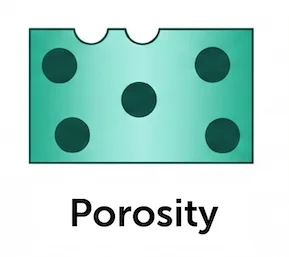
Porosity refers to internal voids within a casting that reduce structural integrity, fatigue resistance, and pressure tightness. It is one of the most common—and most difficult to diagnose—casting defects because it can originate from multiple mechanisms at once.
There are several forms of porosity, including:
- Gas porosity caused by trapped gases or air entrapment during mold filling
- Shrinkage porosity caused by metal contraction during solidification
- Micro-porosity consisting of tiny dispersed voids that may not be visible without sectioning or CT scanning
Porosity ranges from isolated microscopic defects to larger cavities that compromise mechanical performance. In pressure-containing or structural components, even small amounts of porosity can become critical.
Causes:
- Air or gas trapped during mold filling
- Inadequate venting
- Shrinkage during solidification
Prevention:
- Design gating and venting systems to allow air to escape
- Degas molten metal before pouring
- Maintain uniform wall thickness to reduce localized shrinkage
Shrinkage Defects
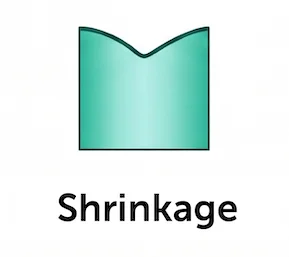
Shrinkage defects occur when molten metal contracts during solidification without sufficient feeding of additional material. These defects may appear as internal cavities, sink marks, or localized voids in thicker regions of the part.
Shrinkage is strongly influenced by geometry. Thick sections cool more slowly than the surrounding material, creating “hot spots” that continue contracting after adjacent regions have already solidified. If molten metal cannot flow into these areas during cooling, voids form internally.
Shrinkage defects are especially problematic because they frequently occur below the surface, where they may not be seen during visual inspection.
Causes:
- Thick sections that cool more slowly than surrounding material
- Insufficient feeding of molten metal during solidification
Prevention:
- Use properly sized and placed risers to feed material
- Design for directional solidification
- Avoid isolated thick sections that act as “hot spots”
Misruns and Cold Shuts
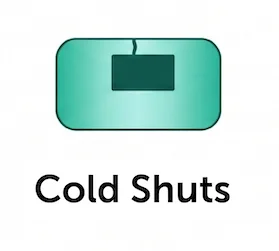
Misruns occur when molten metal solidifies before fully filling the mold cavity, resulting in incomplete geometry. Cold shuts occur when two separate metal flow fronts meet but fail to fuse into a continuous structure.
Both defects are commonly associated with thin walls, long flow paths, or poor thermal control. Because they interrupt material continuity, they can significantly weaken the final part.
Cold shuts typically appear as thin seam-like lines on the casting surface, while misruns leave visibly incomplete features or edges.
Causes:
- Thin walls or long flow paths
- Low pouring temperature
- Slow or inconsistent fill rates
Prevention:
- Ensure adequate wall thickness for the selected process
- Optimize flow paths to reduce resistance
- Maintain proper pouring temperature and speed
Inclusions
Inclusions are non-metallic contaminants—including oxides, sulfides, silicates, refractory particles, or sand from the mold system—trapped inside the casting. A common subtype is slag inclusions, which form when oxidized material or other impurities become entrapped during pouring or solidification.
These contaminants disrupt the continuity of the metal matrix and act as stress concentrators, reducing fatigue strength and overall reliability. This is particularly problematic in high-performance or pressure-critical applications.
Turbulent flow is a major contributor because it can fold oxide films and other surface contaminants into the metal during mold filling.

Causes:
- Contaminated molten metal
- Turbulent flow that entrains surface oxides
Prevention:
- Use clean melt practices and proper material handling
- Incorporate filtration systems
- Minimize turbulence during pouring
Hot Tearing and Cracking
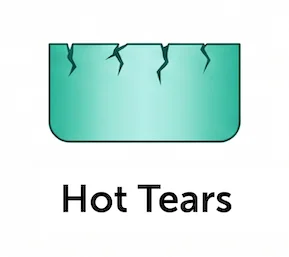
Hot tearing occurs when a casting cracks during the final stages of solidification, while the material is still partially molten and mechanically weak.
As the metal contracts during cooling, the casting must be able to shrink freely. If geometry or mold restraint prevents this, tensile stresses build, and cracks form. These defects commonly appear near sharp corners, abrupt section changes, or constrained intersections.
Unlike cracks caused after solidification, hot tears form at elevated temperatures during the solidification process.
Causes:
- Thermal stress during cooling
- Geometry that prevents the part from shrinking freely
Prevention:
- Add fillets to reduce stress concentrations
- Design for controlled contraction
- Avoid abrupt changes in section thickness
Warping (Distortion)
Warping is dimensional distortion that occurs as a casting cools unevenly. Different regions of the part contract at different rates, generating internal stresses that deform the geometry.
Large flat surfaces, asymmetrical designs, and non-uniform wall thicknesses are particularly susceptible to warping. In severe cases, distortion can make secondary machining or assembly impossible without rework.
Because warping is tied directly to thermal gradients, geometry plays a major role in determining risk.
Causes:
- Uneven cooling rates across the part
- Thermal gradients caused by non-uniform geometry
Prevention:
- Maintain consistent wall thickness throughout the part
- Balance mass distribution to promote even cooling
Moving from CNC prototypes to production-grade casting? Ensure your parts are optimized for the transition by reading our Scaling CNC Machining to Casting Transition Guide.
How Design Decisions Drive Casting Defects
One of the most important insights in casting is that many defects originate from part geometry rather than process execution alone. Small design decisions can dramatically influence how metal flows, cools, and solidifies.
Key Design Principles for Defect Prevention
- Uniform wall thickness promotes even cooling and reduces shrinkage and warping
- Fillets instead of sharp corners improve metal flow and reduce stress concentrations
- Minimized thickness transitions prevent hot spots that lead to shrinkage defects
- Smooth flow paths reduce turbulence and air entrapment
These principles are central to Design for Manufacturability (DFM). Applying them early in the design phase can eliminate many defects before they occur, reducing the need for complex tooling adjustments or process controls.
Why Casting Defects Are Difficult to Diagnose
Diagnosing casting defects is not always straightforward. Many defects—especially porosity—have multiple potential causes, and different mechanisms can produce similar visible results.
Some of the most critical defects are internal and can’t be detected through visual inspection alone. Identifying them often requires advanced inspection methods such as X-ray or CT scanning.
Without a clear understanding of the underlying physics, teams that rely on trial and error end up treating symptoms rather than root causes.
DFM Checklist for Metal Casting Defect Prevention
Before finalizing a casting design, evaluate whether the geometry supports proper flow and solidification.
Use this checklist as a quick validation tool:
- Are wall thicknesses as uniform as possible?
- Are thick sections minimized or redesigned?
- Are fillets applied to internal corners?
- Does the design promote smooth, non-turbulent flow?
- Can shrinkage-prone areas be effectively fed?
- Are potential sources of air entrapment minimized?
Addressing these questions early with DFM feedback can significantly reduce the risk of defects and improve overall part quality.
Learn more about how to design for casting and reduce defects with our Die Casting Design Guide
The Key to Preventing Casting Defects
Casting defects are a natural outcome of the complex interactions between molten metal, part geometry, and process conditions. But they’re not unavoidable.
By understanding the root causes of common defects—and designing with those principles in mind—engineers can improve casting quality, reduce scrap, and avoid costly redesigns.
In most cases, the biggest gains come not from changing the process, but from improving the design. When geometry is optimized for flow and solidification, many defects can be prevented before the first part is ever produced.
Want to identify potential defect risks in your design early?
Upload your CAD for a die casting quote and DFM feedback through the Fictiv platform, or contact our team to discuss other specialized casting processes.
Talk to a Fictiv expert about your project, or upload your parts to start a free quote.
Frequently Asked Questions About Metal Casting Defects
What is the most common casting defect?
Porosity is one of the most common casting defects. It occurs when gas becomes trapped in the molten metal or when shrinkage during solidification creates internal voids. Porosity can reduce strength, fatigue resistance, and pressure tightness in cast parts.
What causes shrinkage defects in castings?
Shrinkage defects occur when metal contracts during solidification without adequate feeding from risers or surrounding molten material. Thick sections and uneven wall thicknesses are common contributors because they cool more slowly and create localized hot spots.
How can casting defects be prevented?
Many casting defects can be reduced through proper Design for Manufacturability (DFM), including maintaining uniform wall thickness, adding fillets to reduce stress concentrations, designing for smooth metal flow, minimizing turbulence and air entrapment, and optimizing gating, venting, and feeding systems.
Why are casting defects difficult to diagnose?
Many casting defects have overlapping root causes. For example, porosity may result from both trapped gas and shrinkage during solidification. Additionally, some defects are internal and cannot be identified through visual inspection alone, requiring X-ray, CT scanning, or simulation analysis.
What role does part geometry play in casting defects?
Part geometry heavily influences how molten metal flows and solidifies. Sharp corners, abrupt thickness transitions, and isolated thick sections can create turbulence, thermal stress, and shrinkage hot spots that increase the likelihood of defects.