



Precision Manufacturing Inside a Machine Built to Make Precision Parts
The Genmitsu 3030 Prover Ultra occupies an interesting space in the desktop CNC market — affordable enough for hobbyists and small shops, capable enough to cut metal and hold reasonable tolerances. At its price point, it bridges the gap between hobbyist routers and entry-level professional equipment.
After unboxing, we did what any sane engineering team would do: we ran a few test cuts, admired the rigidity of the gantry, and immediately reached for the wrenches. There’s something deeply satisfying about tearing down a machine that was itself built to make parts.
Bill of Materials (BOM) & Manufacturing Processes Overview
Before diving into sub-assemblies, here’s a high-level look at the manufacturing processes represented in this build:
- CNC Machining: Structural plates, spindle shaft, linear rail mounting blocks
- Sheet Metal Fabrication: Chassis panels, wire management tracks, brackets
- Die Casting / Casting: Spindle motor housing
- Turning: Spindle shaft with grooves and screw contours
Off-the-shelf components: Linear rails, guide blocks, proximity sensors, bearings
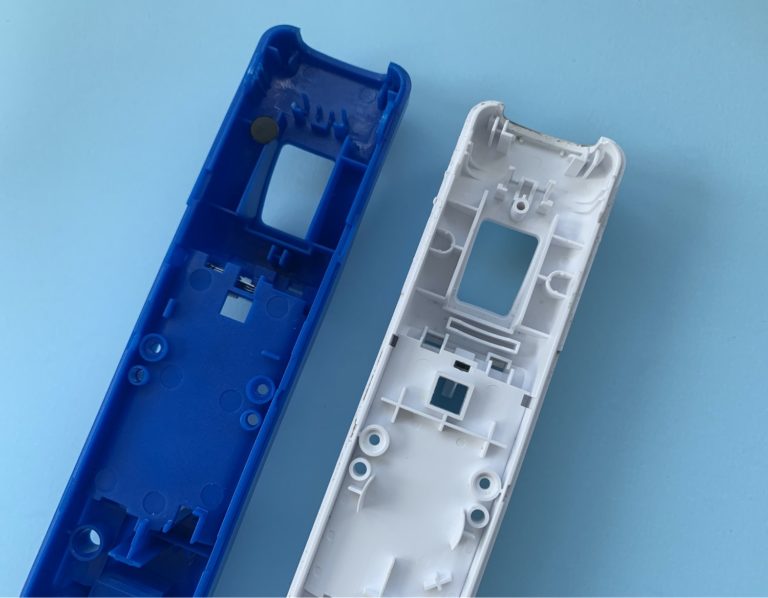
Injection molding: Controller housings, cable management guide, power supply housing,
What makes this teardown particularly interesting is how many of the parts inside were made using the same processes the machine itself performs. It’s a live portfolio of its own capabilities.
1. The Gantry: Deceptively Simple, Surprisingly Stubborn
The gantry was the first thing we went after — and the last thing that gave us any respect. While the machine assembled cleanly out of the box, disassembly was a different story. Fasteners were torqued with intention, and the structural rigidity that makes it a capable cutting platform made it genuinely difficult to pull apart.
s Tessa put it: “That’s actually a testament to the durability of the machine. If this had been simple to disassemble, this wouldn’t be a good purchase.”
The gantry itself is built around machined plates and linear rail assemblies — a sliding table configuration that delivers the X and Y axis travel. The rail and guide block combination is a clean example of off-the-shelf precision components integrated with custom machined mounting hardware.
2. Wire Management: The Living Hinge Track
One of the standout design details was the wire management track — a living hinge profile that keeps wiring organized and protected as the gantry moves through its full range of motion.
Milosz flagged this as his favorite part of the whole build: “It’s used to hold the wiring in place and allow it to move in X and Y, but never get in the way.”
From a manufacturing standpoint, this is a great example of an injection molded design done well. Clean design that eliminates the need for secondary hardware like zip tie mounts or cable clips entirely. The feature is in the part itself.
3. The Spindle Assembly: CNC Machined for a CNC Machine
The spindle shaft is a CNC-turned part — grooves, screw contours, and bearing seats all machined in a single setup or flipped for the second side. It’s a compact example of what turned parts can achieve when tolerances matter: the shaft has to run true at high RPM with minimal runout, or your cuts suffer.
The spindle housing, by contrast, is a cast component. The natural parting lines and interior cavity geometry are visible on close inspection — a cast housing provides thermal mass and structural rigidity around the motor without the cost of machining a complex enclosure from billet.
Tessa noted the machining-within-machining irony: “This is a CNC machined part that was CNC machined for the CNC machine.” At a certain level of meta-awareness, teardowns get philosophical.
4. Linear Rails & Proximity Sensors: Precision Where It Counts
The linear guide assemblies — rail plus guide block — are the backbone of accurate axis travel. Each axis uses a machined plate paired with a guide block to create a simple, stiff sliding table. The tolerances on these components directly determine how accurately the machine can position the spindle, so the quality of the rail hardware has an outsized effect on cutting performance.
Sheet metal brackets on the back of the axis assemblies engage proximity sensors for homing — a clean integration of stamped hardware and off-the-shelf sensing components that keeps the design simple and serviceable.
Engineering Takeaways
The Genmitsu 3030 Prover Ultra is a well-considered piece of equipment at its price point. A few things stood out:
Design for assembly works both ways. The machine went together easily out of the box — a sign that assembly sequence and fastener strategy were thought through. That same intentionality made disassembly harder than expected, which is actually a quality signal.
Injection molding does more than it gets credit for. The wire management track is the best example here — a single part that handles wire routing, and dynamic flex. With the right features designed in, injection molding can eliminate multiple secondary components.
Casting and machining complement each other. The spindle housing is cast for complexity and thermal mass; the shaft is turned for precision and concentricity. Knowing which process to use for which function is what separates a well-engineered BOM from an expensive one.
Have a complex assembly of your own? Upload your parts to get instant DFM feedback on your CNC machining, sheet metal, or injection molding projects.