






Time to read: 10 min
When a manufacturing customer requests a material certificate, they’re really asking multiple questions at once: was this material tested, did it meet the standard, and is this the actual material used to make my part? These questions need a clear, documented answer. In practice, the gap between them is where things go wrong.
Material traceability—the ability to link a finished part back to its original mill-certified stock through an unbroken chain of documentation—is one of the less glamorous disciplines in manufacturing quality. It doesn’t generate much excitement until something fails and people need to find out why. Then it becomes the most important thing in the room.
This article covers what a robust material traceability program actually looks like, what can go wrong without one, and what engineers and procurement professionals should be asking of their suppliers.
What a Material Certificate Actually Is
A material certificate—sometimes called a mill certificate, test report, or certificate of analysis—is a document issued by the material manufacturer that records the test results for a specific batch of material. A complete, conforming certificate includes:
- The mill or manufacturer’s name and address
- The material designator and condition (e.g., A514, quenched and tempered)
- The applicable material standard (e.g., ASTM A514)
- The test methods used (e.g., ASTM A370 for mechanical testing)
- A unique identifier, typically a heat number or lot number
- Material dimensions
- Actual chemical composition results, alongside the specification limits
- Actual mechanical property results (yield strength, tensile strength, elongation, etc.), alongside the specification limits
- The signature or stamp of an authorized release authority
- The date of issue
The actual values alongside specification limits matter more than they might seem to. A certificate that only lists test results without the specification requirements forces the reader to go look up whether those results are compliant. A well-structured certificate puts both columns side by side. Where the standard being used doesn’t require certain parameters to be reported, those fields should be marked “N/A” rather than left blank. A blank field is ambiguous; N/A is a deliberate statement.
One important note: a material certificate that records out-of-specification results is not a compliant certificate, regardless of how it was issued. Material with documented nonconformances should not enter production without an explicit disposition process.
What the Tests on a Certificate Actually Tell You
A certificate is only useful if you can interpret what it’s telling you. There are three critical elements to a certificate:
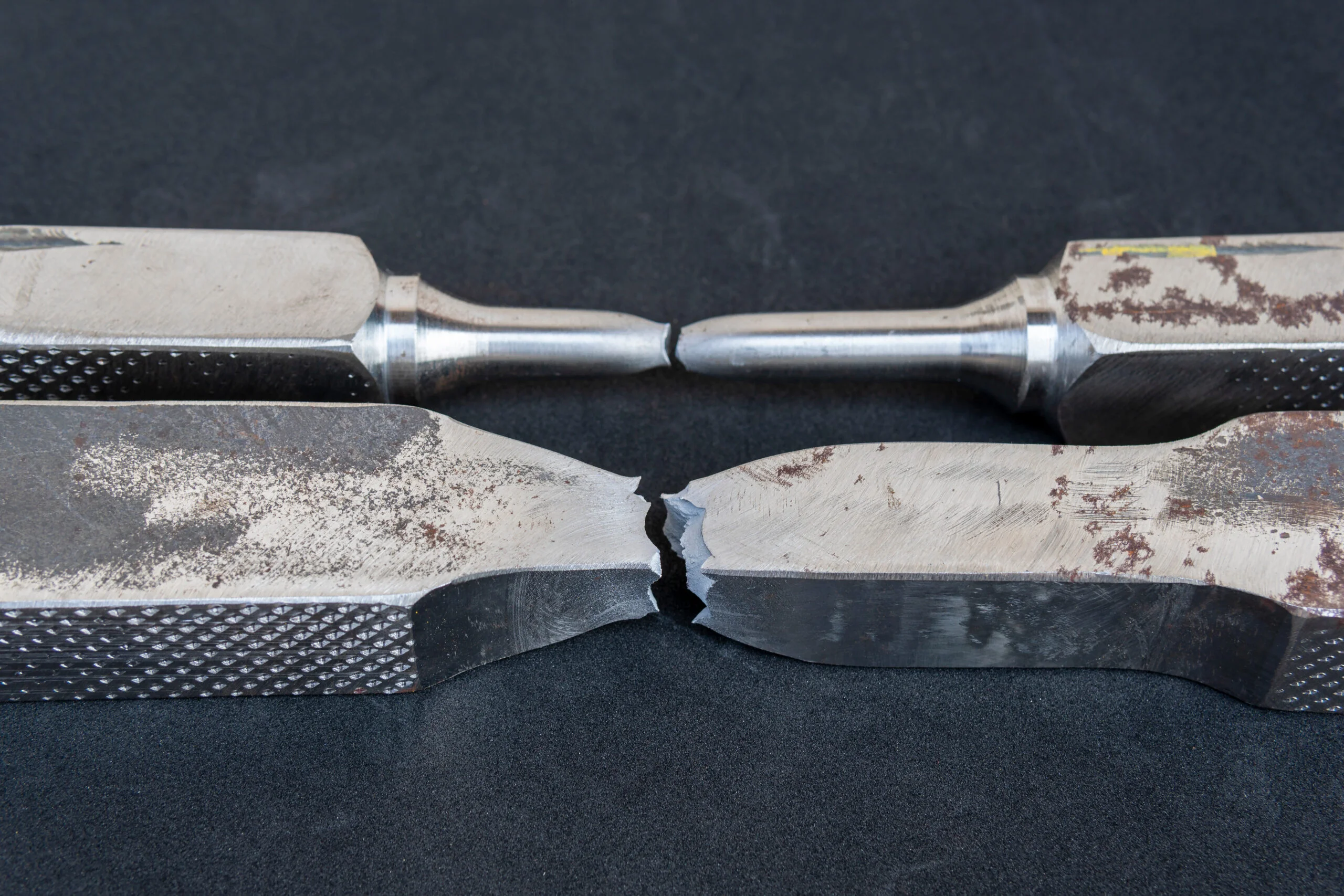
Mechanical properties—primarily from tensile testing—record yield strength (where permanent deformation begins), ultimate tensile strength (the maximum before fracture), and elongation (a measure of ductility and how the material fails). Low elongation means brittle fracture with little warning. Depending on the standard, you may also see hardness (Brinell or Rockwell) and Charpy impact values, the latter being critical for low-temperature or dynamic load applications where a material can pass tensile requirements at room temperature and still fail in the field.
Chemical composition confirms you have the right alloy—not just a material with adequate strength numbers. Carbon content affects weldability and heat treatment response; chromium and molybdenum govern corrosion and oxidation resistance. A part machined to the correct dimensions from the wrong alloy can still fail in service.
Material condition describes the processing applied after casting or rolling: annealed, normalized, quenched and tempered, cold drawn, and so on. Two certificates for the same grade can show meaningfully different mechanical properties depending on condition, so this must match what the customer drawing specifies—not just the alloy designation.
A certificate doing its job shows actual results alongside specification limits for all three. One that leaves fields blank, omits test methods, or mismatches the specified condition is asking you to accept something on faith that should be documented.
The Chain of Custody Problem
Here’s where it gets more complicated. Even a perfectly complete, conforming material certificate is worthless if you can’t prove the material it describes is the material sitting in your machine shop.
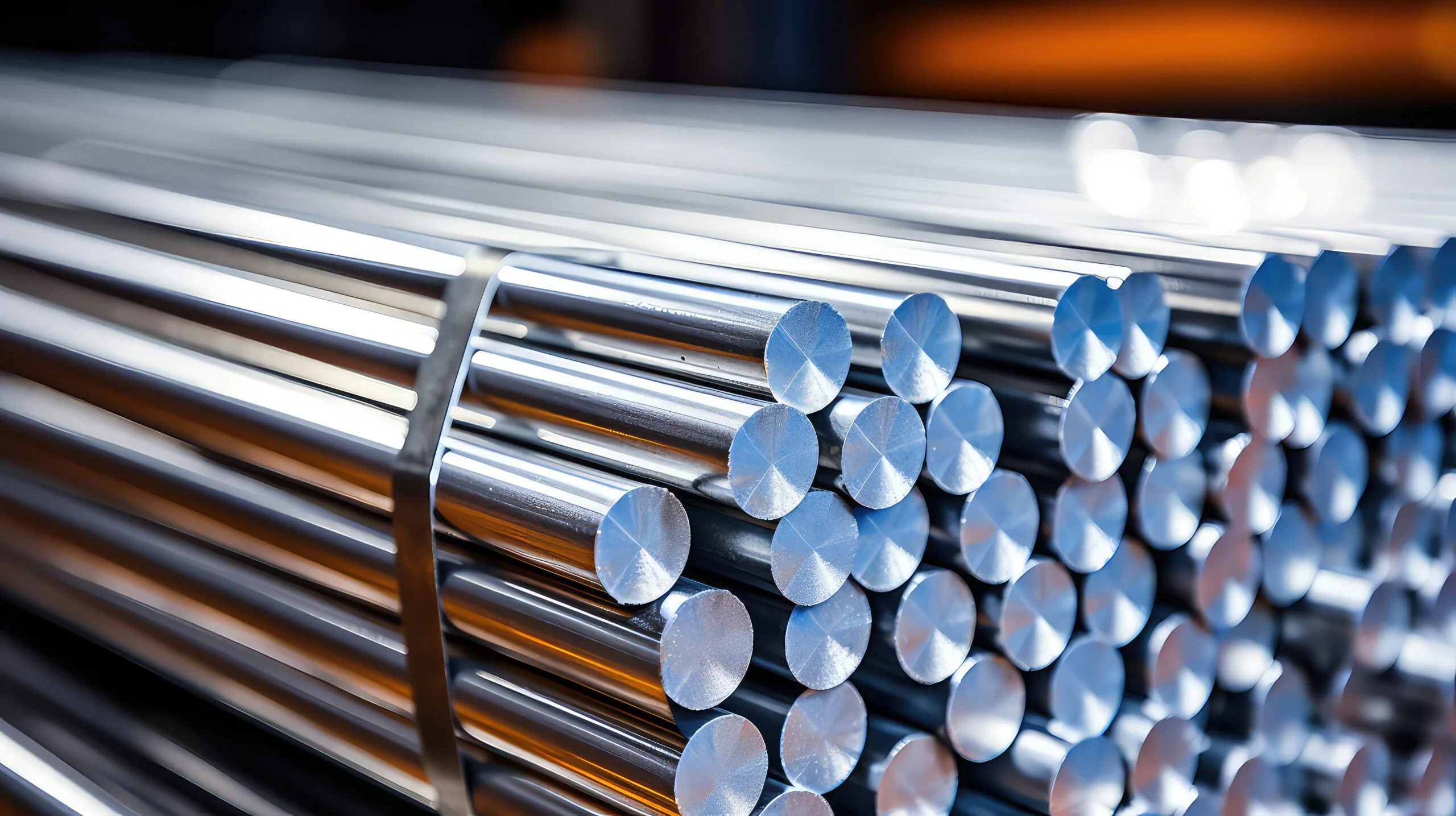
Raw stock moves through several hands between the mill and the machine: distributors, stockists, sometimes multiple intermediaries, before it reaches a manufacturing partner. At each step, the original material identification needs to be maintained. The unique identifier on the certificate—that heat number or lot number—must appear on all accompanying documentation at every link in that chain.
This sounds straightforward, but in practice, it’s one of the most common failure modes in material certification programs. Stock gets co-mingled in a warehouse. Labels fall off. A bar gets cut and the offcut piece gets set aside without any marking. A distributor issues their own documentation without clearly referencing the original mill certificate.
None of these things are necessarily intentional, but the result is the same: you have a certificate and you have material, and you can no longer prove with confidence that they belong to each other.
A robust chain of custody program addresses this directly. It requires that the unique identifier travels with the material through every step—physically marked on the stock itself, recorded on delivery documentation, referenced on any re-issued certificates from intermediary suppliers. Methods for physically marking material need to be durable enough to survive normal handling, cleaning, and storage.
What Can Go Wrong When Traceability Breaks Down
The consequences of poor material traceability vary by industry and application, but they’re rarely trivial.
In industries with safety-critical components—aerospace, automotive, medical devices—an untraceable part is effectively a nonconforming part. It may need to be scrapped entirely, because there’s no way to demonstrate it meets the required specification. That’s an expensive outcome at any stage of production, and a potentially catastrophic one if it’s discovered after delivery.
In addition to safety-critical conformance, the downstream costs of poor traceability add up: retesting material at ISO 17025-certified laboratories, requalifying substitutes, delays to delivery schedules, and the administrative burden of reconstructing documentation after the fact.
The other less obvious risk is this: a material certificate that looks complete but contains errors or omissions. A missing test method reference, a signature from an unauthorized individual, a certificate template with parameters left blank rather than marked N/A—any of these can invalidate a certificate on close review. Catching these issues before cutting metal is far cheaper than catching them at inspection.
Building a Reliable Traceability Program
For engineers and procurement professionals managing supply chains with material certification requirements, a few foundational practices significantly reduce risk.
Qualify your material suppliers, not just your manufacturing partners. The material distributor your manufacturing partner uses is a critical link in the chain. Distributors should be able to demonstrate they maintain material identification from the mill through to delivery, and can provide conforming mill certificates for the materials they supply. Auditing this—looking for objective evidence of process, not just a yes answer to the question—is the only reliable way to know it’s real.
Define what a conforming certificate looks like before you need one. Having a documented checklist of certificate requirements, reviewed against the actual material standard being called out on your drawing, makes verification consistent and repeatable. It also makes it easier to train people across different teams or facilities to apply the same standard.
Know when to test. When a certificate is incomplete, when material provenance is uncertain, or when an alternative material substitution is being considered, third-party laboratory testing through an ISO 17025-accredited lab provides an independent verification of material properties. Test reports from these labs should reference the material’s unique identifier directly, connecting the test result back to the specific batch.
Don’t treat material traceability as a paper exercise. The documentation exists to support a physical claim: this part was made from this material. If the physical material management practices at a facility—how bars are marked on receipt, how cuttings are tagged, how material is stored and retrieved—don’t support that claim, no amount of paperwork will compensate. Process audits should verify that material identification practices are robust enough to maintain traceability through the full manufacturing workflow.
What to Ask Your Manufacturing Partners
When material certification is a requirement on a drawing or purchase order, a few direct questions help establish whether a supplier is genuinely equipped to deliver:
- Do you use approved material distributors who can provide traceable mill certificates?
- How do you verify that the material you receive matches the certificate provided?
- How is material physically marked and identified when it arrives, and when it’s cut?
- What happens if identification is lost or a certificate goes missing?
- Can you retrieve the certificate for any part you’ve shipped, and associate it with that specific job?
Suppliers with mature material management programs will have clear, confident answers to these questions. Vague responses, or answers that rely entirely on trusting the distributor, are worth probing further.
How Fictiv Approaches Material Traceability
Material certification is a specialized capability, and one we take seriously across our manufacturing network.
For orders where material certification is required, Fictiv works with manufacturing partners to source material from suppliers who can support documented chain of custody and provide conforming certificates that meet the requirements outlined in this article. Availability depends on the material and supplier, so this is best discussed before placing an order. Where certificates are incomplete or material provenance needs independent verification, third-party testing through ISO 17025-accredited laboratories can be used to validate material properties against the specified standard.
Contact us for more information on how Fictiv handles quality and supply chain controls, or to discuss specific material certification requirements for your parts.
Log in to start a quote, with material certification available through the platform.
FAQs About Material Traceability
What is a material certificate and why is it important?
A material certificate (also called a mill certificate or certificate of analysis) is a document issued by the material manufacturer that records the tested properties of a specific batch of material. It’s important because it provides documented evidence that the material meets the requirements of the standard called out on your drawing—covering chemical composition, mechanical properties, and material condition.
What is the difference between a heat number and a lot number?
Both are unique identifiers used to trace material back to its origin, but they refer to different scopes. A heat number identifies a specific melt of material at the mill—every piece of steel from that melt shares the same heat number. A lot number is typically used for non-metallic or processed materials and identifies a defined batch. Either way, this identifier is the critical link between the physical material and its certificate, and it must appear on all documentation through the supply chain.
What should I do if a material certificate is incomplete?
An incomplete certificate—one missing test methods, specification limits, an authorized signature, or with fields left blank rather than marked N/A—should not be accepted without resolution. Options include requesting a corrected certificate from the supplier, obtaining the relevant material standard to supplement the missing specification data, or commissioning independent testing at an ISO 17025-accredited laboratory to verify the material properties directly.
What is chain of custody in material traceability?
Chain of custody is the documented record linking the physical material you’re using back to the original mill certificate, through every step of the supply chain. It means the heat number or lot number on the mill certificate must appear on purchase orders, packing notes, and delivery documentation at every transfer point—from mill to stockist to distributor to your manufacturing partner. Without it, you have a certificate and you have material, but no proof they belong to each other.
Which industries require material traceability?
Material traceability is mandatory in aerospace (AS9100), medical devices, automotive, and defense, where safety-critical parts must be fully traceable to their source material. However, any application where material properties are specified on a drawing—not just high-regulated industries—benefits from robust traceability practices. The cost of discovering a material nonconformance after delivery far exceeds the cost of getting the documentation right upfront.