




Time to read: 8 min
How to Restore Production Continuity for Legacy Systems Facing Component Obsolescence
Industrial equipment doesn’t fail on schedule. A damaged bracket, worn housing, obsolete fixture, or discontinued machine component can bring production to a halt—especially when replacement parts are no longer available from the original manufacturer.
For companies operating aging industrial equipment, robotics systems, aerospace hardware, or custom automation platforms, sourcing legacy Maintenance, Repair, and Operations (MRO) parts has become increasingly difficult. OEMs discontinue components, suppliers consolidate, technical documentation disappears, and long lead times create operational bottlenecks that directly impact production schedules and revenue.
In many cases, the challenge extends beyond replacing a broken part. Engineering teams must recreate a manufacturable, validated component that functions reliably within an existing assembly and supports long-term operational continuity.
This is where reverse engineering for MRO parts becomes a core manufacturing capability. By combining dimensional analysis, CAD reconstruction, GD&T validation, manufacturing engineering, and production-ready process selection, companies can recreate obsolete components while improving manufacturability, reducing supplier risk, and extending the lifecycle of critical equipment.
Why Reverse Engineering for MRO Parts Is Critical For Legacy Systems
Many industrial systems remain operational for decades, particularly in robotics, aerospace, industrial automation, semiconductor manufacturing, and energy infrastructure. While the equipment itself may continue performing reliably, the supply chains supporting those systems often evolve much faster.
Manufacturers frequently encounter situations where OEM replacement parts are discontinued, CAD files are unavailable, or original suppliers no longer support legacy programs. In other cases, replacement lead times become operationally unacceptable, or undocumented design revisions create inconsistencies between production runs.
These issues create operational risk, especially for organizations relying on specialized machinery or proprietary hardware platforms. A single unavailable component can delay production schedules, interrupt maintenance workflows, or force engineering teams into reactive redesign efforts under tight timelines.
For many organizations, the cost of downtime quickly outweighs the cost of reverse engineering the component itself. As global supply chains continue shifting and industrial systems age, reverse engineering is increasingly being used not just as a repair tactic, but as part of a broader production continuity strategy.
What Is Reverse Engineering for MRO Parts?
Reverse engineering for MRO parts is the process of capturing technical specifications, dimensions, and material properties in order to recreate a physical component when original engineering data is incomplete, unavailable, or obsolete.
The process typically begins with an existing part sample—sometimes damaged, worn, or modified through years of operational use. Engineers analyze the geometry, functional interfaces, materials, and manufacturing constraints of the component before rebuilding it into a production-ready digital model.
Reverse engineering workflows include:
- Dimensional inspection and metrology
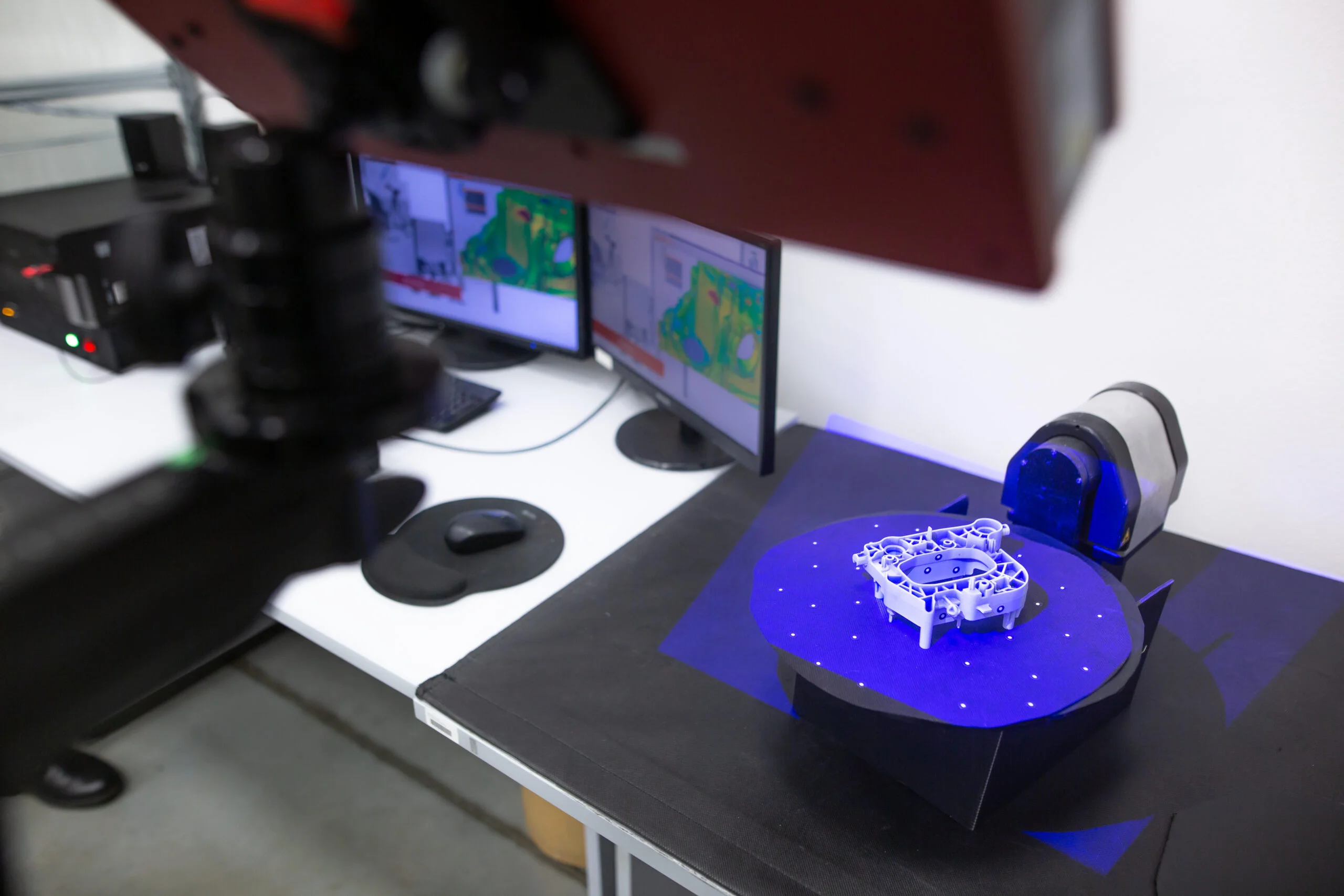
- 3D scanning and surface capture
- CAD reconstruction
- GD&T recreation
- Tolerance validation
- Material identification
- Manufacturing process optimization
- Inspection and quality planning
The objective isn’t simply duplicating geometry. It’s to create a validated, manufacturable component that performs reliably within the broader assembly or production system.
This distinction is critical. A direct copy of a worn or poorly documented part may reproduce the same manufacturing inefficiencies or reliability issues present in the original design. Manufacturing-first reverse engineering approaches instead focus on improving production readiness, manufacturability, and long-term supply continuity.
Capturing Geometry Through Scanning and Metrology
The first stage of reverse engineering typically involves capturing dimensional data.
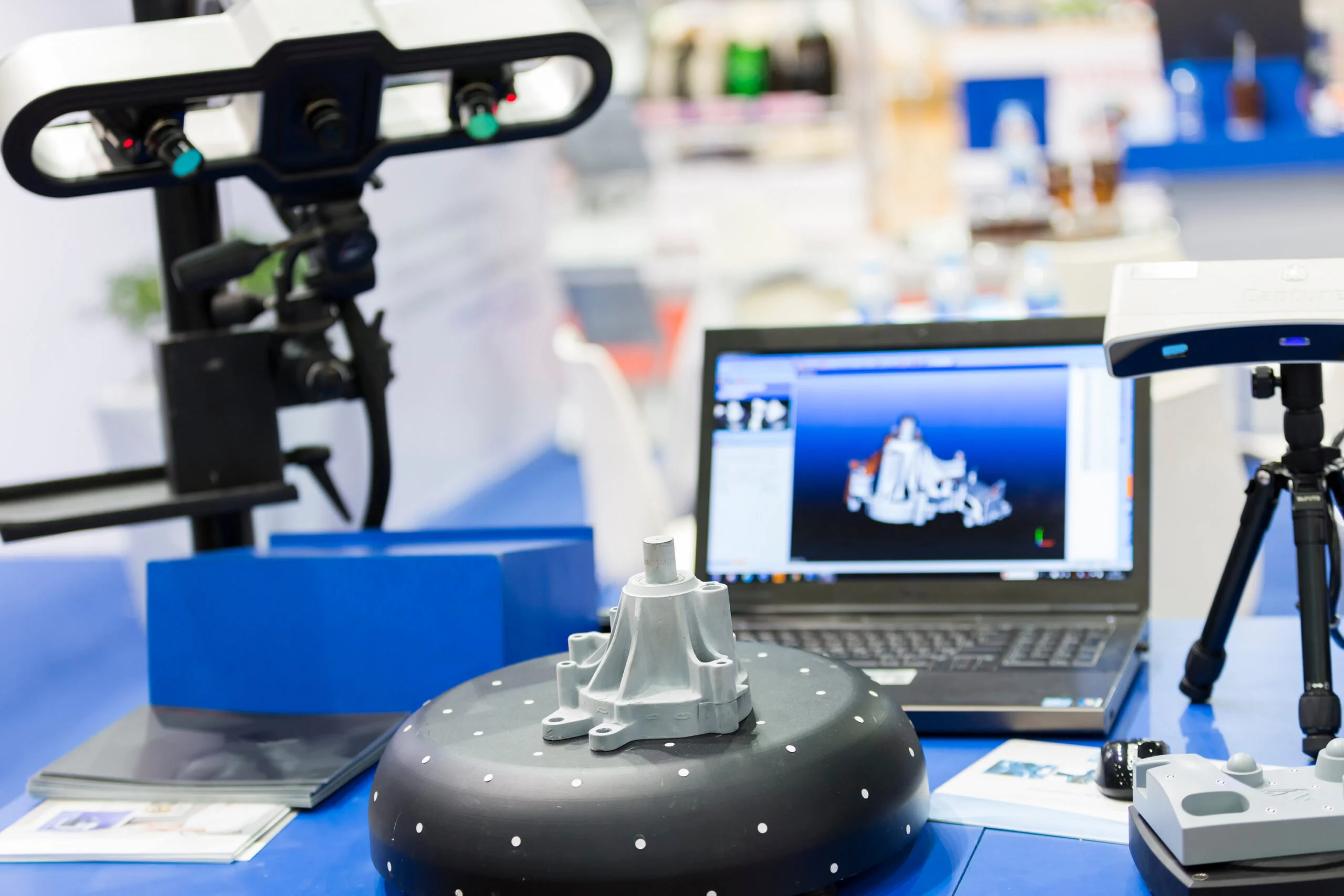
Depending on the component’s size, complexity, and accuracy requirements, engineers may use laser scanning, structured light scanning, coordinate measuring machines (CMMs), or traditional metrology tools to capture its physical geometry. More complex assemblies or internal features may require CT scanning or advanced inspection methods.
3D scanning is especially valuable for components with organic surfaces, cast geometries, undocumented contours, or worn and damaged features. However, raw scan data alone is rarely sufficient for manufacturing.
Engineering teams must still determine which dimensions are functionally critical, which surfaces define assembly interfaces, and which geometric features can be optimized for production. Scan data often contains wear artifacts, manufacturing inconsistencies, or undocumented modifications that must be interpreted before a reliable CAD model can be created.
This is where manufacturing engineering expertise becomes essential. A raw point cloud scan only captures the component in its as-built state—complete with years of operational wear, gouges, or warping. Reverse engineering is a functional engineering process that requires understanding how the part operates within the larger mechanical system.
A true industrial reverse-engineering workflow uses the scan data merely as a baseline. The design engineer must calculate the part’s original as-designed nominal intent. This requires isolating critical mating faces, defining functional datum planes, and reverse-calculating the original tolerances to ensure the new part interfaces perfectly within the existing legacy assembly.
Rebuilding the CAD Model for Manufacturability
Once the dimensional data is captured, engineers reconstruct the part as a parametric CAD model that supports future manufacturing and revision control.
During this stage, teams frequently identify opportunities to improve the original design. Legacy components are often redesigned to better fit modern manufacturing processes, improve assembly efficiency, or reduce long-term production costs.
For example, engineers may:
- Simplify non-critical geometry
- Improve wall thickness consistency
- Reduce unnecessary machining complexity
- Redesign fastening strategies
- Consolidate multi-part assemblies
- Optimize parts for CNC machining or molding
- Standardize hardware interfaces
In many cases, reverse engineering becomes an opportunity to modernize the component, not just reproduce it.
A cast part may be redesigned for CNC machining to reduce lead time variability. A welded assembly may be consolidated into a single machined component. An outdated molded enclosure may be redesigned for modern tooling practices and improved manufacturability.
These improvements can increase production reliability while reducing future supply chain dependence.
The Importance of GD&T and Tolerance Validation
One of the most overlooked aspects of reverse engineering is tolerance definition.
Physical geometry alone does not fully define how a component functions within an assembly. Without proper GD&T analysis and tolerance validation, recreated components may introduce alignment problems, assembly failures, excessive wear, or dimensional stack-up issues.
This is particularly important for robotics systems, aerospace assemblies, automation equipment, precision-machined interfaces, and multi-component mechanical systems.
Engineering teams must determine which dimensions are truly critical to functionality and which tolerances can be optimized for manufacturability and cost efficiency. This often involves recreating datum structures, mating conditions, assembly interfaces, inspection strategies, and functional tolerance requirements.
Tolerance stack-up analysis may also be required when reverse-engineered parts interact with multiple legacy components inside a larger assembly. Without this validation process, even dimensionally accurate parts can fail during production use.
Choosing the Right Manufacturing Process
Reverse engineering also creates opportunities to reassess how a component should be manufactured.
Many older parts were originally designed around manufacturing constraints, supplier capabilities, or cost structures that no longer apply today. Modern manufacturing processes may offer significant advantages in lead time, scalability, repeatability, or cost optimization.
Depending on production requirements, engineers may recommend:
- CNC machining for low-volume structural components
- Sheet metal fabrication for lightweight enclosures
- Injection molding for high-volume plastic parts
- Die casting for high-volume structural geometries
- 3D printing for complex low-volume designs
- Urethane casting for low-volume parts with production quality
Selecting the right process depends on factors such as production volume, tolerance requirements, material performance, surface finish needs, tooling investment, scalability expectations, and regional manufacturing availability.
In emergency MRO situations, rapid CNC machining may provide the fastest path to restoring uptime. For long-term supply continuity programs, transitioning into injection molding, casting, or hybrid production workflows may offer better scalability and cost efficiency.
Reassessing the manufacturing process is also a massive lever for de-risking your supply chain. For instance, a part originally manufactured as a complex casting decades ago might face a 20-week lead time today due to foundry consolidations. Through smart CAD reconstruction for manufacturing, that same part can often be optimized for rapid CNC milling or advanced additive manufacturing. This slashes lead times from months to days, bypassing traditional tooling bottlenecks entirely.
Manufacturing process selection isn’t just an engineering decision—it’s also an operational and supply chain strategy decision.
Modernizing Legacy Components for Long-Term Production Continuity
One of the greatest advantages of reverse engineering is the opportunity to improve operational resilience.
Many legacy parts were never designed for scalable production or modern supply chain flexibility. Reverse engineering allows organizations to redesign components with manufacturability, serviceability, and future sourcing stability in mind.
This may include:
- Reducing part count
- Simplifying assembly
- Improving inspection repeatability
- Eliminating hard-to-source features
- Standardizing hardware
- Reducing supplier dependency
- Optimizing designs for modern manufacturing workflows
Instead of continuously reacting to obsolete components, organizations can build more sustainable long-term manufacturing strategies around validated, production-ready designs.
For companies operating complex industrial systems, this approach can significantly reduce future downtime risk while improving operational predictability.
Quality Validation and Production Readiness
Recreating geometry is only one part of a successful reverse engineering program. Production-ready MRO components also require quality validation and inspection planning to ensure long-term reliability.
Depending on the application, this may include:
- First article inspection (FAI)
- Material verification
- Dimensional validation
- Functional testing
- Critical dimension inspection
- Pilot production validation
- Controlled documentation packages
For regulated industries such as aerospace, defense, and medical manufacturing, additional traceability and documentation requirements may also apply.
Integrating engineering support directly with manufacturing execution helps ensure recreated components are not only dimensionally accurate but also repeatable, scalable, and production-ready.

Reverse Engineering as a Manufacturing Strategy
As industrial equipment ages and supply chains become more fragmented, reverse engineering is evolving from a reactive maintenance tool into a broader manufacturing continuity strategy.
Unplanned factory downtime can cost industrial operations thousands of dollars per minute. When a critical component—like a damaged housing, obsolete manifold, or specialized robotic bracket—fails, and the Original Equipment Manufacturer (OEM) has discontinued support, production continuity breaks down.
Organizations that proactively recreate and modernize critical MRO components can reduce downtime risk, improve supplier flexibility, and extend the lifecycle of production equipment without relying on increasingly unstable legacy supply chains.
Instead of waiting for failures to disrupt operations, manufacturers can use reverse engineering to strengthen production resilience and build more scalable long-term manufacturing workflows. For companies managing aging or specialized hardware systems, that shift can create meaningful operational and competitive advantages.
Fictiv provides engineering support and expert manufacturing guidance throughout your entire product lifecycle.
Contact us to learn more about our engineering services.
Start a quote to get your project started.
Talk to a Fictiv expert about your project, or upload your parts to start a free quote.