








Content type

Role

Topic

Industry

Manufacturing Processes

Latest

Article

Custom vs. Standard Mechanical Components: How to Source a BOM From One Manufacturing Partner

If you’ve ever managed a mechanical bill of materials (BOM), you know it can get complicated fast—especially when balancing custom vs. standard parts. Tracking parts is only a fraction of the challenge; BOM complexity also impacts both engineering and procurement. Each additional supplier, custom component, or interface increases risk, slows iteration, and complicates assembly. Early […]

Article

Progressive Sheet Metal Stamping: When to Use It for Complex, High-Volume Parts

In high-volume manufacturing, repeatability determines success. Scaling projects from prototypes to hundreds of thousands of units requires a shift in production logic from manual, part-by-part fabrication to an automated, continuous flow. Progressive stamping is an ideal solution for this transition to higher volumes. Integrating punching, coining, bending, and shearing into a single tool set eliminates […]

Article

The 2026 State of Manufacturing & Supply Chain: AI, Regional Resilience, and the Capacity Crunch 

Manufacturing is undergoing one of its most significant transformations in decades. Today, Fictiv released its 11th annual 2026 State of Manufacturing & Supply Chain Report, capturing insights from industry leaders across MedTech, Climate Tech, EV, and Robotics. The findings point to an industry moving decisively toward AI-enabled systems, regionally resilient production strategies, and more integrated […]

Article

Product Assembly Guide: DFA and Joining Methods

When designing a product, much of the early focus naturally goes into the individual parts—what materials to use, how they’ll be manufactured, and whether each component can be made reliably. That work is critical, but it’s only part of the picture. What’s often overlooked is how those parts come together into a complete, buildable unit. […]

Article

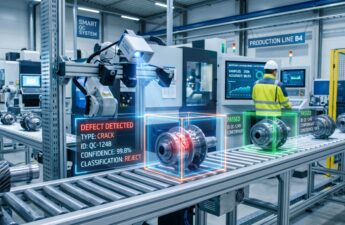
Quality Control in Manufacturing: Processes, Standards, and Best Practices for Reliable Production

In manufacturing, quality isn’t a subjective ideal or a marketing claim—it’s a measurable requirement with real consequences. Undetected defects can trigger recalls, regulatory action, production delays, or long-term brand damage. As products become more complex and supply chains more distributed, preventing those failures has become increasingly difficult. Quality control in manufacturing refers to the set […]

Article

Design for Excellence (DFX) in Product Development: How DFM, DFA, and More Improve Manufacturing Efficiency

When designing a product, consider all factors that will contribute to its success throughout the development process. For most companies, this involves making the best quality product at the lowest possible cost. Design for Excellence (DFX) is a modern product development approach and an umbrella term encompassing several design strategies focused on optimizing design and […]

Article

AI in Digital Manufacturing: How Artificial Intelligence Improves Production Efficiency and Quality

In manufacturing, artificial intelligence is a catalyst tool that enables workers to accomplish higher-value tasks with greater accuracy, fewer errors, and fewer accidents. Instead of a dystopian nightmare, AI and digital manufacturing can be a huge advantage to a factory’s workforce. Even though artificial intelligence sometimes gets a bad rap for being overhyped, it is […]

Article

Sheet Metal Welding Design Guide

A crucial part of sheet metal fabrication is planning how the assembly will be welded into a complete unit, known as a weldment. An optimized design makes the weldment process more efficient and cost-effective, while also improving structural strength, reducing the risk of rework, and preventing issues like weak welds or cracking. This guide will […]

Article

Chinese New Year 2026: How the Holiday Impacts Manufacturing Capacity

In 2026, the Chinese New Year, also known as the Lunar New Year, is February 16–20, 2026. Here’s what you need to know. Key Takeaways Why the Chinese New Year Disrupts Manufacturing Production The official Chinese holiday runs this year from February 16-20, 2026. During this time, people leave the industrial cities of coastal China […]

Article

US Machine Shops: How Tariffs and Recent Supply and Demand Trends Shape the Market

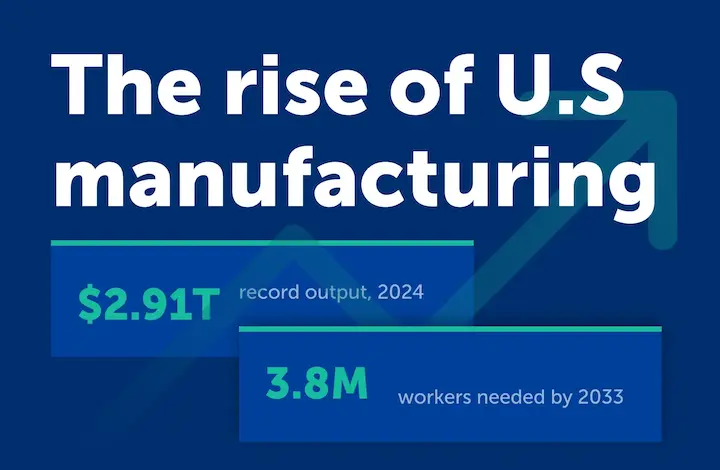
For U.S. machine shops, the last few years have been anything but steady, marked by an unpredictable mix of tailwinds and headwinds. Reshoring and record factory construction have boosted demand, while tariffs and cost inflation continue to tighten margins and blur forecasts. Here’s a clear-cut view of what’s gaining traction, what’s slowing, and how to […]