


Time to read: 7 min
There’s a gap between the end of a prototyping phase and the beginning of mass production when lower volumes of product need to be manufactured. Steel injection molds and die casting tools, for example, can take weeks to complete. In the gap, product launches and regulatory submissions move inexorably forward, while pilot customers await the product and demand forecasts take shape.
Prototype manufacturing methods often can’t bridge this gap or fully meet product requirements. A 3D-printed prototype cannot replicate the cosmetic finish, durability, or regulatory compliance requirements of a production-intent part. Bridge production manufacturing is the strategy that links across that divide.
What Is Bridge Production?
Bridge production is a manufacturing strategy that produces functional, production-quality parts in the transition from prototype completion to mass production. Typically, this occurs before production tooling becomes available. It uses lower-cost, faster-to-deploy manufacturing methods, such as machining or quick tooling, to supply parts for pre-production builds and for post-design, pre-mass-production demand.
Mass production tools/dies require a large investment. Tool fabrication, trials, revisions, and qualification require many weeks or even months. Bridge production provides production-quality parts during that hiatus. It serves:
- Product teams transitioning from prototype to production
- Companies experiencing early demand growth
- Teams waiting for overseas tooling to be completed
- Manufacturers navigating tooling modifications or repairs
- Organizations preparing FDA, CE, UL, or other regulatory submissions
Unlike ongoing manufacturing strategies, bridge production is temporary by design. Most programs last days, weeks, perhaps months before qualified production commences.
Bridge Production vs. Prototyping
Prototypes exist to validate a design. They serve in DFM evaluation, fit and functional testing, and design refinement. Bridge production parts, on the other hand, exist to support non-development business activities. These go to customers and regulators, get used in pilot deployments, or serve as launch inventory.
As a result, bridge production parts generally need to meet:
- Production material requirements
- Production tolerances
- Cosmetic specifications
- Functional performance requirements
- Quality documentation standards
Whereas bridge production parts go out into the wild, prototypes are typically for internal use.
Bridge Production vs. Low-Volume Manufacturing
Low-volume manufacturing is a permanent strategy for products whose demand never justifies hard tooling—specialty equipment, medical devices with constrained markets, or industrial components with limited but stable demand. For these products, low-volume manufacturing isn’t a transitional measure; it’s the intended long-term approach.
Bridge production, by contrast, is intended to be temporary. It exists specifically to supply parts during the gap between prototype completion and qualified production tooling. Every bridge program has a defined exit—T1 tool approval, a launch date, or a volume threshold. When that point arrives, bridge production ends.
The same methods often serve both strategies. The deciding factor isn’t the process—it’s the intent. If the program has a hard exit tied to tooling qualification, it’s bridge production. If low-volume output is the long-term plan, it’s low-volume manufacturing.
When Does Bridge Production Apply?
Bridge production programs are a response to several common triggers.
- Production tooling is in progress, but parts are needed immediately: A production die-set may be weeks from qualification, but product launch activities require parts today.
- Demand shows up before the tooling can meet it.: A successful customer pilot, trade show launch, or early purchase order may create immediate volume requirements before production is available.
- Tooling is being qualified or reworked: T1 and T2 sampling reveal dimensional/cosmetic issues or processing challenges that require tool iterations.
- Production volume does not yet justify full tooling investment: Products with annual volumes of hundreds to a few thousand units exist in an economic gray area; bridge production can offer a better business case than full production tooling.
- Production-intent parts are required for regulatory submission: Regulatory pathways require parts manufactured from production materials and processes, often months before real production.
Choosing the Right Bridge Production Method
The best bridge production method depends on several project requirements, as shown below.
| Factor | CNC Machining | Sheet Metal Fabrication | Soft Tooling Injection Molding | Urethane Casting |
| Best for | Precision metal and plastic parts | Enclosures, brackets, structural components | Production-grade plastic parts | Cosmetic parts at low volumes |
| Lead time to first part | Fastest — no tooling required | Moderate — minimal tooling required | Slowest — tooling lead time dominates | Moderate — silicone mold from master pattern |
| Tooling lead time | None | None (laser/brake); short (punch dies) | Moderate (aluminum or soft steel tool) | Short (silicone mold from master pattern) |
| Tooling cost | None | None to low | Moderate — 20–40% of a production tool | Low |
| Typical volume range | 1–500+ units | 1–2,000+ units | Up to ~10,000 units | 1–300 units |
| Typical tolerance | Tightest — well-suited to precision fits and critical features | Moderate — formed features looser than machined | Moderate — material and geometry dependent | Loosest — degrades with part size and mold age |
| Best material | Metals and plastics | Steel, aluminum, stainless steel | Production-grade plastics | Polyurethane resins |
Lead times and tolerances vary by part complexity, geometry, material, and order specifications.
Need more support selecting the right bridge production method for your project? Contact our team of experts.
Four Primary Methods for Bridge Production
Several manufacturing methods can support bridge production, but the four approaches below are most commonly used.
CNC Machining
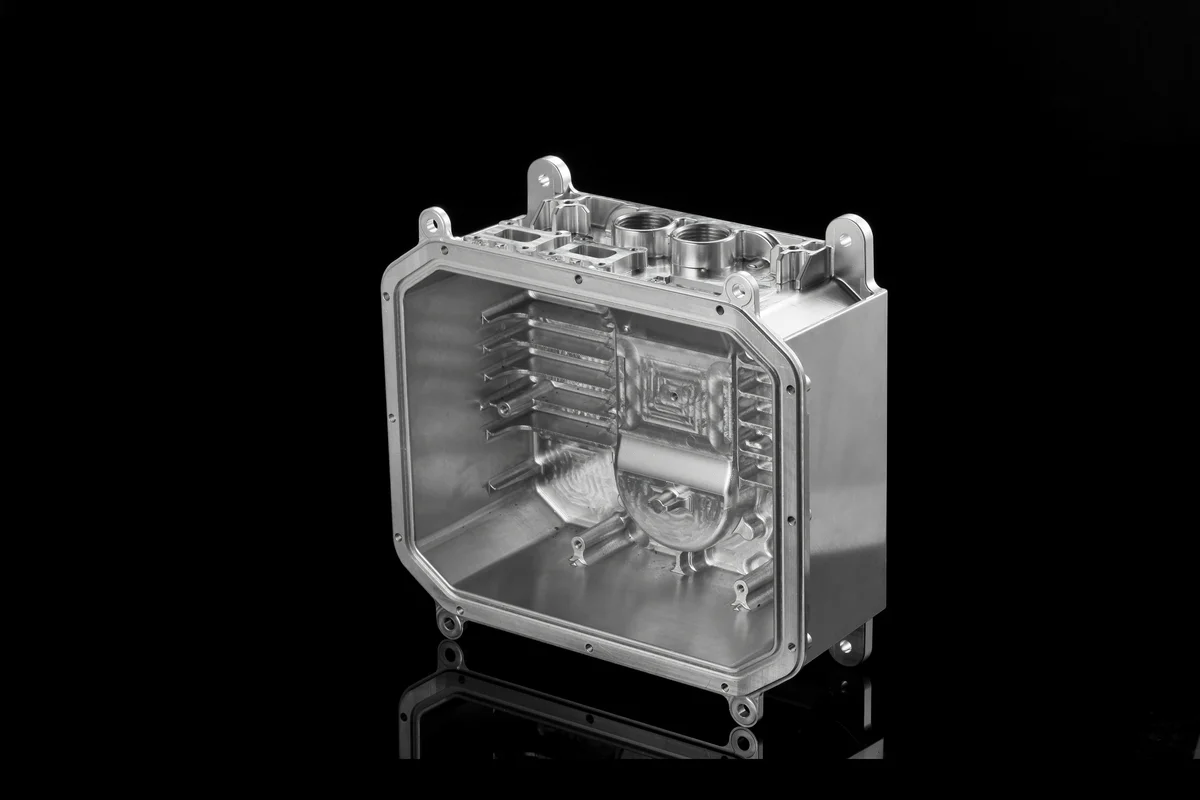
CNC machining is typically the fastest bridge production solution available. Because no tooling is required, production can begin immediately after design approval. CNC machining also provides access to the broadest range of close-to-production spec materials.
CNC machining works particularly well for metal components, low-volume rigid-plastic parts, tight-tolerance applications, functional testing hardware, and regulatory builds requiring certified materials. Common materials include 6061-T6 aluminum, 7075 aluminum, stainless steel, and titanium.
Advantages include:
- No tooling investment
- Fast delivery schedules
- Best fit for parts requiring very tight tolerances
- Design flexibility
However, per-unit cost remains high and relatively constant as volume increases. Some complex geometries intended for injection molding can be difficult to machine economically.
Sheet Metal Fabrication
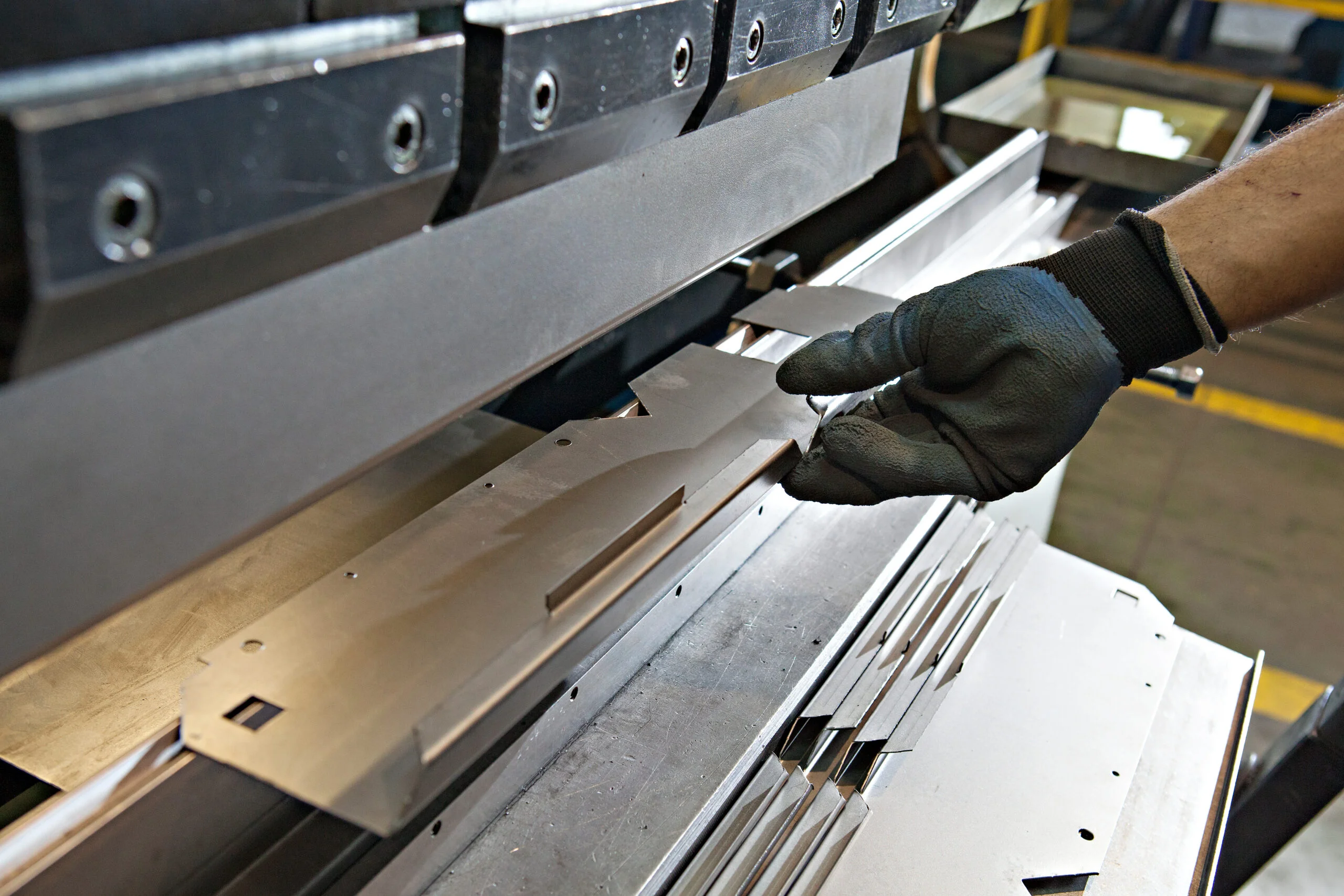
Sheet metal fabrication is a strong bridge production option for enclosures, brackets, chassis, panels, and structural components—parts that injection molding doesn’t address and CNC machining handles expensively at volume. Because tooling requirements are minimal (laser cutting and press brake forming require none), production can begin quickly after design approval. Where custom punching dies are needed, they are inexpensive and fast to produce compared to injection mold tooling.
Sheet metal is particularly effective for enclosures and housings, mounting hardware, structural frames, and EMI shielding components. Common materials include 5052 and 6061 aluminum, cold-rolled steel, stainless steel, and galvanized steel.
Advantages include:
- Minimal tooling investment
- Wide range of production-representative finishes (anodize, powder coat, plating)
- Direct scalability—the same process runs from bridge quantities into production volumes
- Well-suited to parts with hardware insertion requirements (PEM nuts, standoffs, hinges)
Key DFM considerations include consistent bend radius, appropriate k-factor allowances, and minimum flange lengths. Parts designed for CNC machining may require geometric modifications before sheet metal is viable.
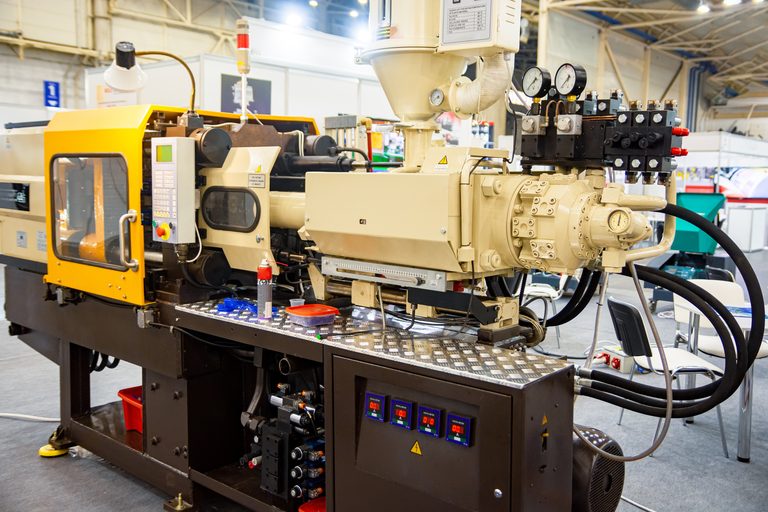
Soft Tooling Injection Molding
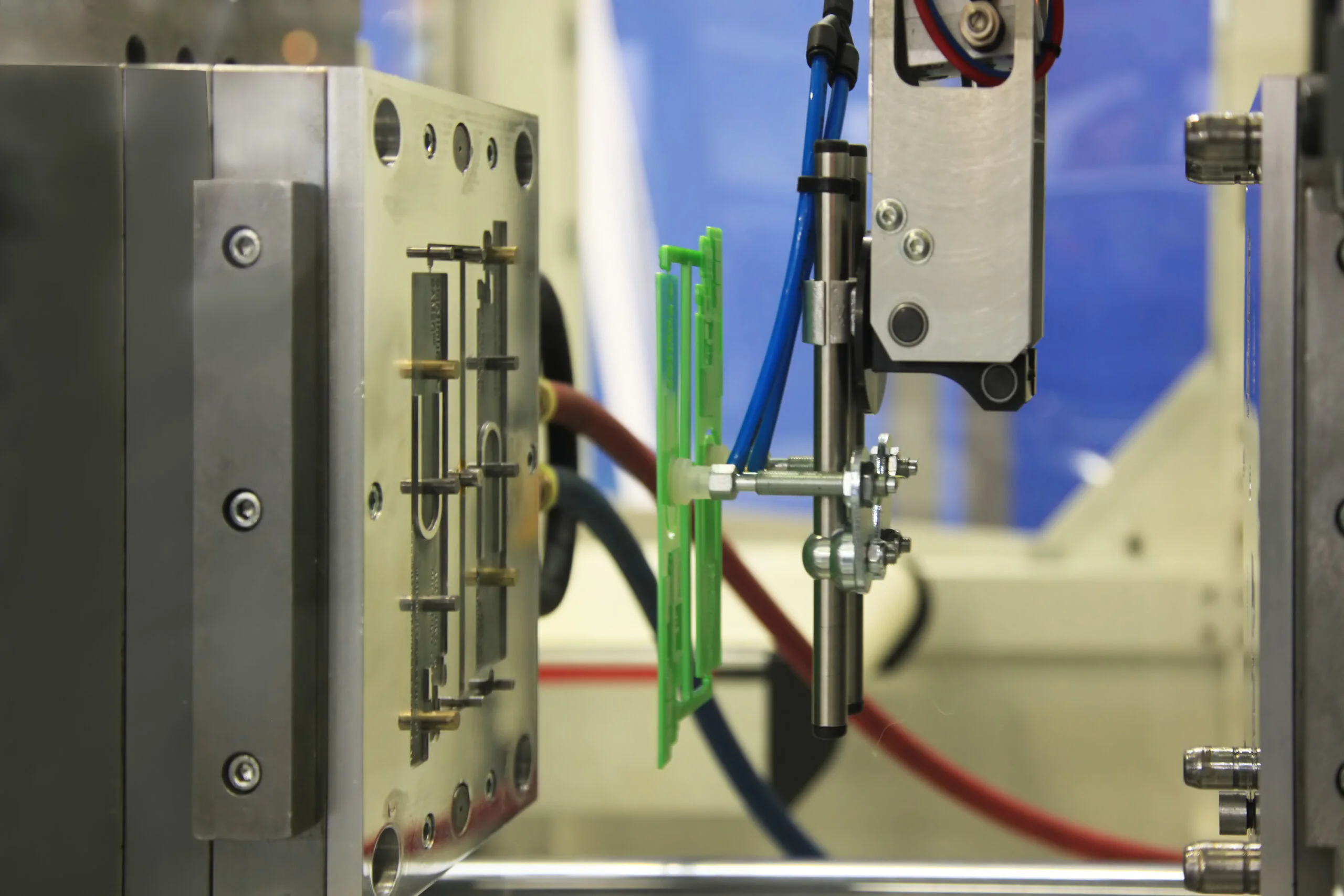
Soft tooling (also known as prototype, quick, or bridge tooling) uses aluminum or unhardened steel and produces parts using production-grade thermoplastics on conventional injection molding equipment, providing a close representation of the final product.
Soft tooling is particularly effective for plastic parts between 100 and 1000 units, regulatory submissions, customer pilot programs, production-intent launch inventory, and complex molded geometries. Features such as living hinges, snap fits, thin walls, and cosmetic textures are more feasible to replicate through this molding approach than machining.
Advantages include:
- Production-grade materials
- Production-representative process
- Lower per-unit costs at higher volumes
- Excellent cosmetic quality
Soft tooling requires investment and lead time, and its finite tool life makes it unsuitable for long-term production.
Urethane Casting
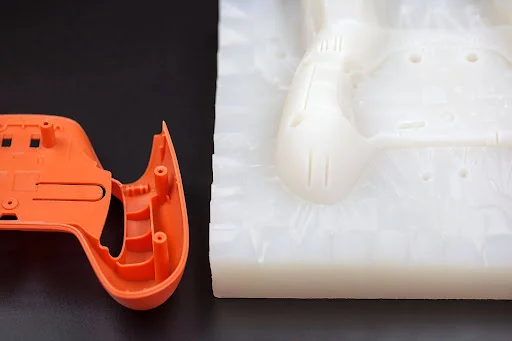
Urethane casting occupies a unique position between prototyping and injection molding. The process uses silicone molds produced from a master pattern, generated through CNC machining or 3D printing. Polyurethane materials can closely mimic many production plastics while delivering excellent cosmetic quality.
Urethane casting is often selected for sales samples, trade show products, investor demonstrations, consumer electronics, and low-volume cosmetic parts.
Material properties, however, are approximations, not exact matches. The process is unsuitable for highly loaded structural components or regulatory submissions needing real-production equivalence.
How to Plan a Successful Bridge Production Program
Bridge production succeeds when treated as a systematic, programmed manufacturing process, rather than as an emergency.
Define Exit Criteria Before Starting
One of the most common mistakes is failing to define when bridge production ends. Exit criteria might include:
- Production tooling qualification
- T1 or T2 approval
- Preset volume threshold
- Fixed launch date
Without a defined exit, bridge production frequently persists longer than intended.
Design for the Bridge Process
A design optimized for injection molding may not be optimized for CNC or urethane casting. Similarly, a part intended for hardened steel tooling may require modifications for soft tooling. Run DFM reviews against both the bridge process and the eventual production process.
Align Material and Regulatory Requirements Early
Before selecting a process, confirm:
- Material requirements
- Regulatory expectations
- Volume requirements
- Qualification requirements
- Documentation requirements
Evaluate Total Program Cost
Bridge production necessarily costs more per unit than volume production. However, that is not a useful comparison. The better view is:
Bridge production cost vs. the cost of delay.
Lost revenue, delayed market entry, missed customer commitments, and postponed regulatory approvals cost far more than bridge manufacturing.
Build Quality Into the Program
Bridge production parts should be inspected as per the production parts. Consider specifying:
- First Article Inspection (FAI)
- Material certifications
- Dimensional reports
- PPAP documentation
Quality requirements should be established before purchase orders are issued.
Common Bridge Production Mistakes
Most errors arise from judgment rather than operational issues:
- Treating Bridge Production Like Prototyping: Bridge parts frequently reach customers or regulators. They deserve production-level quality control.
- Starting Too Late: Even the fastest bridge methods require lead time. Avoid schedule pressure, where possible.
- Ignoring Process-Specific DFM: Different bridge methods impose design constraints. Assuming the production design automatically fits the bridge process is a mistake—design (from the beginning) to avoid delays.
- Operating Without an Exit Plan: Bridge production should be temporary. Programs without defined exit criteria often become unexpectedly expensive, long-term solutions.
How Fictiv Supports Bridge Production
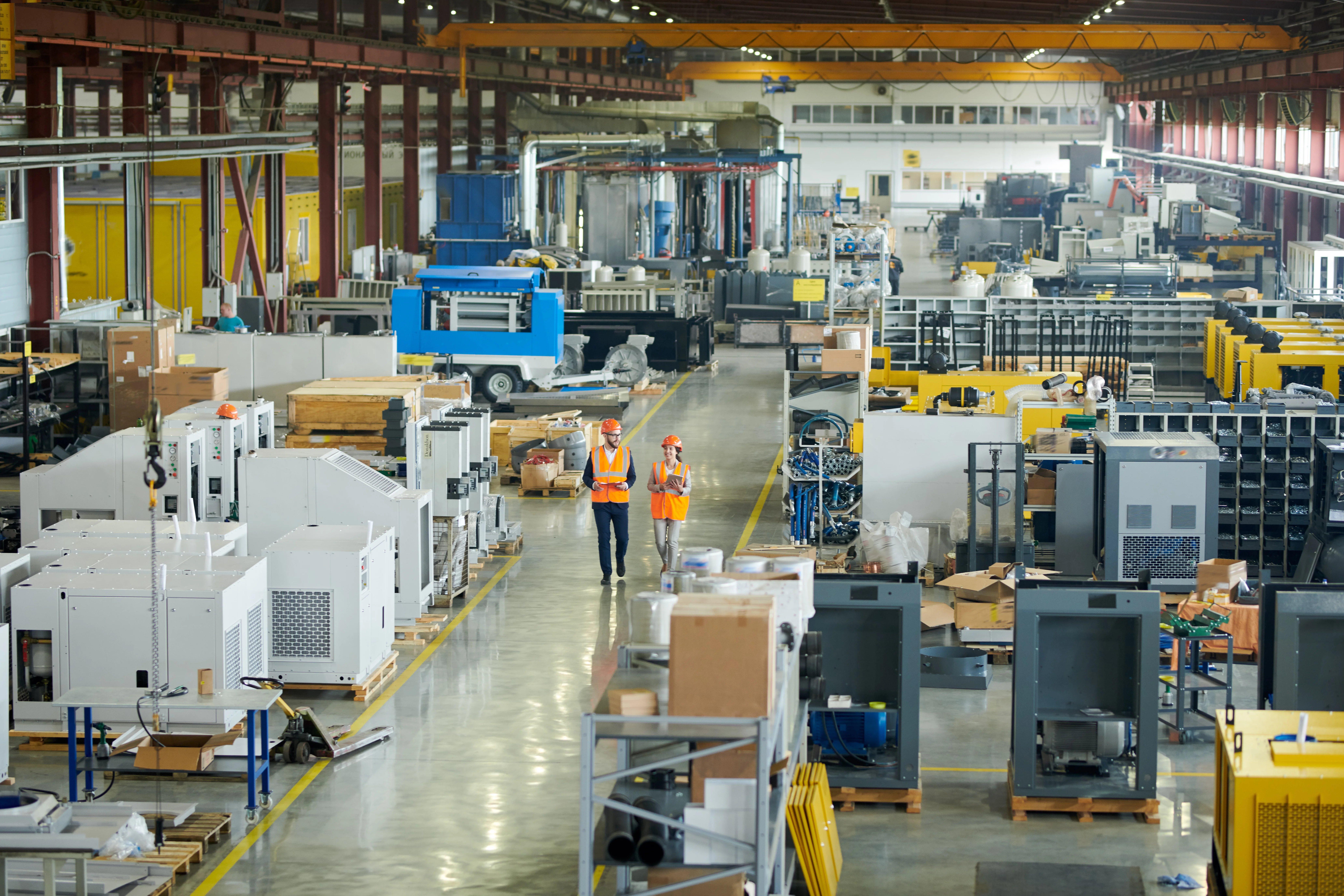
Bridge production succeeds when teams move quickly between manufacturing methods without disrupting schedules, supplier relationships, or quality requirements. Fictiv supports multiple bridge production approaches through a unified sourcing platform, allowing engineering and procurement teams to evaluate multiple manufacturing processes within the same workflow.
Automated DFM feedback further supports successful bridge production by evaluating both the selected bridge manufacturing process and the intended production process, helping teams identify manufacturability issues early. Quality documentation is available, including First Article Inspection (FAI) reports, material certifications, and dimensional inspection reports.
Fictiv also provides engineering support for teams navigating the transition from bridge production to full-scale manufacturing. This includes DFM review, tooling strategy guidance, process selection assistance, and supplier coordination to help ensure a smoother path toward production launch.
Need parts before your production tooling is ready?
Get an instant quote for bridge production across CNC machining, sheet metal, soft tool injection molding, and urethane casting.