



Time to read: 12 min
You’re looking at a CAD file for a robotic joint link or actuator housing and need to make a sourcing decision. Maybe it’s a new design for a humanoid arm. Maybe it’s a replacement component for an automated line that can’t afford downtime. Maybe you’re a machine builder spec’ing structural parts for a custom automation system, and you need verified material properties, not just a close-enough fit.
Regardless of context, the process decision comes down to two questions: which method—CNC machining, sheet metal fabrication, or injection molding—and where each part lands on the BOM.
This guide covers metal manufacturing for robotic arm structural components—actuator housings, joint link bodies, and mounting frames—as well as end-effector design, where plastic and metal coexist in a single assembly. For a broader view of how these processes fit into a full robotic system alongside off-the-shelf components, see our overview of manufacturing for robotic systems.
Why This Decision Is More Consequential Now Than 3 Years Ago
Reshoring isn’t just a buzzword. For robotics hardware teams rushing to market, reshoring shifts risk. Lead time is now the number one constraint cited by hardware teams in the first two prototype cycles—not unit cost or tooling spend. 98% of leaders are actively mitigating tariff impacts. Offshore suppliers that may offer attractive unit economics might also add six to eighteen weeks of drag when design changes are needed, which in robotics development is nearly always the case.
Domestic machine shops can now turn CNC parts in one to ten business days, sheet metal assemblies in two to fifteen days, and first-article injection-molded parts in ten days to twelve weeks. That last number sounds long until you compare it to twelve-plus weeks for offshore tooling with a time-zone gap on every DFM question.
For MRO teams and machine builders, the stakes are high. A failed actuator housing or joint link on a production line doesn’t wait for an offshore lead time. Domestic sourcing compresses that gap from weeks to days—and the cost of downtime typically makes the unit price difference irrelevant.
For robotics teams in earlier stages of development, domestic sourcing for faster lead times is often the default choice. The process you select determines how much of that lead-time advantage you can actually capture.
Why the Component Matters Before the Process Does
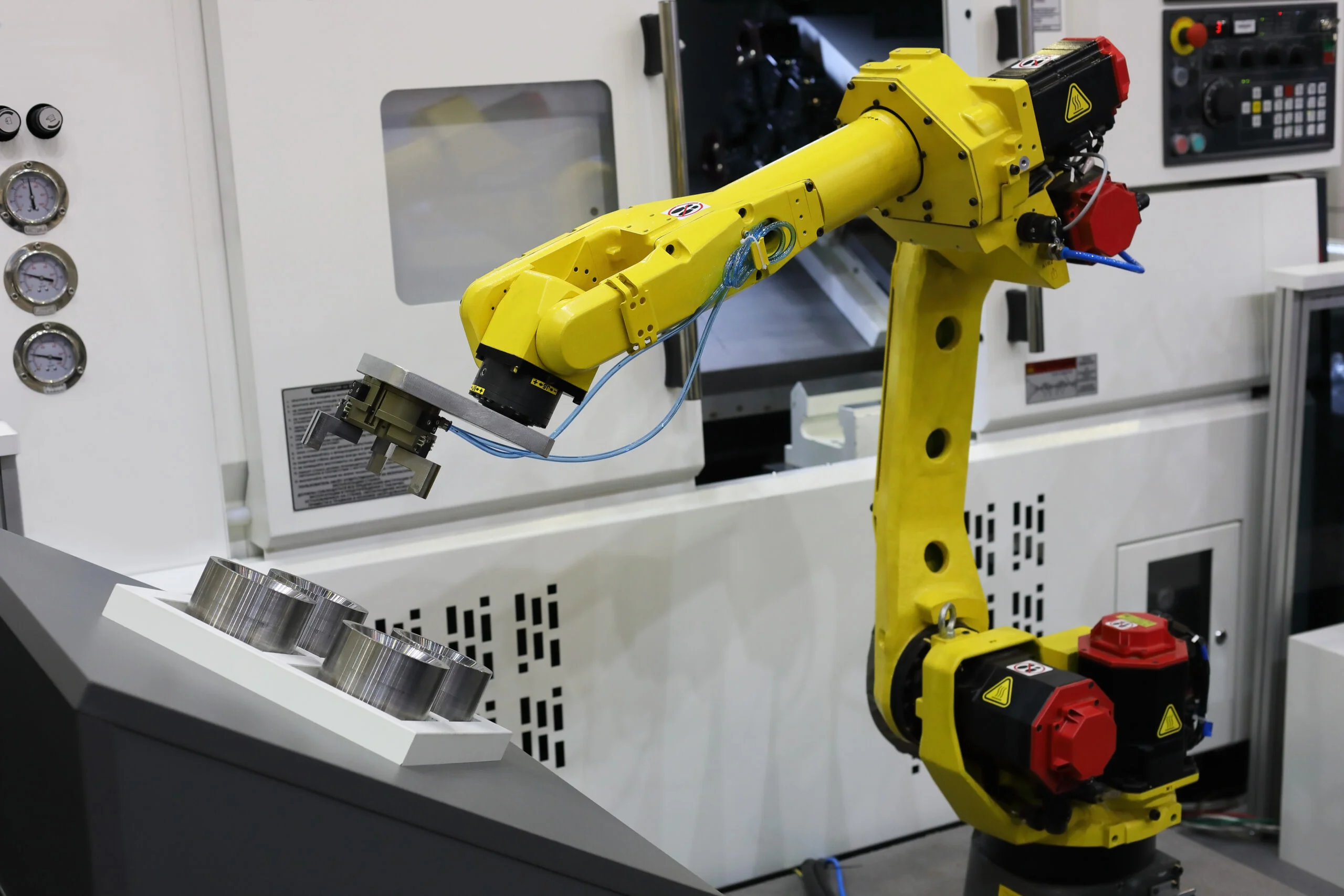
A robotic arm should not be treated as a single component, but rather as a segmented bill of materials. A typical robotic arm or cobot assembly contains at least three structurally distinct categories of components, each with different process requirements.
Structural link bodies and actuator housings carry load, enclose drivetrain components, and must maintain dimensional stability under thermal and dynamic cycling. These are typically metal, and material traceability matters. Small geometric errors here accumulate across the kinematic chain, showing up as end-of-arm positioning error and joint wear.
Secondary structural components—mounting brackets, cable trays, cover panels—provide support and protection without carrying primary loads. These are sheet metal candidates, where forming geometry delivers stiffness at a fraction of the cost of machined mass.
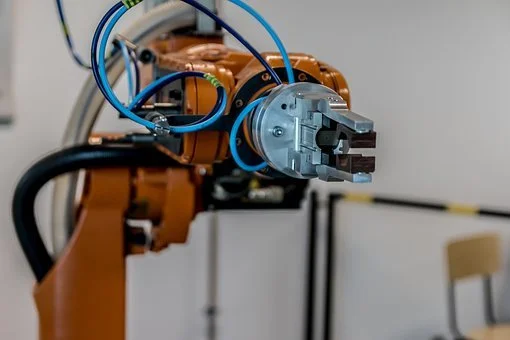
End effector components—gripper jaw bodies, finger pads, mounting flanges, soft-contact surfaces—combine metal and plastic in the same assembly. The process decision here is driven by contact geometry, required compliance, and production volume, and it almost always results in a hybrid solution.
Getting this segmentation right before selecting a process is the difference between a manufacturable BOM and a pile of design review comments.
The Five-Question Decision Framework for Component Selection
Before matching process to component, answer these five questions. By question five, most actuator housing and joint link designs resolve to a clear primary process.
Question 1—Volume: 1–50 units (prototype or pilot), 50–5,000 units (small-series production), or 5,000-plus (high-volume production)?
Question 2—Tolerance: Tight (±0.001–0.005 inch) at bearing seats, servo interfaces, or encoder mounts—moderate (±0.005–0.020 inch) for general structural fit—or loose for non-mating geometry?
Question 3—Geometry: Complex 3D solid with internal channels, undercuts, or precision bores—formed sheet geometry with cutouts and bent flanges—or thin-wall enclosure with integrated features?
Question 4—Application context: New design in active development, production-stable component at volume, or a replacement part where dimensional compatibility is the primary constraint?
Question 5—Lead time: Under two weeks, two to eight weeks, or eight-plus weeks (optimizing for unit cost at scale)?
Tight tolerance + complex 3D geometry + low-to-mid volume + active development or MRO replacement → CNC machining.
Moderate tolerance + formed sheet geometry + mid-volume → Sheet metal fabrication.
High volume + stable design + thin-wall metal enclosure → Die casting or permanent mold casting.
Thin-wall plastic enclosure or contact surface + production volume → Injection molding.
Injection molding is typically used more on the end effector than the structural arm, although filled materials can be used to increase rigidity.
This is a simplified version of the correct process selection for these components, and the decision depends heavily on the specific design, material, volume, and cost threshold. Read on to learn more, or contact a manufacturing expert to discuss your project.
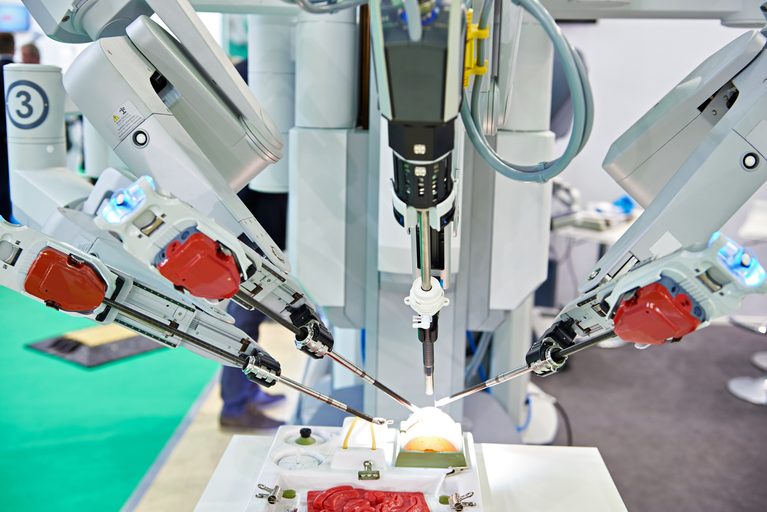
Robot demo at Automate trade show
CNC Machining: Precision, Flexibility, and the Default for Most Robotic Programs
CNC machining is the right answer for actuator housings and joint links whenever precision, material integrity, and design flexibility matter more than cost per part. That describes most of the structural BOM from early prototype through pilot production for most robotics programs.
The core advantage of machining is the absence of hard tooling. A design revision is a CAD/CAM file update, not a $20,000 mold modification. For teams running two to four hardware spins before design freeze, this eliminates the cost penalty that kills iteration velocity. This is the primary metal process offering this, and no other sourcing model delivers it as fast as a domestic partner that can turn DFM feedback the same week a file lands.
Domestic CNC shops running 3- and 5-axis machining centers hold ±0.001 inch on aluminum alloys—6061-T6 and 7075-T6 being the most common for robotic link bodies—and tighter still on steel and titanium for high-load applications.
For MRO teams, CNC is the natural process for replacement and legacy-compatible components. When a joint link fails on an automated line and the original design file no longer exists, CNC from a reverse-engineered CAD model or 2D drawing produces a dimensionally accurate drop-in replacement—often in one to ten business days domestically, versus weeks or months from an offshore source.
Above roughly 2,000 to 5,000 units, CNC cost per part becomes difficult to justify. For components that are primarily flat or bent—like brackets, panels, cable management—sheet metal matches structural performance at substantially lower cost and faster turnaround.
Domestic lead time: 1–10 business days. Same-week DFM feedback on file submission.
Sheet Metal Fabrication: The Structural Workhorse for Secondary Components
Sheet metal fab is often underutilized by robotics engineering teams that default to CNC for every structural component. For mounting brackets, actuator cover panels, cable trays, and secondary enclosures—parts that support the primary structure without carrying primary loads—it delivers competitive stiffness at lower cost with faster lead times for higher volumes.
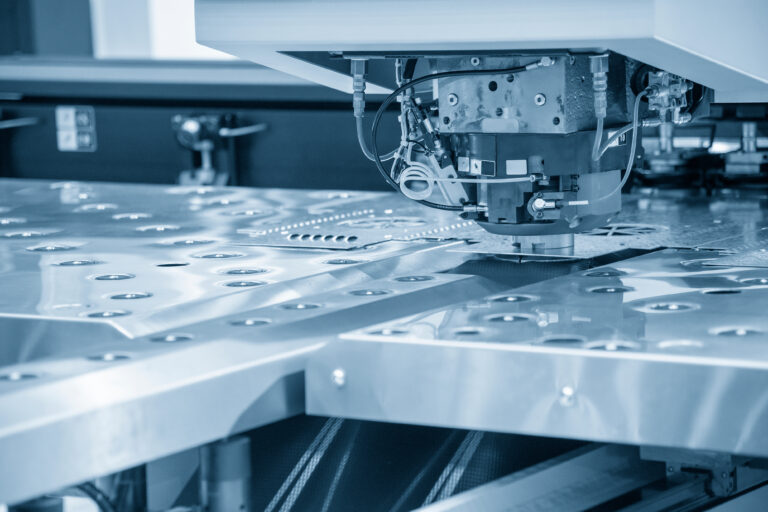
Laser cutting, followed by brake-press forming, produces structural rigidity through geometry rather than through machined mass. A tolerance capability of ±0.005 to ±0.015 inches on formed features covers most secondary structural interfaces. Where a mating surface requires tighter tolerance, the standard hybrid is to sheet-metal the bracket body and CNC-machine a precision insert for the critical interface. When a design changes, the part simply goes back into the laser queue—there’s no mold or die to modify—which is a real advantage for engineers working on tight timelines.
Where sheet metal reaches its limits: complex 3D geometry with undercuts, internal channels, and compound curves is outside the process envelope. For parts with integrated complex features at production volume, die casting is the answer.
Domestic lead time: 2–15 business days.
Die Casting: The High-Volume Metal Process
Above roughly 3,000 to 5,000 units of a production-stable metal component, CNC per-part cost becomes difficult to justify. Die casting is the correct transition — not injection molding, which is a plastic process and doesn’t apply to structural arm components.
Die casting forces molten aluminum, zinc, or magnesium alloy into a hardened steel die under high pressure, producing near-net-shape metal parts with integrated ribs, bosses, mounting features, and cable routing channels that would require secondary operations in CNC or sheet metal. Die-cast aluminum (A380, A383) delivers strength-to-weight ratios competitive with wrought aluminum at production volume, with consistent, inspectable material properties.
A typical tooling investment of $15,000 to $80,000 for a domestic die is justified once volume and design stability are confirmed. The correct planning approach is to run CNC bridge parts through development and pilot production while domestic die tooling is cut in parallel, then transition to cast production parts at design freeze.
Where die casting loses: uneconomical below 3,000 to 5,000 units, and post-tooling design changes carry a high cost. Until the design is stable, CNC is the answer.
Domestic lead time: 3–8 weeks to first shot.
Injection Molding: The Right Process in the Right Place
Injection molding has a place on the robotic arm BOM, just not for structural metal components. Its best fit is the end effector: jaw contact pads, sensor housings, cable management clips, snap-fit covers, and operator-facing surfaces. At production volume, these plastic components benefit from the per-unit economics and integrated feature capability of clips, ribs, bosses, and cable-routing channels molded directly into geometry.
A typical tooling investment of $10,000 to $100,000 for a domestic mold is justified once design is stable and volume is confirmed. Domestic first shots can arrive in ten days to twelve weeks versus twelve-plus offshore, with revision cycles that lengthen further every time a DFM question crosses time zones. For programs still in development, urethane casting produces high-quality plastic parts as a bridge before freezing the geometry.
Where injection molding loses: uneconomical below roughly 5,000 units, and every post-tooling design change carries a cost. For structural metal components, die casting is the correct high-volume process.
Domestic lead time: 10 days–12 weeks to first shot.
Quick Reference: Domestic Manufacturing Lead Times
| Process | Typical Domestic Lead Time |
| CNC Machining | 1–10 business days |
| Sheet Metal Fabrication | 2–15 business days |
| Die Casting | 3–8 weeks to first shot |
| Injection Molding | 10 days–12 weeks to first shot |
| Urethane Casting | 5–10 business days |
Lead times are estimates based on typical domestic supplier performance and vary based on part complexity, material, order volume, and tolerance requirements.
Common Materials by Process for Robotic Arm Components
The right process and the right material are part of the same decision. Here’s how the most common materials map across each process for robotic structural and end effector components.
| Process | Material | Typical Use Case | Key Tradeoff |
| CNC Machining | 6061-T6 Aluminum | Secondary structural links, brackets, housings | Best machinability and cost; lower strength than 7075 |
| CNC Machining | 7075-T6 Aluminum | Primary load-bearing links, high-stress joints | Higher strength-to-weight; higher cost, harder to machine |
| CNC Machining | 303/304 Stainless Steel | Precision shafts, bearing carriers, corrosive environments | High strength and corrosion resistance; significantly heavier than aluminum |
| Sheet Metal | 5052-H32 Aluminum | Brackets, cable trays, cover panels | Excellent formability, good corrosion resistance; not for primary structure |
| Sheet Metal | Cold-Rolled Steel (CRS) | Structural brackets, mounting plates, enclosures | High stiffness at low cost; heavier than aluminum, requires finishing |
| Die Casting | A380 Aluminum | Actuator housings, gearbox covers at production volume | Best die casting fluidity and general-purpose performance |
| Die Casting | A383 Aluminum | Complex thin-wall housings, fine detail features | Improved die filling for complex geometry; slightly lower mechanical properties than A380 |
| Injection Molding | 30% Glass-Filled Nylon (PA6-GF30) | Sensor housings, cable management, snap-fit covers | Good stiffness and heat resistance; brittle at impact vs. unfilled |
| Injection Molding | TPU | Jaw pads, soft-contact end effector surfaces | High flexibility and abrasion resistance; not structural |
Robotic Arm BOM Segmentation
The right question isn’t ‘which process for the robot arm?’ It’s ‘which process does each component on the BOM require?’
For a production robotic arm assembly, the answer typically looks like this:
Primary structural link bodies and actuator housings → CNC for prototype through pilot; die casting at production volume
Bearing seats, precision mating interfaces, encoder brackets → CNC or post-casting machining because tolerance requirements don’t change with scale
Secondary brackets, cable trays, cover panels → Sheet metal
Gripper jaw bodies → CNC; die casting at scale
Jaw pads, plastic housings, snap-fit covers → Urethane casting for development; injection molding at production volume
This is how production robotic systems are built by engineering teams at companies like Boston Dynamics, Agility Robotics, Apptronik, and HEBI Robotics—and how machine builders and MRO teams keep automated lines running when replacement components are needed fast.
Domestic sourcing across all of these processes is now viable and increasingly competitive with offshore sourcing in most respects, except for raw unit cost for fully commoditized, volume-stable parts. For programs where design changes are frequent, quality documentation is required, and line downtime is costly, the lead-time math clearly favors it.
Making the Right Process Call
CNC machining wins on precision, material flexibility, and iteration speed. Sheet metal wins in structural efficiency at mid-volume for secondary-formed components. Injection molding wins on per-unit economics for plastic end effector components at production volume. Casting bridges the gap for high-volume metal components once the design is stable and volume justifies tooling.
The process you select and the sourcing model you use are the same decision. Domestic sourcing isn’t a premium on top of the right process—it’s what allows the process advantages to show up in your program timeline.
Get manufacturing quotes for CNC machining, sheet metal fabrication, die casting, urethane casting, and injection molding on the Fictiv platform—with domestic lead times and DFM feedback included.
Talk to a Fictiv expert about your project, or upload your parts to start a free quote.
FAQs About Robotic Arm Manufacturing
What manufacturing process is best for robotic actuator housings?
CNC machining is the default for actuator housings from prototype through pilot production, where precision, material integrity, and design flexibility outweigh per-part cost. At production volumes above 3,000 to 5,000 units of a stable geometry, die casting is the correct transition — delivering near-net-shape metal parts with integrated features at unit economics CNC cannot match.
When does die casting replace CNC for robotic arm components?
Die casting becomes the right process once a metal component design is stable and production volume exceeds roughly 3,000 to 5,000 units. Below that threshold, the tooling investment — typically $15,000 to $80,000 for a domestic die — is difficult to justify. The standard approach is to run CNC bridge parts through development while domestic die tooling is cut in parallel.
Where does injection molding belong on a robotic arm BOM?
Injection molding is a plastic process and does not apply to structural metal arm components. Its correct home is the end effector — jaw contact pads, sensor housings, snap-fit covers, and operator-facing surfaces. For programs still in development or below roughly 5,000 units, urethane casting is the right bridge before committing to injection mold tooling.
How does domestic sourcing affect robotic arm component lead times?
Domestic CNC shops turn parts in one to ten business days; sheet metal assemblies in two to fifteen. Domestic injection mold first shots arrive in ten days to twelve weeks versus longer offshore timelines. For MRO teams replacing failed components on a live production line, that gap typically exceeds the unit cost difference many times over.
What is the right manufacturing process for secondary robotic arm components like brackets and cable trays?
Sheet metal fabrication is the correct process for secondary structural components — mounting brackets, cable trays, and cover panels — that support the primary structure without carrying primary loads. Laser cutting and brake-press forming deliver structural stiffness through geometry at lower cost and faster lead times than CNC, with design revisions requeueing at the laser rather than at a mold or die modification schedule.
What is the best material for robotic arm link bodies?
6061-T6 aluminum is the most common material for robotic link bodies, offering good machinability, cost efficiency, and sufficient strength for most secondary structural applications. 7075-T6 aluminum is the better choice for primary load-bearing links and high-stress joints where strength-to-weight ratio is the priority, at a higher material and machining cost. For precision shafts, bearing carriers, or corrosive