






Time to read: 7 min
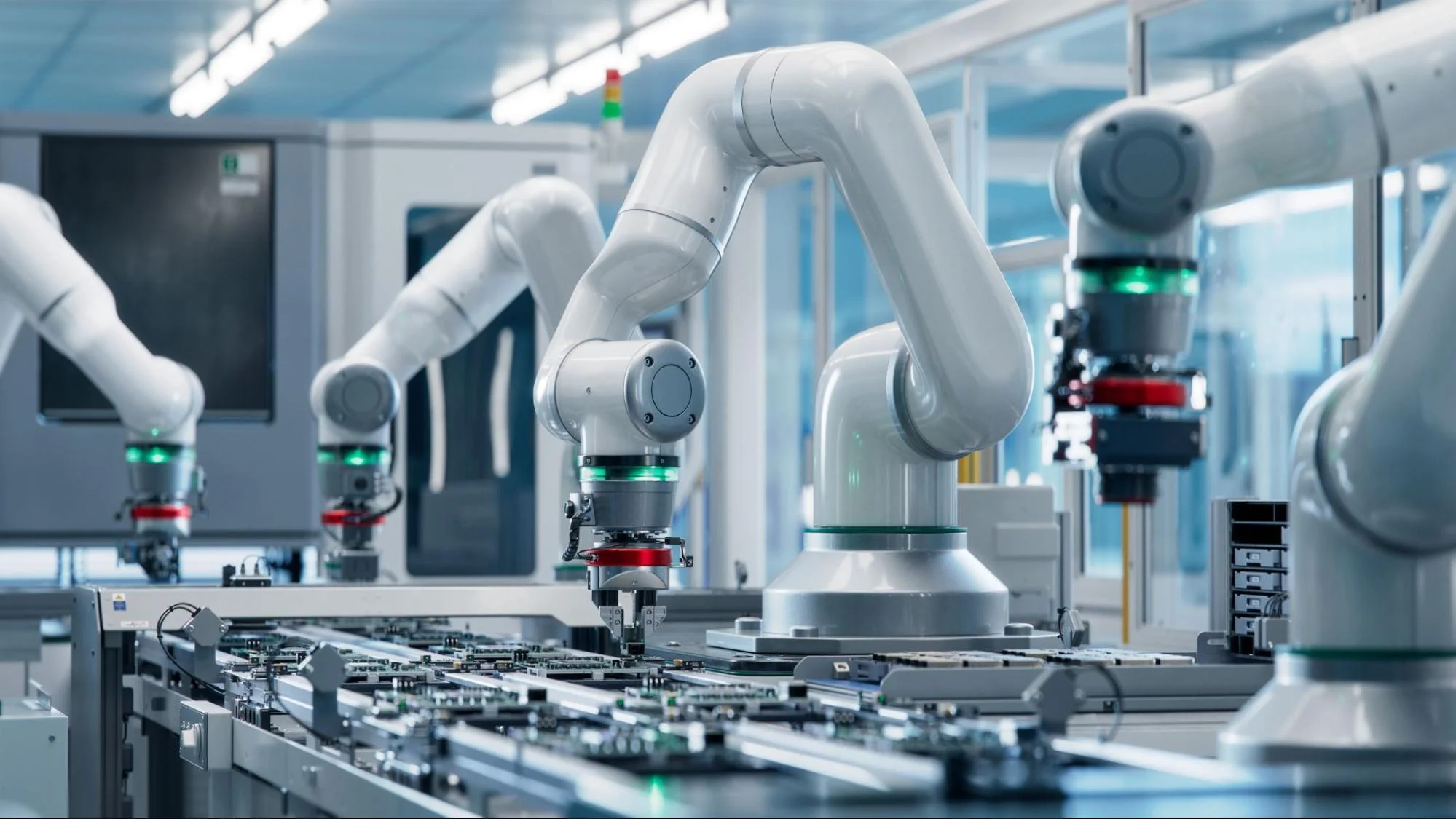
While robotics can automate many tasks, including manufacturing processes, the robots themselves must be intentionally designed and manufactured as complex systems.
Manufacturing for robotics here refers to the design and production of robotic systems themselves, rather than the products those robots later assemble. It involves selecting and integrating the right mix of off-the-shelf parts and custom-manufactured components—using processes such as CNC machining, injection molding, and sheet metal fabrication—to achieve precision, durability, and scalability in robotic platforms.
Robots are hybrid systems that combine custom precision parts, such as machined actuator housings or joint cores, with standard off-the-shelf components, including bearings, belts, and modular frames. The balance between custom-built and purchased components reflects trade-offs between accuracy, cost, development speed, and scalability.
This article breaks down the core processes used to manufacture robotic systems, explains when custom and standard parts make sense, and shows why system-level decisions are critical to a profitable manufacturing strategy.
Key Manufacturing Processes for Robotic Subsystems
Manufacturing decisions for robotic systems can be evaluated based on their impact on robot accuracy, repeatability, serviceability, and scalability. Different robot subsystems impose different demands on manufacturing processes, which drives process selection and defines where precision matters most.
Precision Machining for Actuators and Joints
Motion-critical subsystems are where manufacturing accuracy is most observable in robot performance. Actuators and joints convert control signals into physical motion, and dimensional errors in these components show up as positioning error, repeatability loss, vibration, or drift during operation.
Why CNC Machining Is Critical
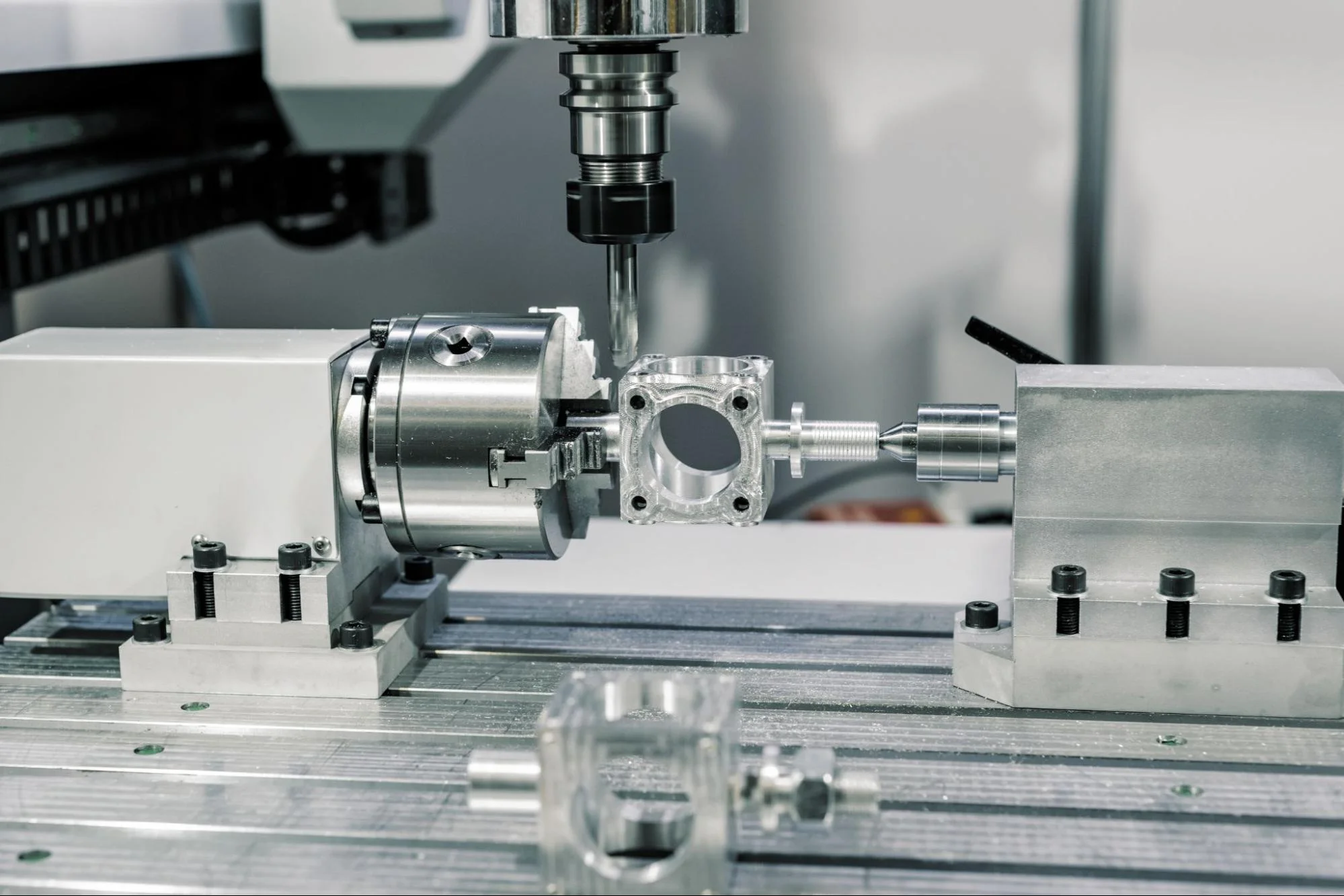
CNC machining is commonly used for actuator housings, joint bodies, gearbox cases, and motor mounts because it enables the dimensional accuracy and geometric control required for reliable motion. The process itself does not guarantee accuracy, but it makes achieving tight tolerances, coaxiality, and flatness more practical and repeatable than most alternatives.
Small geometric errors in joint components can accumulate across a kinematic chain, increasing end-of-arm positioning error or variability in motion paths. In production environments, this directly affects whether the robot can repeatedly place parts within required positional limits.
Functional Requirements for Machined Robot Parts
From a functional standpoint, machined motion components must support specific system-level behaviors. Examples include maintaining joint alignment under load, transmitting torque without excessive compliance, and preserving bearing preload over repeated duty cycles. Failure to meet these requirements can result in measurable loss of accuracy, increased wear, or shortened maintenance intervals.
Injection Molding for Robotic Housings and Covers
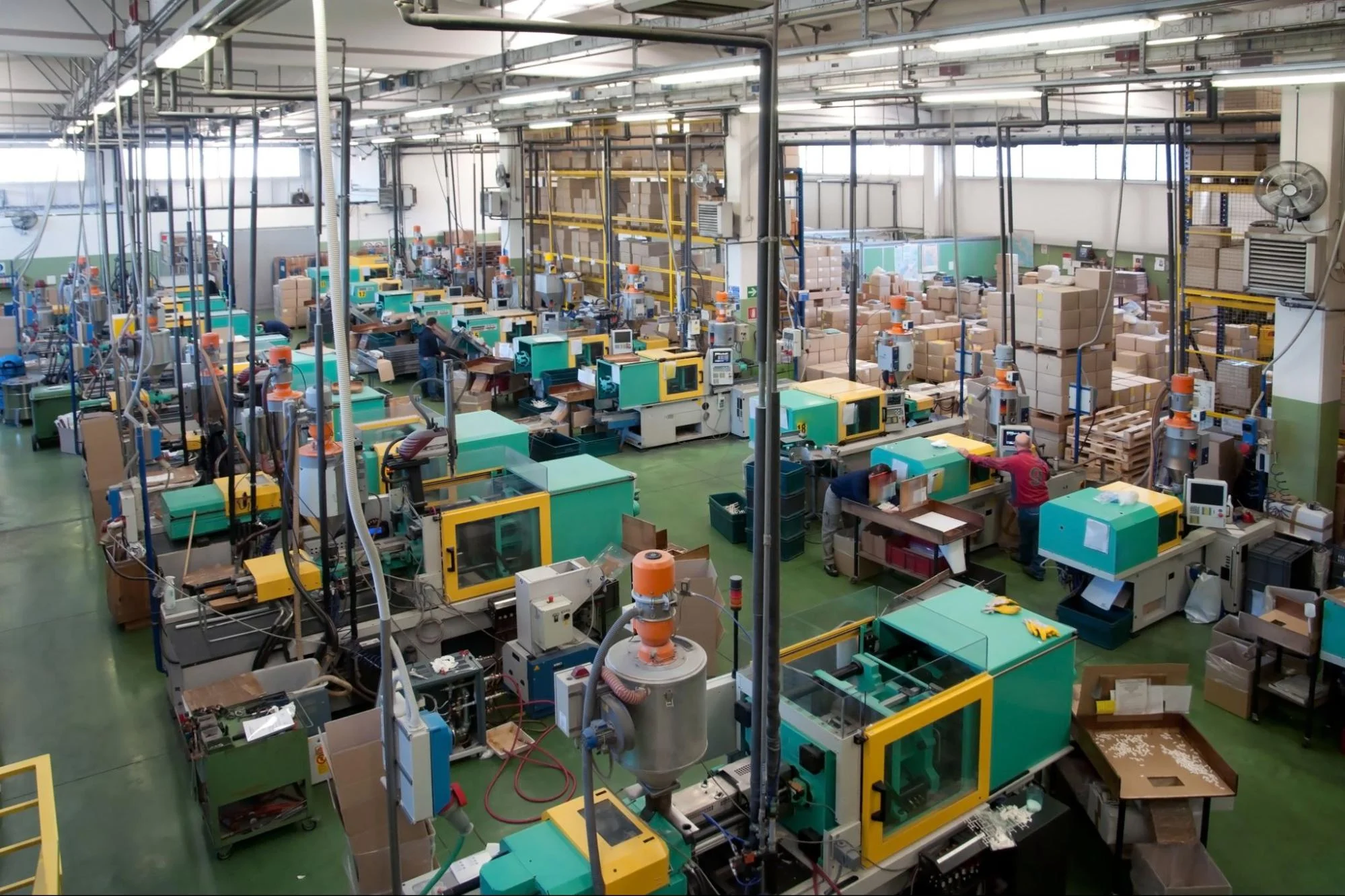
Injection molding is primarily used for non-load-bearing subsystems that protect and organize the robot’s mechanical and electrical elements during operation. Filled plastics are sometimes used for semi-structural covers, but typically still require metal load paths.
Injection molding becomes particularly attractive as robot production volumes increase, because tooling enables consistent part geometry across builds. Features such as clips, ribs, bosses, and cable-routing channels can be molded directly into the housing geometry, reducing secondary operations and part count.
From a system perspective, molded enclosures, or housings, serve several technical functions. They protect motion components from debris and operator contact, constrain cable routing to prevent fatigue, and provide controlled interfaces to machined frames and mounting points. Design considerations include draft angles, wall thickness control, reinforcement around fastener interfaces, and defined clearances for thermal expansion and service access.
Sheet Metal Fabrication for Frames and Chassis
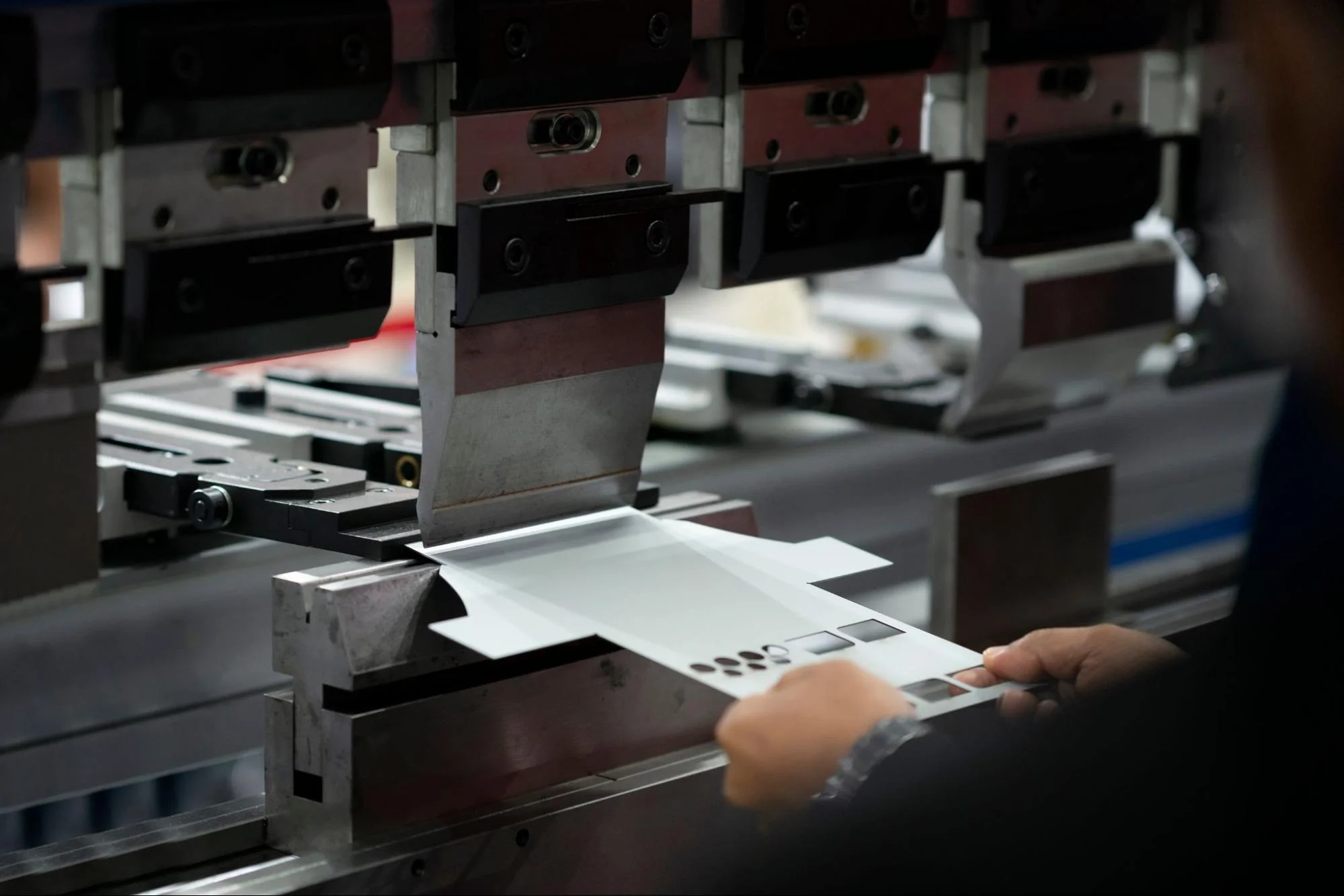
The primary structural frames and chassis of many robotic systems are fabricated from sheet metal using laser cutting, bending, welding, and fastening operations.
This approach is most commonly applied to mobile robot chassis, electronics enclosures, and lightweight structural panels, where flat geometries and folded sections can provide adequate stiffness without the cost or lead time of complex machined structures. Sheet metal fabrication supports relatively fast turnaround for prototypes and low-volume production when designs rely on standard gauges and simple bend geometries rather than progressive stamping.
Effective sheet metal design for robotic frames requires attention to bend allowances, weld distortion, fastener access, and tolerance accumulation across multiple formed features. When these factors are addressed explicitly, sheet metal structures can provide predictable alignment surfaces for machined joints and actuators without requiring excessive post-assembly adjustment.
Using Off-the-Shelf Components in Robotic Systems
Not every component in a robotic system needs to be custom-designed. Strategic use of off-the-shelf components reduces development effort and technical risk without sacrificing system performance.
Robotic systems commonly rely on off-the-shelf components in the following categories:
- Motion guidance elements such as linear guides and rails, shafts, bearings, cam and roller followers, bushings, hinges, and slides that define controlled motion and support loads with repeatable alignment
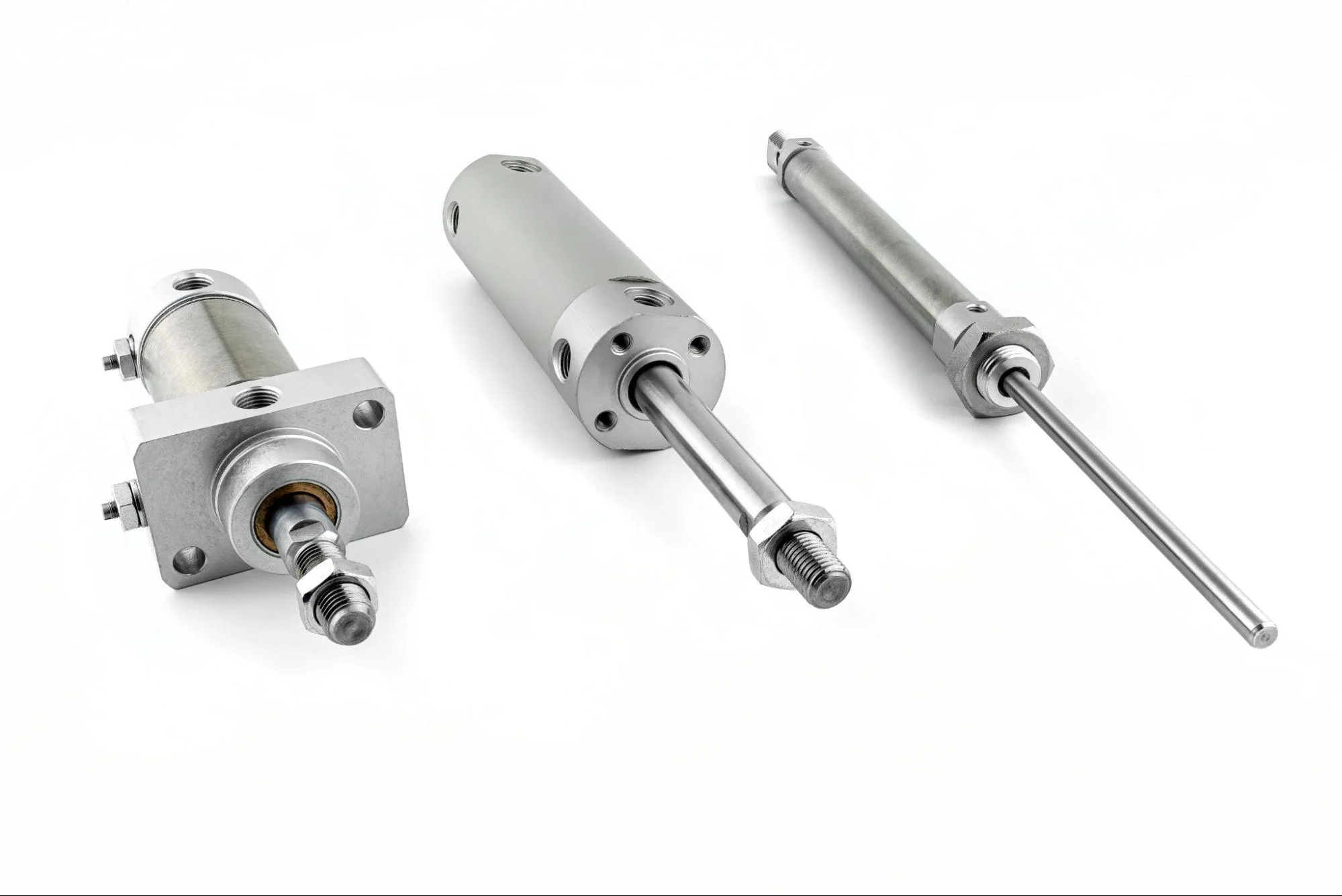
- Motion transmission components, including belts, pulleys, chains, gear reducers, couplings, pneumatic cylinders, and fittings used to transmit force and motion between actuators and joints
- Structural elements such as modular aluminum extrusions, brackets, and framing components used to build robot frames, guards, and support structures
- Assembly and alignment hardware, including NAAMS locating pins, precision locating pins, jig bushings, spacers, fasteners, mounting hardware, and electrical interface components that establish repeatable datums and consistent assembly
These components allow engineering teams to focus custom effort on subsystems that require differentiation or precision.
Robotics-Specific Design for Manufacturability Considerations
Design for manufacturability in robotic systems extends beyond part geometry. Common considerations include standardized actuator mounting patterns, consistent torque specifications for fasteners, defined access paths for assembly and service, vibration-resistant joint interfaces, and repeatable alignment features that do not rely on manual adjustment. These factors directly affect build consistency, service time, and long-term system stability.
System-Level Manufacturing Decisions Across Robotic Subsystems
Understanding individual manufacturing processes is necessary, but the primary optimization opportunity lies in system-level decision-making. At this level, engineers define how subsystems interface, which tolerances matter across assemblies, and where precision must be concentrated to meet performance targets.
For example, actuators and joints often require precision machining because of their impact on accuracy and repeatability. Frames and chassis may combine sheet metal structures with modular extrusions to balance stiffness, weight, and cost. Covers and enclosures may be molded once robot production volumes justify the investment in tooling. Motion control subsystems often use standard bearings and transmission components to reduce risk and simplify sourcing.
Fasteners and mechanical interfaces are typically standardized to support consistent assembly, predictable torque application, and easier maintenance across robot builds.
Choosing Custom or Off-the-Shelf Parts for Robotic BOMs
Choosing between custom-manufactured and off-the-shelf components is not usually a single decisive moment, but rather a series of constrained engineering choices. In most robotic systems, the decision is guided by whether a component directly affects accuracy, repeatability, safety, or system differentiation.
Custom manufacturing delivers the most value when it enables performance that cannot be achieved with standard components. Off-the-shelf parts are most effective where functions are repeatable, well understood, and not central to competitive advantage.
Robotic Component Selection: Custom vs. Off-the-Shelf
| Component Type | When Custom Manufacturing Adds Value | When Off-the-Shelf Is the Better Choice |
| Actuator housings | Joint accuracy, stiffness, or packaging requires housing geometry tailored to a specific motor–gearbox–bearing stack-up | Standard housings meet accuracy requirements and avoid unnecessary custom tolerance control |
| Bearings | Load direction, shock, speed, or envelope constraints fall outside catalog assumptions | Standard bearing sizes meet load, life, and availability requirements |
| Frames | Structural load paths, mounting interfaces, and mass distribution are tightly coupled to robot kinematics or payload | Modular aluminum extrusion systems meet stiffness needs with faster iteration and reconfiguration |
| Motion drives | Transmission paths or packaging constraints require nonstandard routing or integrated mechanisms | Belts, chains, pulleys, and pneumatic components efficiently transmit power using proven architectures |
| Covers and housings | Sealing, thermal management, operator safety, or mechanical interfaces must match the robot’s internal layout | Off-the-shelf enclosures are sufficient when protection and appearance requirements are generic |
Why Manufacturing Strategy is Critical in Robotics
In robotics, manufacturing strategy defines how a robotic system is engineered to be built, assembled, and scaled reliably. Decisions about processes, tolerances, interfaces, and sourcing determine whether a robotic system can be produced consistently or whether it becomes a collection of technically sound components that are difficult to assemble, align, and maintain in practice.
The Hidden Cost of Fragmented Part Sourcing in Robotics
A common source of failure in the development of robotic systems is fragmented sourcing. Custom components such as machined joint housings, mounting plates, or frames may be designed without locking in specific bearings, guides, or motion elements. Standard components are then selected later, forcing compromises in fit, mounting, or alignment to make mismatched parts work together.
In these situations, engineers may be forced to modify interfaces, introduce shims, loosen fit requirements, or redesign adjacent components to accommodate parts that were never intended to work as a system. This increases integration risk across the robotic system, slows iteration, and makes consistent assembly more difficult.
Beyond mechanical integration issues, fragmented sourcing also complicates supply chain management. Each independently selected component introduces its own supplier, lead time, revision cycle, and availability risk. Engineering changes that affect interfaces may require cascading updates across multiple vendors, slowing iteration and increasing the risk of late-stage redesign.
A cohesive manufacturing plan reduces these risks by defining interfaces, tolerances, and sourcing decisions together, so custom geometry, standard component sourcing, and manufacturing processes are aligned from the outset.
Read the case study showing how Fictiv supported Gecko Robotics.
Why a Unified Manufacturing and Sourcing Partner Matters
As robotic systems increase in complexity, coordinating how parts come together becomes as important as how individual components are designed. Managing machining, molding, sheet metal fabrication, and catalog sourcing through separate vendors increases coordination overhead and raises the risk that interface assumptions diverge across teams.
Problems are more likely to arise when tolerances are defined in isolation, interface requirements are interpreted differently by suppliers, or design changes must be propagated across multiple manufacturing workflows. These issues are not inevitable, but they become harder to manage as the number of suppliers increases and system complexity grows.
A unified manufacturing and sourcing partner does not replace engineering ownership or eliminate the need for good project management. Instead, it centralizes manufacturability feedback, sourcing coordination, and tolerance interpretation across custom and standard components. By providing subject-matter expertise across processes and managing supplier communication, such a partner can help engineering teams identify interface risks earlier and reduce late-stage rework.

Building Robotic Systems Through Coordinated Manufacturing
Rather than choosing a single process or defaulting to either custom or catalog components, robotics manufacturing relies on careful coordination between machining, molding, sheet metal fabrication, and standard components to address interfaces, tolerances, and assembly constraints at the system level.
Upload CAD files for your custom components to receive manufacturability feedback, or contact Fictiv to coordinate sourcing, supplier management, and manufacturability review for both custom and off-the-shelf robotic components through a single platform.