

Time to read: 5 min
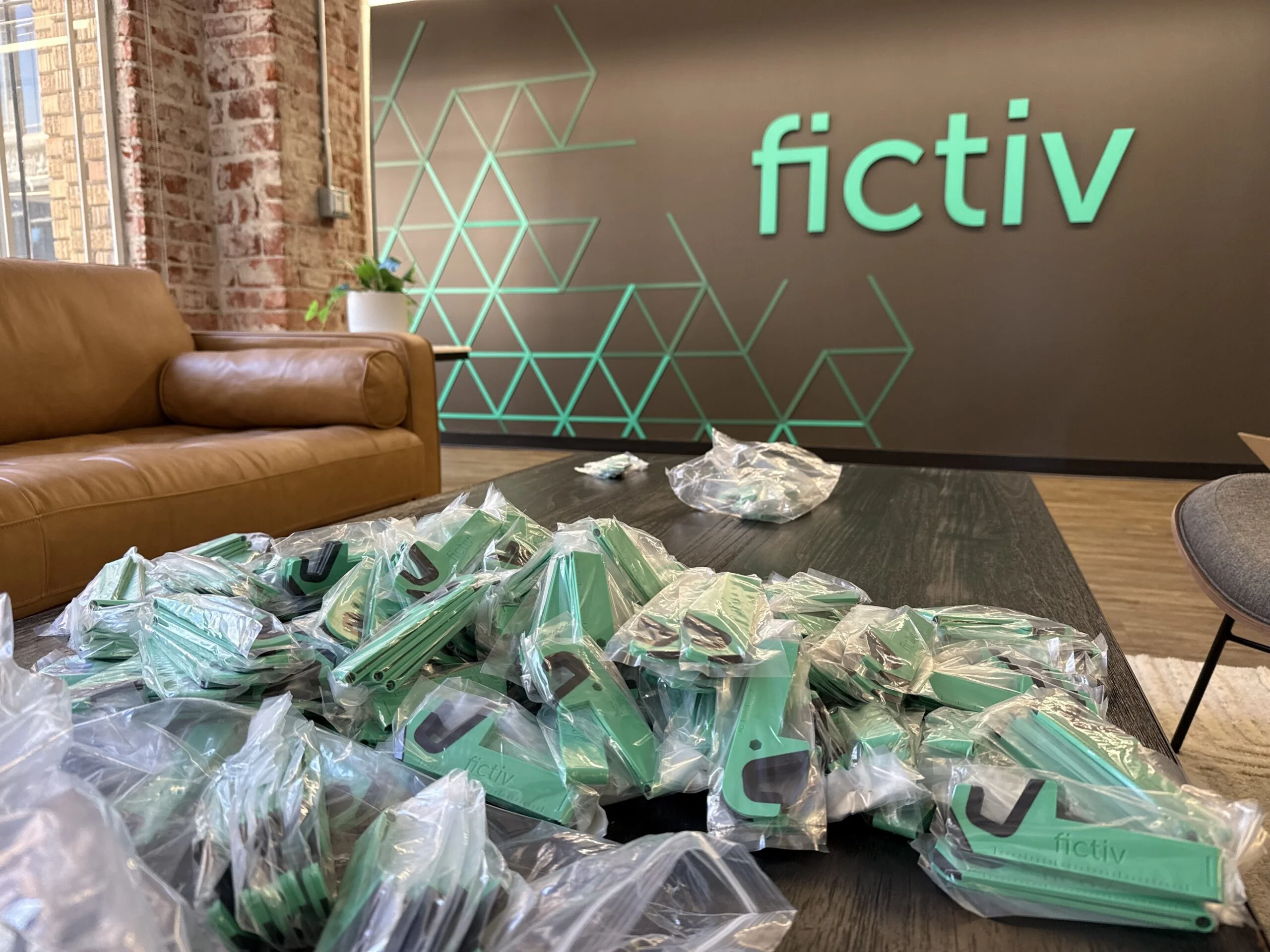
The boxes landed at Fictiv HQ, and the payoff was real. After months of designing, prototyping, and manufacturing, the final production run of our multi-tool phone stand is officially in our hands.
If you’ve been following the journey from a simple CAD file to a physical, multi-material product, seeing a table piled high with production-ready parts is the closing scene. For any product design engineer, getting the final parts is always a great feeling.
Here is a quick recap of how I tested the final parts to see if they actually live up to the design intent.
The Box Cutter Test
First things first—we had to get into the packaging. What better way to test the integrated box-cutting feature than by using the tool to slice open its own shipping boxes? The metal edge of the blade held up well and sliced through the tape with a bit of pressure. It’s not quite as sharp as a true knife edge, but you can take it through airport security.
The Phone Stand Test
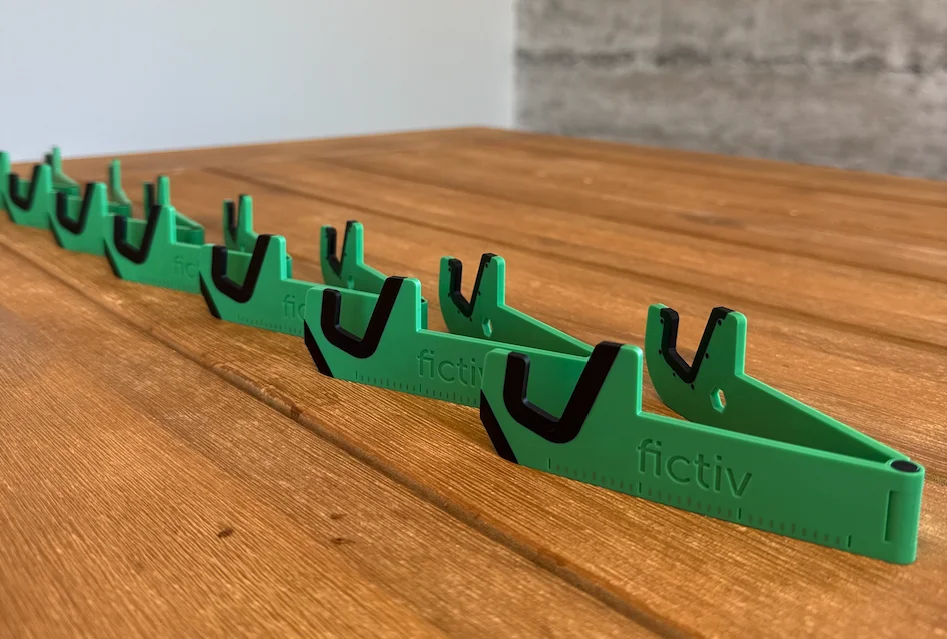
The tool easily unfolds into a stable phone stand for vertical or horizontal viewing. I set up the stand on the conference table, popped a phone in, and used it to watch… well, our Fictivmade episodes, obviously. The overmolded TPU grip keeps the phone secure, preventing it from sliding around or falling out in both portrait and landscape mode.
The Hex Drive (Screwdriver) Test
Next up was the hex drive. I designed this to accept standard hex bits with a snug fit, turning the entire body into an ergonomic screwdriver. I grabbed a drive bit and used it to unscrew and tighten a screw on the back of a keyboard. Thanks to the overmolded grip and length, it gave plenty of torque without slipping or flexing the plastic core.
The Ruler Measurement Feature Test
I also tried out the integrated ruler feature running along the edge. Molded-in text can sometimes lose definition during injection molding, but these markings came out incredibly crisp, legible, and—most importantly—perfectly accurate when checked against a standard caliper.
The Speed Square Test
Injection-molded parts are highly accurate because the molds are CNC machined, and dimensions can be verified through various forms of inspection. The speed square, subtly integrated into the product’s “F” form, works well for quickly checking square corners.
The Hinge Stress Test
If you watched our earlier design iterations, you know we modified the hinge geometry to be more robust and stable. I cycled the hinge open and closed, even twisting it to try and break the snap pin. The modified hinge was solid, without loosening permanently.
The Pocketability Check
A multi-tool is most useful if you can actually carry it with you. For the final test, I tossed it in my pocket and took it back out a few times. Thanks to the slim, fold-flat design and rounded edge radii, it slips right into a front or back pocket without snagging or digging in when you sit down.
Looking Back on the Twists and Turns: The Engineering Behind the Finish Line
Getting to this final, polished product wasn’t a straight line. Looking back on the twists and turns of the development process, this project was a true test in real-world problem-solving.
I had to work through multiple iterations to split the model in CAD to redesign how the blade and overmold features integrated seamlessly. We wrestled with dialing in the perfect hinge tightness so it snapped together tightly without coming apart. There was also a healthy amount of DFM back-and-forth with the manufacturing team to optimize our parting lines and draft angles. Even late in the game, pivoting to laser etching for the additional smaller ruler lines was a great call, since those tiny increments were too close together to mold. Every hurdle pushed us to refine the engineering and make the final product that much better.
👉 Explore the Full #FictivMade Series Hub
That’s a Wrap
From a blank CAD canvas to a fully functional, multi-material pocket tool, this project has been an incredible ride. We’ve covered everything from design for manufacturing (DFM) to material selection, prototyping, tooling, and final production.
If you missed any steps along the way or want to see the deep-dive engineering breakdowns, we’ve got you covered. You can catch up on every single episode and article on the official project page.
Ready to manufacture your own design? Start here.
Talk to a Fictiv expert about your project, or upload your parts to start a free quote.