


Time to read: 11 min
Flame-retardant requirements show up in power supply housings, electrical connectors, and industrial control panels. They also turn up in products like a battery pack on a mobile robot, a diagnostic device housing, or a solar inverter enclosure. Any product with a battery, power electronics, or components near line voltage is a candidate for a flammability requirement, whether or not “electronics” is the first word that comes to mind.
When a product requires a flame-retardant plastic, engineers hit the same problem: a spec calls for UL 94 V-0, the materials database shows plenty of options rated V-0, but the rating depends on wall thickness, grade, lot, and test conditions. Selecting a material that meets the requirement on paper, only to fail UL 94 testing at the prototype stage because a wall is 0.5mm too thin, is one of the most avoidable mistakes in product development.
This guide covers what UL 94 means, how the classification system works, which materials engineers typically specify, the manufacturing implications for injection-molded and 3D-printed parts, and what to watch for when specifying FR materials.
The UL 94 Classification System
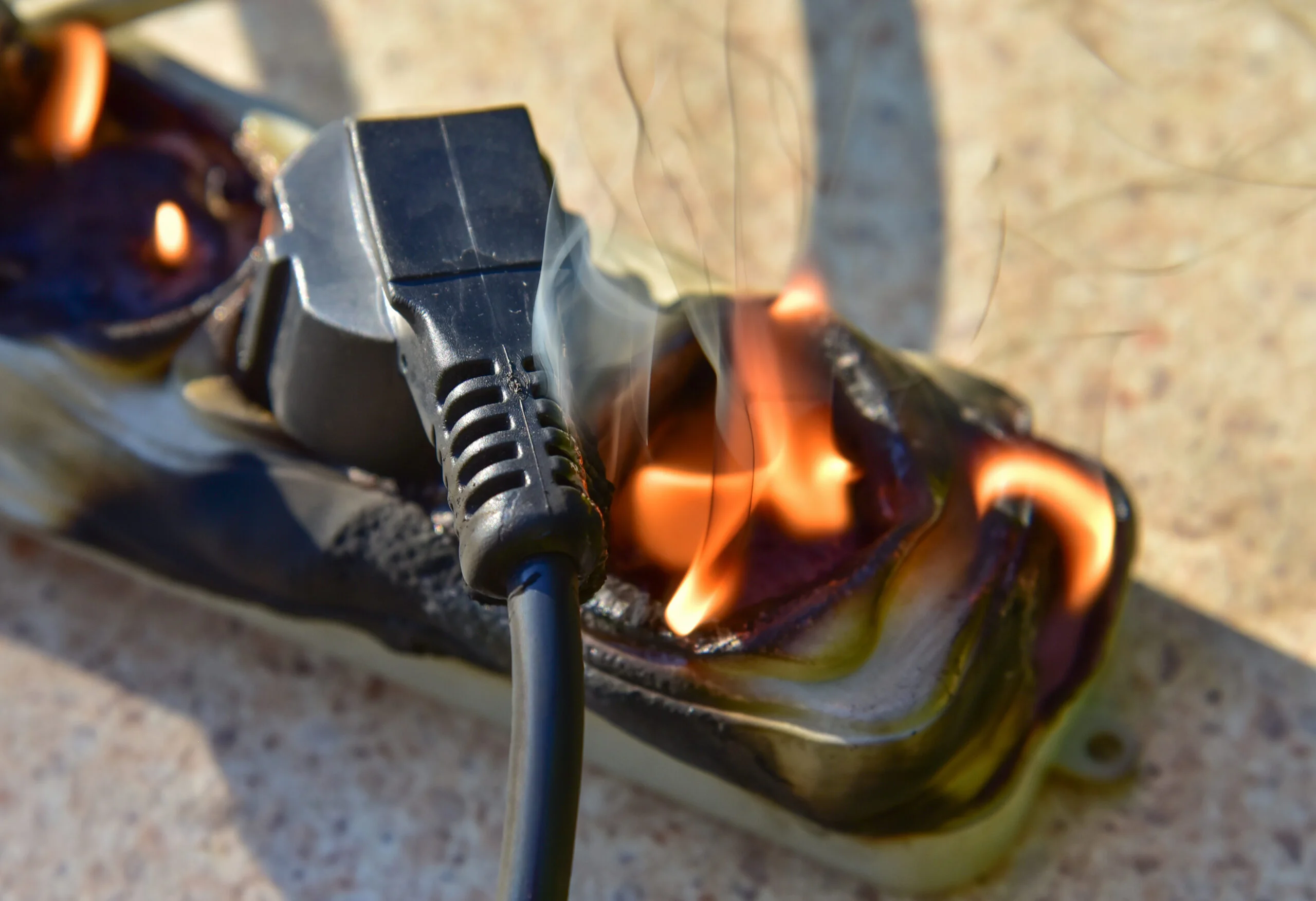
UL 94 is Underwriters Laboratories’ standard for flammability of plastic materials in devices and appliances. It’s not a single pass/fail test—it’s a classification system that rates how a material behaves under specific combustion conditions, at a specific thickness. A material rated V-0 at 3.2mm does not automatically earn V-0 at 1.6mm.
Classifications, from least to most flame-retardant:
HB (Horizontal Burning): the lowest rating. A horizontal specimen burns slowly or self-extinguishes but does not need to self-extinguish rapidly under vertical flame. Acceptable for many consumer and industrial applications away from ignition sources, but not where a V-rating is required.
V-2: self-extinguishes within 30 seconds after each of two 10-second flame applications on a vertical specimen, but burning drips that ignite cotton below the specimen are permitted.
V-1: same 30-second self-extinguishing requirement, but flaming drips that ignite the cotton are not permitted.
V-0: the strictest vertical rating: self-extinction within 10 seconds after each flame application, with no flaming drips that ignite the cotton. Required for most consumer electronics enclosures, power supplies, and industrial control equipment near wiring.
5VA and 5VB: the highest ratings, tested with a more severe flame on a plaque specimen. 5VA requires no burn-through and is required for enclosures that must resist severe flame exposure without forming openings. 5VB permits a hole.
A V-0 rating does not imply 5VA performance. If the application requires 5VA, V-0 alone is not enough.
How Thickness Affects the UL 94 Rating
UL 94 ratings are always reported at a specific thickness. A datasheet entry of “V-0 @ 1.6mm” means the material achieved V-0 at that thickness. If the actual part wall is thinner, the material may not achieve V-0 there, even though it does at 1.6mm. Thinner walls are harder to flame-retard because there’s less material to absorb heat and the FR additives are more diluted.
This is the most common source of UL 94 failures at prototype and first production: a V-0-rated material is selected, the wall is designed thinner than the tested thickness, and the part fails. The fix is simple—verify the rating at the actual minimum wall thickness, not the nominal one—and it’s far cheaper to catch before tooling is cut. Most datasheets report ratings at multiple thicknesses (e.g., V-0 @ 1.6mm, V-1 @ 0.8mm); use the thinnest wall on the part as the reference, and be sure to account for tolerance.
Flame-Retardant Requirements Across Industries
Consumer electronics and appliances: the most common use case. Enclosures, power supplies, and chargers typically require V-0 due to proximity to line voltage and wiring.
Robotics and automation: battery packs, actuator housings, and sensor enclosures on mobile robots and cobots often require V-0 or better, especially near lithium battery cells.
Medical devices: diagnostic equipment, patient-worn devices, and benchtop instruments frequently require FR ratings alongside broader compliance (IEC 60601), biocompatibility, and sterilization requirements.
Aerospace: flammability is critical, but most aircraft interior and structural components are governed by FAR 25.853 rather than UL 94; the two use different test methods, so confirm which standard actually applies before selecting a material.
Clean energy: battery energy storage systems, EV charging infrastructure, and solar inverters combine high power density with FR requirements, often specifying halogen-free grades to meet sustainability commitments.
Automotive and EV: under-the-hood components, onboard charging systems, and battery pack housings combine thermal exposure with UL 94 requirements; halogen-free grades are increasingly required for EU market compliance.
Industrial equipment: control panels, relays, and connectors near motors and wiring commonly require V-0, with 5VA/5VB specified where equipment must resist sustained flame exposure.
Common Flame-Retardant Plastics
Flame retardancy works through two mechanisms: halogenated (bromine- or chlorine-based) additives that interrupt combustion chemistry, and non-halogenated additives (phosphorus-based, mineral-based) that work through char formation and heat absorption. RoHS and REACH are pushing the industry toward non-halogenated systems, though halogenated grades remain common outside the EU.
PC/ABS FR blends combine PC’s impact resistance with ABS’s processability, achieving V-0 at walls as thin as 1.5mm. They’re the default for consumer electronics and IT equipment enclosures (Sabic Cycoloy, Covestro Bayblend FR, LG Chem Lupoy FR) — always verify V-0 on the specific grade and lot.
FR ABS is the standard, lower-cost enclosure material for consumer electronics, power supplies, and appliance housings, with V-0 available at standard wall thicknesses but lower impact and temperature performance than PC/ABS. It’s typically supplied in black or dark gray; light and translucent colors are possible but should be confirmed with the supplier, since FR additives can affect color consistency.
FR polycarbonate offers higher temperature capability and impact resistance than FR ABS, at higher cost, and is used in electrical connectors, lighting, and industrial enclosures where clarity or toughness matters (Makrolon FR, Lexan FR, Panlite FR).
FR nylon (PA6/PA66) is used where mechanical performance and flame retardancy matter—structural housings, connectors, cable management, and under-the-hood automotive parts. Glass-filled grades add stiffness and thermal resistance, and halogen-free grades are available for EU markets.
FR PBT and PET dominate electrical connector and relay housing applications thanks to low moisture absorption and good dielectric properties, delivering dimensional stability and V-0 performance alongside chemical resistance.
FR polypropylene is the low-cost option for cable management, appliance housings, and packaging where structural requirements are modest; V-0 is harder to achieve at thin walls than in engineering plastics, and halogen-free grades are increasingly specified for WEEE/RoHS compliance.
Flame-Retardant Materials Reference Table
| Material | Common V-0 thickness | Impact resistance | Temp. capability | Relative cost | Key applications |
| FR PC/ABS | 1.5mm | High | Moderate | Moderate | Consumer electronics, IT equipment |
| FR ABS | 1.6mm | Moderate | Low–moderate | Low | Enclosures, appliances, power supplies |
| FR PC | 1.5mm | High | High | High | Electrical connectors, lighting, industrial |
| FR PA6/PA66 | 0.8mm (GF grades) | High (GF) | High | Moderate–high | Connectors, structural housings |
| FR PBT | 0.8mm | Moderate | High | Moderate | Electrical connectors, relay housings |
| FR PP | 1.6mm | Low–moderate | Low | Low | Cable management, low-cost enclosures |
| FR PEEK | 0.8mm | Moderate | Very high | Very high | Aerospace, oil & gas, high-temp connectors |
Manufacturing Implications for Injection Molded FR Parts
Tooling: Halogenated FR additives can release bromine and chlorine compounds during processing. This corrodes standard P20 tool steel over time, degrading surface finish. For high-volume production with halogenated FR materials, use hardened H13 or stainless (420 grade) tooling. Standard P20 is generally fine for non-halogenated systems with regular maintenance and passivation.
Surface finish: FR additives can cause a hazy or mottled look on glossy tools, and high-gloss FR enclosures often need secondary painting or coating to hit the desired cosmetic result. Matte finishes are less affected. Confirm achievable finish with the supplier before specifying a high-gloss tool.
Processing stability: FR materials degrade more readily than standard grades during machine downtime or color changes. Purge with a dedicated compound before extended downtime to prevent gassing and discoloration on restart, and establish FR-specific purging protocols in mixed-material molding operations to avoid contaminating non-FR runs.
See our Injection Molding Material Selection Guide for more insights.
Flame-Retardant Materials in 3D Printing
FR options for 3D printing are far more limited than for injection molding. Most standard FDM, SLS, and SLA materials don’t achieve V-0 or V-1 at typical wall thicknesses.
FDM: FR ABS and FR PLA filaments can achieve V-0 at 3mm or more, but may not reach it at typical FDM walls (0.8–2mm). FR PETG and FR nylon filaments are also available. Layer lines affect fire performance, so test actual printed specimens at the production wall thickness rather than relying on injection-molded data for the same material.
SLS/MJF: PA12 FR grades can achieve V-0 at thin walls with the right material—check supplier data for the intended thickness.
SLA/resin: FR options are very limited. A few industrial resins carry UL 94 ratings, mostly V-0 at thicker walls; most prototyping resins have no published rating.
For production parts needing V-0 at thin walls, injection molding with a qualified FR grade is almost always the right process. 3D printing is fine for prototyping geometry, but final UL 94 testing should use injection molded specimens from the production material and process.
CNC Machining Flame-Retardant Plastics
FR ABS, FR PC/ABS, and FR PC are available as CNC machining stock for low-volume runs, bridge production, or parts where injection tooling isn’t justified. Stock shapes (sheet, rod, block) don’t always carry the same UL 94 certification as injection-molded pellet grades—confirm the Yellow Card or supplier test data applies to the specific extruded or cast stock lot before relying on it for compliance.
Urethane (Vacuum) Casting for FR Prototypes
Vacuum-cast urethane resins formulated to approximate FR PC or FR ABS performance are a common bridge between 3D printing and injection molding for parts that need V-0 behavior before tooling is cut—useful for enclosures too large for typical FDM or SLS build volumes. Most cast urethane systems don’t carry the same UL 94 Yellow Card status as injection-molded materials, so verify UL 94 test data with the caster directly rather than assuming rated performance based on the resin’s PC- or ABS-like properties.
Specifying FR Requirements on Drawings and Purchase Orders
At minimum, specify:
- Material spec: the UL 94 classification required (V-0, V-1, V-2, 5VA, 5VB), the minimum wall thickness at which it must be achieved, and whether halogen-free is required (e.g., “UL 94 V-0 @ 1.5mm minimum, halogen-free”)
- Material certification: a UL Yellow Card reference or certification confirming the rating for the specific material lot — the Yellow Card is UL’s published record of certified materials and the primary verification document
- Processing documentation: for products going into UL-listed equipment, keep material certifications and processing records in the technical file
Check the UL Yellow Card database (iq.ul.com) before finalizing material selection—a material once V-0 certified may have had its certification lapse or its formulation change. Verifying this upfront avoids discovering a certification gap during product qualification.
Fictiv supports scalable manufacturing processes with commercially available flame-retardant material options.
Get a free online quote for your next flame-retardant product or reach out to our team to learn more.
Talk to a Fictiv expert about your project, or upload your parts to start a free quote.
FAQs About Flame-Retardant Plastics
What does UL 94 V-0 mean?
V-0 is the strictest common vertical flammability rating in UL 94. A specimen must self-extinguish within 10 seconds after each of two flame applications, with no flaming drips that ignite cotton placed below it.
Why did my part fail UL 94 testing even though the material datasheet showed V-0?
The most common cause is wall thickness: the part’s actual minimum wall was thinner than the thickness at which V-0 was tested. Always match material selection to the thinnest wall in the design, not the nominal wall.
Is “fire resistant” the same as “flame retardant”?
Not exactly. “Fire resistant” usually refers to a material or assembly’s ability to hold structural integrity under fire exposure for a rated time (tested under standards like ASTM E119), while “flame retardant” (UL 94) measures how a plastic behaves when a small flame is applied directly to it — ignition, burn rate, and self-extinguishing behavior. The terms are often used interchangeably in casual search, but they’re different tests with different pass criteria.
Which flame-retardant plastic is best for consumer electronics enclosures?
FR ABS and FR PC/ABS blends are the most common choices, offering V-0 at thin walls (around 1.5–1.6mm) at moderate cost. FR polycarbonate is used when higher impact resistance or temperature capability is needed.
How do I verify a material’s UL 94 certification?
Check the UL Yellow Card database at iq.ul.com. It’s UL’s published record of certified materials and confirms whether a rating is still current for a specific grade.
What is the UL Yellow Card and where do I find it?
The UL Yellow Card is UL’s published record of certified plastic materials — it documents which grades have been tested, at what thicknesses, and what classifications they achieved. It’s the primary verification document for FR material qualification. Find it at iq.ul.com by searching the material name or manufacturer. Always verify the Yellow Card before finalizing material selection — a certification can lapse or a formulation can change without the grade name changing on a datasheet.