




Time to read: 12 min
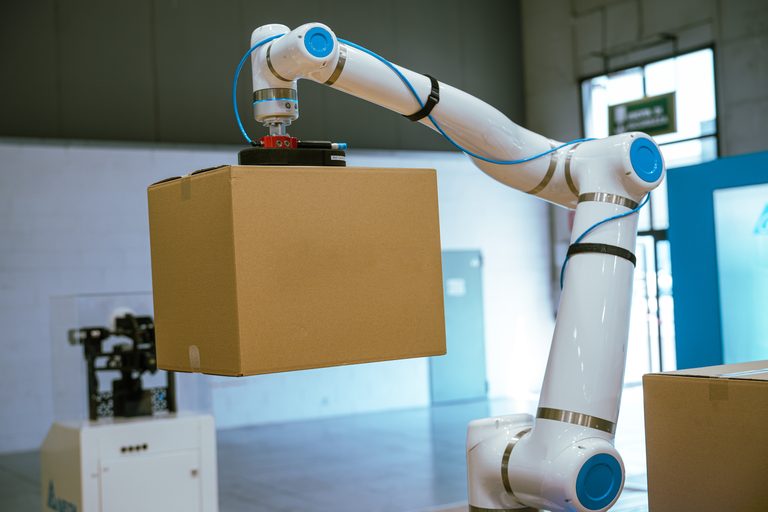
Manufacturers have been automating production for decades. What changed in the last ten years is the layer of intelligence on top of that automation. Smart manufacturing describes production environments where machines, sensors, software systems, and supply chains are connected well enough to generate, share, and act on data in real time. Smart manufacturing is the term that best captures what this means practically: production environments connected well enough to respond to conditions rather than just execute a program.
The concept goes by several names. Industry 4.0 is the term most common in European manufacturing and academic contexts. The Industrial Internet of Things (IIoT) refers to the connected sensors, devices, and networks that collect and move industrial data. Smart manufacturing is the term most common among US manufacturers and capital equipment buyers, and smart factory is often used for the facility itself. They describe overlapping ideas: the convergence of physical production infrastructure with digital intelligence.
For engineers designing hardware products and the manufacturing engineers who build them, smart manufacturing matters in two ways. It changes what production facilities can do: their precision, their flexibility, and their ability to catch and correct problems in process. It also changes how parts are designed and specified with these capabilities in mind.
The Architecture of a Smart Manufacturing System
Smart manufacturing is a stack of technologies that work together.
Connected Equipment and Sensors
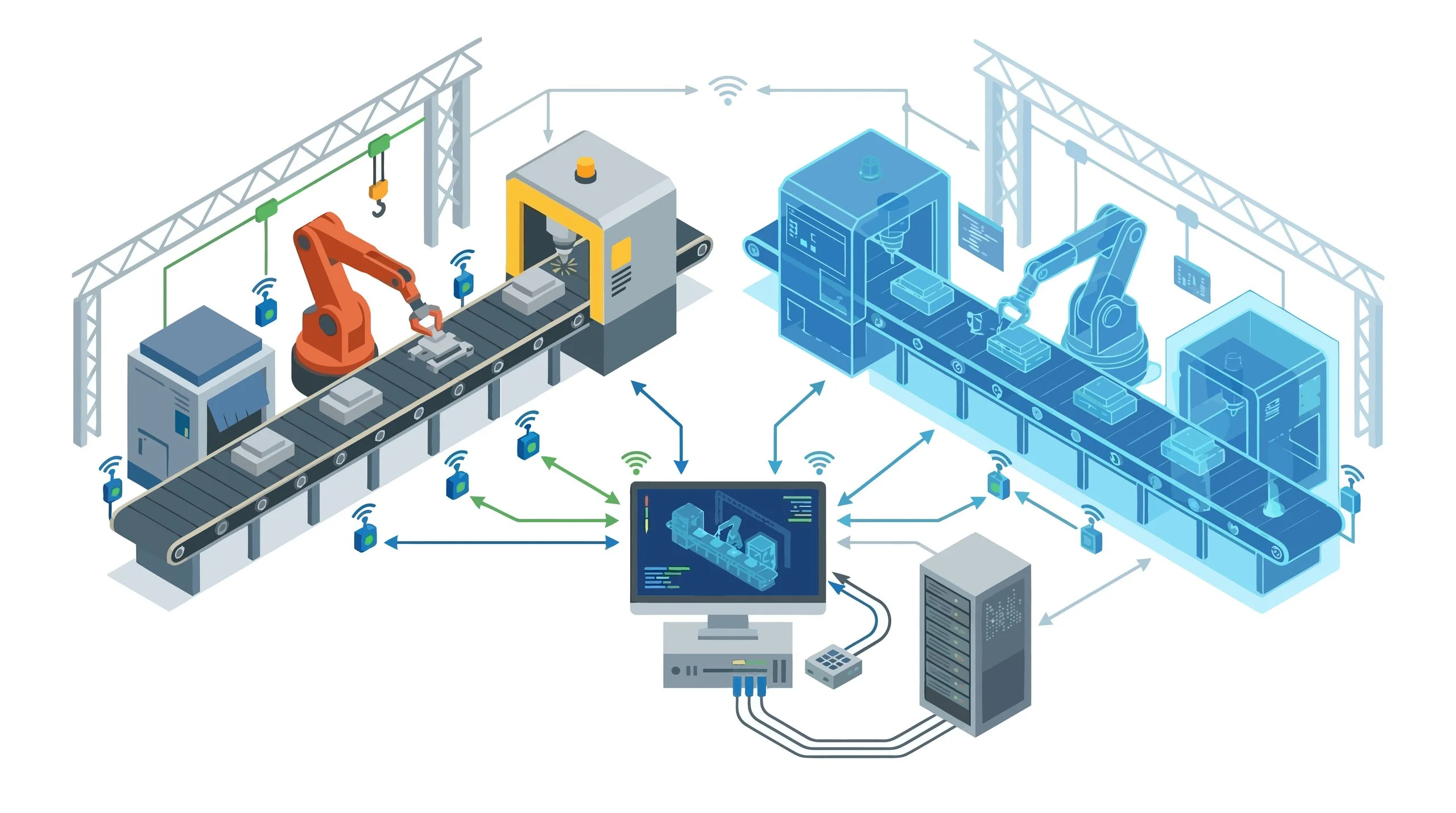
Connected equipment and sensors form the foundation. Machines equipped with sensors report operational data (vibration, temperature, current draw, cycle time, dimensional output) continuously rather than at inspection intervals. This real-time data stream makes every higher layer possible. A facility without connected equipment is not a smart manufacturing facility, regardless of what software it runs.
Edge Computing
Edge computing processes sensor data locally, at or near the machine, rather than sending everything to a central cloud. Some manufacturing decisions need a response in milliseconds, and a cloud round trip adds delay and variability. Streaming high-frequency sensor data to the cloud also consumes significant bandwidth. Spindle vibration monitoring is a typical example: the machine can flag a problem locally and send only summary data upstream. Processing close to the machine keeps the response fast and the data volume manageable.
Manufacturing Execution Systems
Manufacturing Execution Systems (MES) sit above the machine level and manage production workflow: job dispatching, routing, work order management, quality recording, and traceability. In a smart manufacturing environment, the MES receives live data from connected equipment. Paired with planning and scheduling tools, it can adjust routing and sequencing as conditions change rather than following a static plan built the previous shift.
Digital Twins
Digital twins are virtual representations of physical assets, production lines, or entire facilities that are continuously updated using sensor data. A digital twin of a machining center reflects its current condition: tool wear state, thermal state, and recent dimensional output. It is not a static model built from design specifications. Engineers and production managers can simulate interventions (process changes, maintenance actions, scheduling adjustments) against the current-state model before physically applying them to the line.
AI and Machine Learning
AI and machine learning make the connected data actionable at scale. A facility generating millions of sensor readings per hour cannot be managed by people reviewing dashboards. AI systems classify anomalies, predict failures, optimize schedules, and recommend or apply process parameter adjustments within defined limits. Industrial AI applications (computer vision inspection, predictive maintenance, and real-time process optimization) are all components of a smart manufacturing system, and that article covers each in more depth.
How Smart Manufacturing Differs from Industrial AI
Industrial AI refers to AI systems deployed in production environments: the specific applications of machine learning, computer vision, and optimization algorithms running in a factory. It is one layer of smart manufacturing.
Smart manufacturing is the broader concept: the connected infrastructure, data architecture, systems integration, and operational practices that make a facility intelligent. A facility can have connected equipment and a functional MES without industrial AI. Effective industrial AI, however, depends on the data infrastructure smart manufacturing provides (sensors, data pipelines, edge computing), because AI models need consistent, high-quality data to function.
In practice, industrial AI is the most visible part of smart manufacturing, and deploying it without the underlying infrastructure commonly causes AI manufacturing projects to fall short of expectations. A computer vision inspection system is only as good as the consistent, well-positioned image stream feeding it. A predictive maintenance system is only as good as the sensor data it receives. Smart manufacturing is the foundation, and industrial AI runs on top of it.
The Five Capabilities That Define a Smart Manufacturing Facility
Not every facility that calls itself “smart” has the same capabilities. These five are the most useful to check.
Real-Time Visibility
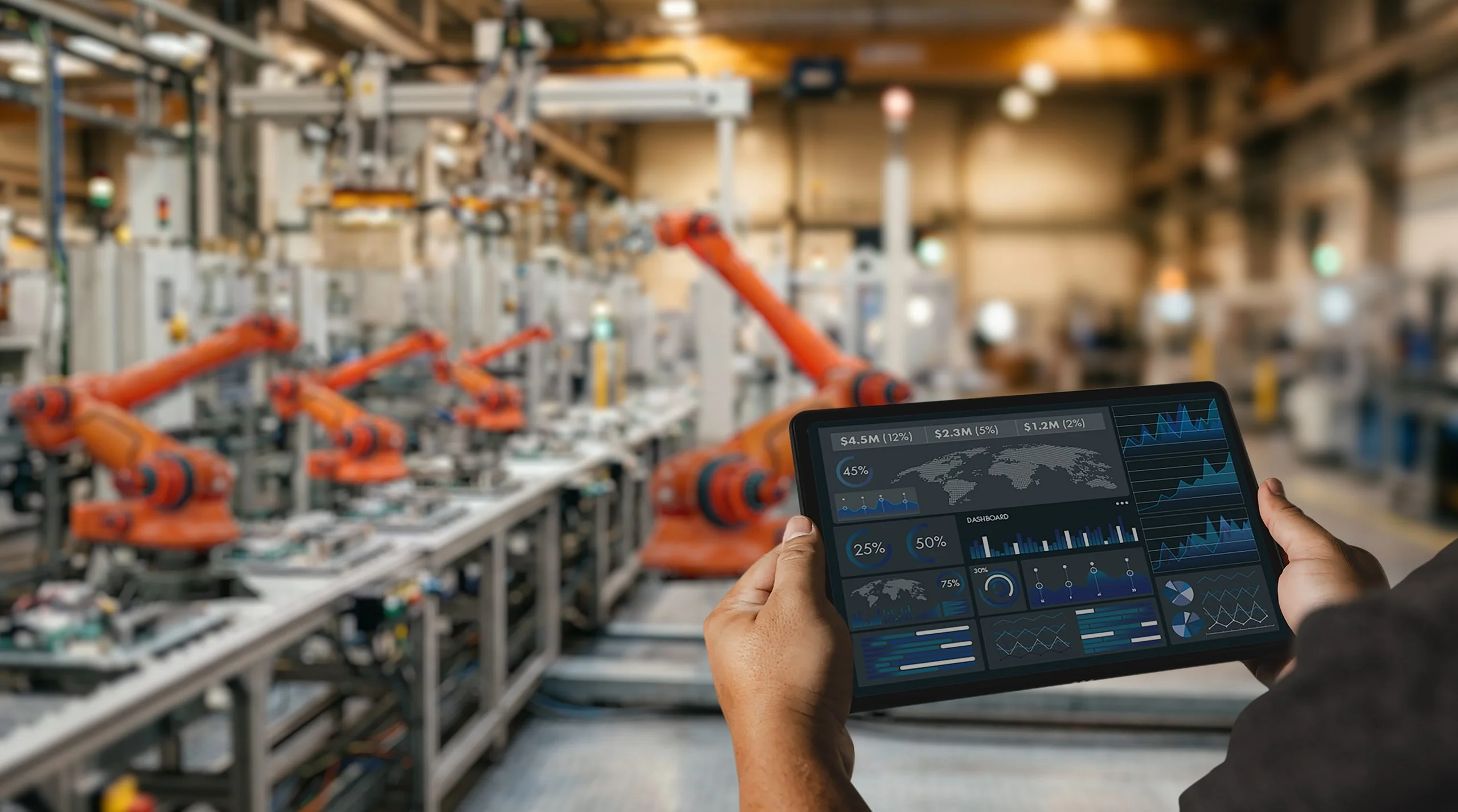
Real-time visibility is the ability to know the current state of production at any moment without walking the floor: what’s running, what’s waiting, what’s out of spec, and where the bottleneck is. It comes from connected equipment, MES integration, and dashboards or alerts that surface the right information to the right people.
In-Process Quality Control
In-process quality control catches defects during production rather than at final inspection. In a conventional facility, quality checks happen at inspection stations after operations are complete. In a smart facility, sensor data from the process itself flags quality issues as they develop: temperature profiles in heat treatment, torque-angle signatures in fastening and assembly, weld current and voltage in welding. Parts likely to be out of spec can be identified and removed before more value is added to them.
Predictive Rather Than Reactive Maintenance
Unplanned equipment downtime is one of the largest sources of production loss in manufacturing. Continuous equipment monitoring detects early signs of failure so maintenance can be scheduled in planned windows rather than after a breakdown.
Flexible Production
Connected production lines can reconfigure faster than conventionally programmed lines. A smart facility running a mixed-model schedule can adjust job sequences, routing, and machine assignments in response to a machine going down, a hot order arriving, or a quality hold on one part number, without a full manual replanning cycle.
Full Production Traceability
Every part produced in a smart facility can carry a digital record of the conditions under which it was made: the machine, the tooling, the operator, the process parameters, and the inspection results. Traceability is a baseline requirement in medical device and aerospace manufacturing, and an operational requirement for any program running statistical process control (SPC) or Production Part Approval Process (PPAP) documentation. Capturing it automatically is far more reliable than assembling it from paper records after the fact. When this data connects design, production, and field performance, it is often called the digital thread.
What Smart Manufacturing Means When You’re Sourcing Custom Parts
For engineers sourcing precision custom components, the clearest sign of a partner’s smart manufacturing capabilities is the data and documentation they provide.
Traceability and records: Connected systems capture machine, tooling, operator, parameter, and inspection data as parts are made. That data feeds PPAP documentation, First Article Inspection (FAI) reports, and corrective action analyses. Ask which records are generated automatically and which are assembled manually after the fact.
Process capability data: Engineers who require Cpk studies or other capability data will often find it more readily available, and easier to audit, from facilities that collect process data continuously. Confirm which characteristics are monitored and how capability is calculated.
Monitoring coverage: Smart manufacturing capability is rarely uniform across a facility. Ask whether the specific equipment that will run your part is connected and monitored, not just whether the facility is.
Design feedback: Facilities with connected DFM analysis tools can flag design issues during quoting, before production begins, rather than on the first production run. That reduces iteration cycles and schedule impact.
Designing Parts for Connected Production
A part does not perform differently because it was made in a connected facility. What changes is how well the design supports monitoring, measurement, and documentation.
Flag critical characteristics: Marking critical-to-quality (CTQ) features on the drawing lets a facility prioritize in-process monitoring and SPC on those dimensions. Unflagged features typically get the same periodic inspection as before.
Plan for measurement access: In-process probing needs clear access to datums and critical features. Datum schemes that match how the part is fixtured and probed also make in-process results correlate better with final inspection.
Reserve space for marking: Serialization or data matrix marking needs a flat, accessible, non-functional surface. Plan it in the design rather than leaving the manufacturer to find a spot.
Tolerance against demonstrated capability: If a partner shares process capability data, use it to help set functional tolerances based on what the process has actually held rather than on assumption.
Consider vision inspection: If the partner uses automated optical inspection, surface finish, contrast, and feature visibility affect how reliably it works.
Part variation is a widespread problem: 92% of respondents in our latest State of Manufacturing & Supply Chain Report agree that variation in part quality causes rework or scrap.
Where Smart Manufacturing Is Today
Adoption is uneven. Full smart manufacturing capability (connected equipment, a functional MES, digital twins, AI-driven optimization, and full traceability) isn’t the norm globally. Many are in automotive, semiconductor, and electronics manufacturing, where production volumes and the cost of defects justify the capital investment.
Partial implementation is far more common: connected equipment in some areas but not others, an MES that isn’t fully integrated with the shop floor, predictive maintenance on critical assets but reactive maintenance everywhere else. Partial implementation still delivers meaningful value over fully conventional production, but it is not the integrated system industry marketing tends to describe.
When evaluating manufacturing partners, specific questions are more useful than categorical ones. Instead of “do you do smart manufacturing?”, ask “what percentage of your machines are monitored in real time?”, “what does your in-process inspection capability look like for this part type?”, and “what quality data will you provide with each order?” The answers reveal actual capability more accurately than any capability description will.
Upload a part design to Fictiv for an instant quote with automated DFM feedback, and see manufacturability issues flagged before production begins. If your program needs process capability data, FAI reports, or full traceability, talk to a Fictiv manufacturing engineer about what documentation to specify up front.
Talk to a Fictiv expert about your project, or upload your parts to start a free quote.
FAQs About Smart Manufacturing
What is smart manufacturing?
Smart manufacturing is a production approach in which machines, sensors, software systems, and supply chains are connected well enough to generate, share, and act on data in near real time. Instead of only executing a fixed program, the facility responds to current conditions. Industry 4.0 and the Industrial Internet of Things describe overlapping ideas.
Is smart manufacturing the same as industrial AI?
No. Industrial AI is one layer of smart manufacturing: the machine learning, computer vision, and optimization applications running in a factory. Smart manufacturing is the broader foundation of connected equipment, data pipelines, edge computing, and systems integration. A facility can have connected equipment and an MES without industrial AI, but AI depends on that infrastructure for data.
What technologies make up a smart manufacturing system?
A smart manufacturing system combines five layers: connected equipment and sensors, edge computing, a Manufacturing Execution System (MES), digital twins, and AI and machine learning. Connected equipment is the foundation, because every higher layer depends on the real-time data it produces.
What does smart manufacturing change for engineers sourcing custom parts?
Connected systems generate the traceability records and process data behind PPAP, FAI, and capability documentation, and in-process monitoring can catch process drift before it produces nonconforming parts. Connected DFM tools can also flag design issues during quoting. Coverage varies by facility and by machine, so confirm it for the equipment running your part.
How can I tell whether a manufacturing partner has real smart manufacturing capability?
Ask specific questions: what percentage of machines are monitored in real time, what in-process inspection exists for your part type, and what quality data is provided with each order. Partial implementation is common, so specific answers reveal actual capability better than a general claim of being “smart.”