




Time to read: 10 min
Industrial equipment is built for longevity, but the components that keep it running are not always built to last. Many production systems operate reliably for 20–30 years, while the mechanical parts, control systems, and electronic components they depend on can become difficult or impossible to source before the equipment wears out. The gap between a machine’s operating life and the lifecycle of its critical parts is the “MRO obsolescence mismatch”—a foreseeable problem that grows gradually rather than hitting all at once.
Why Parts Age Faster Than Equipment
When OEMs update product lines to improve performance or follow new standards, older components are often phased out while the equipment they support still has years of productive life remaining. This is a normal lifecycle dynamic for different types of components operating on different schedules, and availability doesn’t always track with equipment longevity.
For control and electronic components, this shift often begins with a formal signal: an end-of-life (EOL) notice for a specific PLC module, sensor, drive, or switch that moves parts into last-time-buy status before they disappear from normal distribution channels entirely. For mechanical parts—gearboxes, seals, bearings, hydraulic manifolds, or structural castings—availability declines more quietly. A supplier discontinues a casting run, a proprietary geometry disappears from catalogs, or minimum order quantities become uneconomical for a single facility. There is often no formal notice at all.
In both cases, sourcing shifts from routine procurement to locating remaining inventory, qualifying compatible alternatives, or evaluating repair and fabrication options—ideally before a critical failure forces the issue.
Learn how to build a long-term strategy for aging assets with Fictiv’s MRO solutions for obsolete and hard-to-source parts.
The Four-Stage Obsolescence Timeline
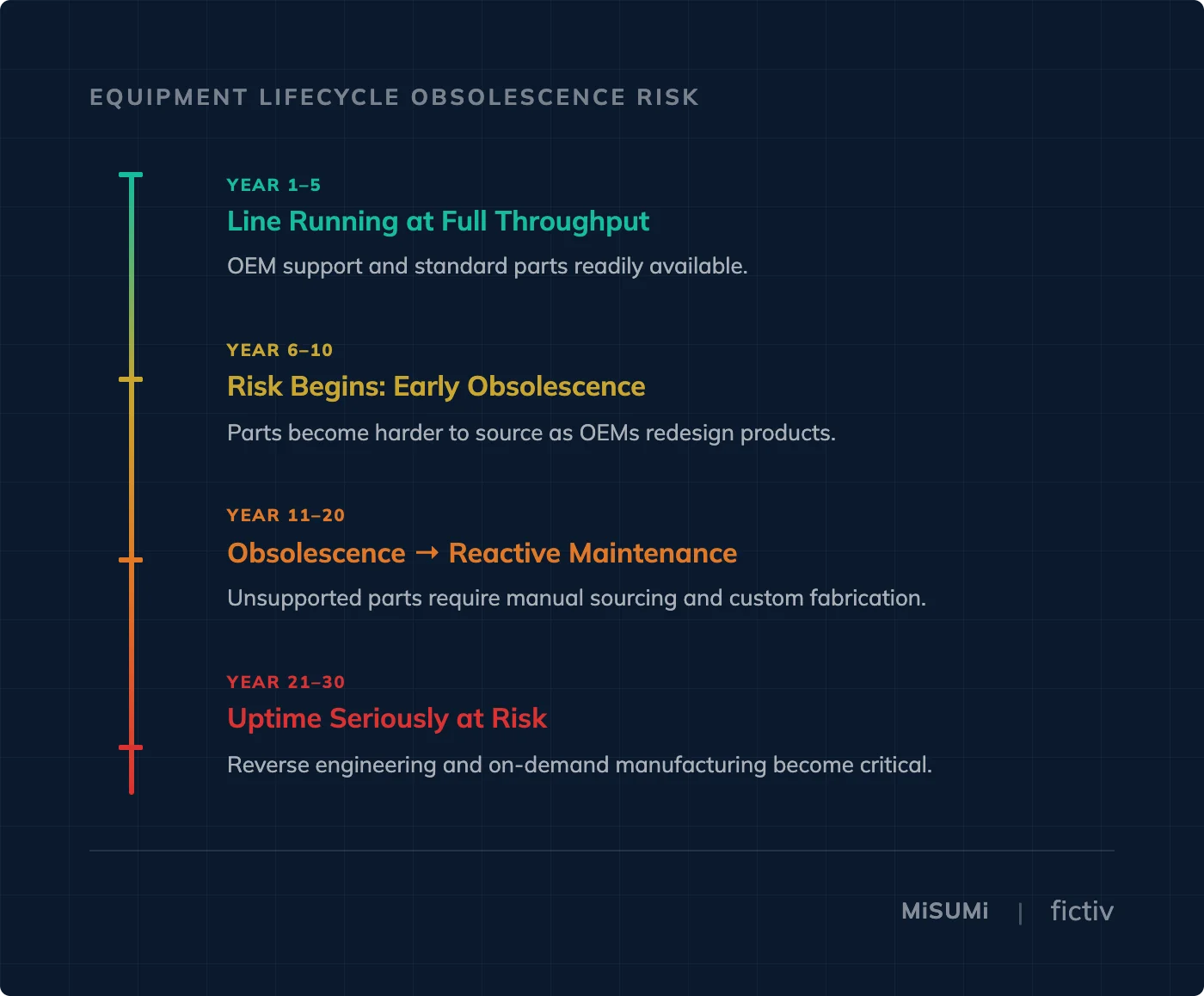
Understanding where equipment sits in this lifecycle allows maintenance, engineering, and procurement teams to anticipate sourcing challenges rather than react to them. The following four stages illustrate how MRO parts obsolescence evolves over time and the actions that can reduce risk before a critical failure disrupts production.
| Equipment Age | Operational State | Primary Risk | Recommended Action |
| Years 1-5 | Equipment fully supported | Complacency | Document BOMs, classify critical spares, capture design data, and monitor early EOL notices. |
| Years 6-10 | OEM support begins shrinking | Early sourcing gaps | Monitor EOL notices, track supplier catalog, identify points of failure, and evaluate alternatives |
| Years 11-20 | Reactive maintenance becomes common | Unsupported parts and long lead times | Use reverse engineering, custom fabrication, and on-demand manufacturing, while evaluating long-term replacement options. |
| Years 21-30 | OEM support is largely gone | Production uptime depends on independent sourcing | Maintain a long-term supply strategy, pre-manufacture critical spares, maintain strategic inventory, and evaluate equipment replacement. |
Years 1-5: Full Throughput and OEM Support
During the first five years, OEM support is fully available, and standard replacement parts are readily accessible through normal supply channels. This is the lowest-risk phase of the equipment lifecycle. The asset is operating as designed, and replacement parts can typically be sourced through authorized distributors with predictable lead times.
The primary risk during this stage is complacency. Because parts are easy to obtain, organizations often delay updating BOMs, identifying critical spare parts, or capturing engineering documentation. These gaps may not affect current operations, but can significantly complicate sourcing as OEM support changes over time.
Use this period to build the foundation for long-term equipment support. Document complete BOMs, classify critical spare parts, identify points of failure, and capture technical documentation while it is readily available. Where appropriate, establish baseline CAD models or dimensional records for components that may eventually require reverse engineering.
Years 6-10: Early Obsolescence and the First Sourcing Gaps
Between years six and ten, OEM product redesigns begin creating the first gaps in part availability. OEMs begin refreshing product lines, retiring older components, and issuing EOL notices for selected parts. While replacement parts remain available, inventories become less predictable, lead times increase, and sourcing requires greater coordination.
The risk shifts from underlying equipment reliability to part availability. Critical components such as bearings, seals, gearboxes, or hydraulic manifolds may become difficult to source, and compatible replacements may require engineering validation. Delaying action until a component fails reduces sourcing options and increases the likelihood of production delays.
Monitor supplier EOL notices, review BOMs for components approaching end of support, and identify single points of failure. Evaluate approved alternative or cross-referenced parts before inventories tighten further, and reassess inventory strategies and policies for components with declining availability.
Years 11-20: Reactive Maintenance and Unsupported Parts
From years eleven through twenty, unsupported parts increasingly require manual sourcing, custom fabrication, or reverse engineering to keep equipment operational.
Although many production assets continue to operate reliably, OEM support has diminished for critical components. Standard procurement channels no longer guarantee replacement parts, forcing maintenance teams to search surplus inventories, specialty suppliers, or third-party repair providers.
Part sourcing becomes increasingly reactive. Every unexpected failure has the potential to trigger emergency sourcing, engineering reviews, or custom manufacturing while production remains idle. For mechanical components, failure modes often announce themselves through vibration, noise, or a gradual drop in performance—but by that stage, replacement parts may no longer be readily available.
Shift from reactive sourcing to proactive lifecycle planning. Identify critical components for reverse engineering before they fail using technologies such as 3D scanning, CMM measurement, and CAD remodeling when original drawings are unavailable. Combine these capabilities with on-demand CNC machining and additive manufacturing to reduce dependence on obsolete OEM supply chains and extend the service life of legacy equipment.
Years 21-30: Uptime Seriously at Risk
After two decades of service, reverse engineering and on-demand manufacturing become essential because OEM support for many critical parts has effectively ended. The equipment may still provide significant production value, but maintaining uptime increasingly depends on an organization’s ability to source or manufacture replacement parts independently.
The greatest risk is extended production downtime caused by the inability to replace a failed component quickly. Emergency hot-shipping, incomplete documentation, and last-minute engineering workarounds become increasingly common when no long-term sourcing strategy is in place.
Develop an independent supply strategy for the asset’s remaining useful life. Identify critical wear components for pre-fabrication, maintain strategic spare part inventories based on failure history and remaining part life, and partner with qualified manufacturers capable of reverse engineering and producing obsolete components on demand.

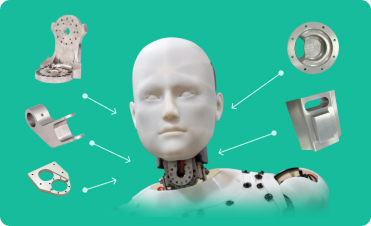
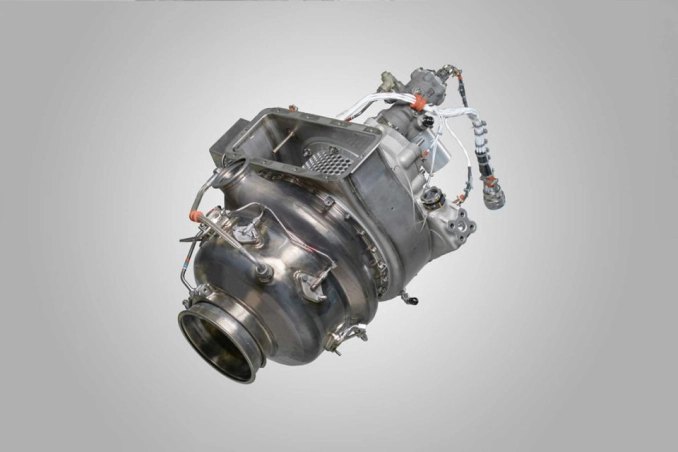
Examples of MRO spare parts
The Real Costs of Parts Life Mismatch
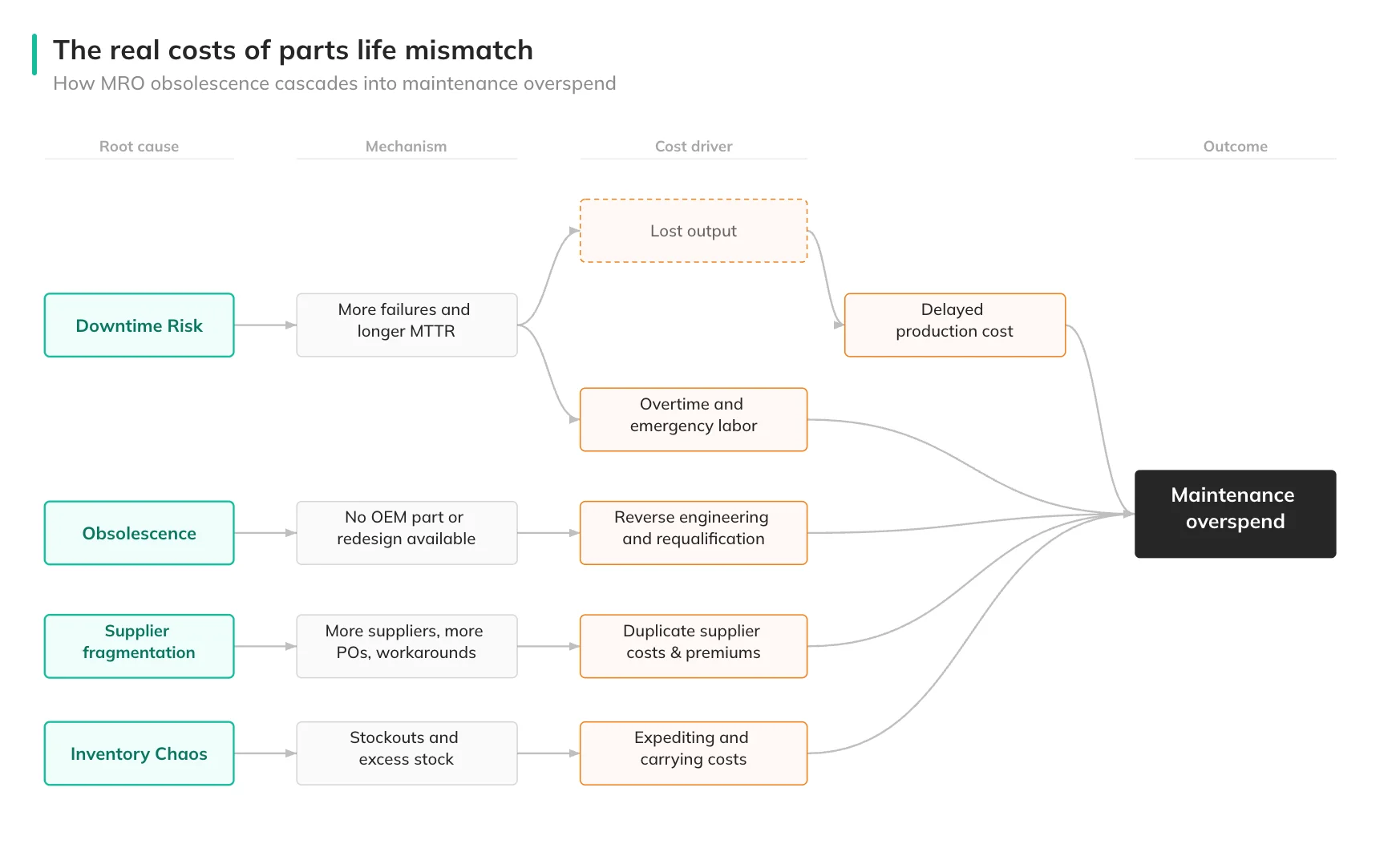
When critical components fail and OEM support is no longer available, maintenance teams face limited options. Remaining inventory may need to be sourced through secondary suppliers. It may be necessary to qualify an alternative component, commission a custom-fabricated replacement, or reverse engineer the original part, all while production remains halted. If technical drawings, specifications, or BOMs are incomplete, additional time is spent measuring parts, validating dimensions, or recreating design intent before manufacturing can begin. These documentation gaps compound delays, particularly for legacy assets that have undergone years of modifications without corresponding engineering documentation updates.
Business impact accelerates as downtime costs accumulate. According to Fictiv’s MRO Strategy Guide, unplanned downtime costs manufacturers an average of $260,000 per hour, and emergency repairs can cost 3-10 times more than planned maintenance. The price of an obsolete part is often insignificant compared with the cost of an idle production line, missed delivery commitments, overtime labor, and expedited manufacturing or shipping.
The longer an organization waits to deal with MRO parts obsolescence, the fewer sourcing options are available. What starts off as a manageable supply chain issue can evolve into a production emergency. This emergency is characterized by reactive panic buying, incomplete documentation, costly expedited shipping, and temporary workarounds that increase operational risk. When engineers recognize the obsolescence mismatch as a predictable lifecycle challenge early, rather than an isolated maintenance event, both downtime exposure and the total cost of sustaining aging manufacturing equipment can be reduced.
Getting Ahead of the Obsolescence Gap
The starting point is an obsolescence risk assessment—a structured review of critical components ranked by failure impact, lead time, and market availability. This surfaces the parts that pose the greatest operational risk, which are not always the most expensive ones: a low-cost bearing with a six-month lead time and no catalog alternative can stop a production line just as effectively as a failed drive.
From there, the right strategy depends on where the equipment sits in its lifecycle—documentation and BOM accuracy for newer assets, reverse engineering and qualified manufacturing partners for aging ones, and pre-fabricated spare inventories for equipment approaching end of life. The organizations that manage obsolescence best are the ones that treat it as a predictable lifecycle challenge and build a supply strategy around it before the production line goes quiet.
MRO Solutions
Talk to an expert about Fictiv’s MRO solutions, or upload your parts to start a quote for custom manufacturing.
Frequently Asked Questions About MRO Parts Obsolescence
What is the MRO obsolescence mismatch?
The MRO obsolescence mismatch refers to the gap between how long industrial equipment remains operational — typically 20–30 years — and how long its critical parts remain available through normal supply channels. Mechanical components can quietly disappear from supplier catalogs due to discontinued casting runs or supplier consolidation, while electronic and control components often follow a formal EOL timeline. In both cases, the equipment outlives its parts supply, creating sourcing challenges that grow more serious over time.
How is mechanical parts obsolescence different from electronic parts obsolescence?
Electronic and control components such as PLCs, drives, and HMIs typically follow a predictable support calendar, with formal EOL notices giving maintenance teams advance warning before parts move to last-time-buy status. Mechanical parts — bearings, gearboxes, hydraulic manifolds, structural castings — tend to disappear from the market more quietly, often with little or no formal notice. This makes mechanical obsolescence harder to anticipate and in some cases more operationally risky.
When should manufacturers start planning for parts obsolescence?
Ideally during the first five years of equipment life, when OEM support is fully available and parts are easy to source. This is the lowest-risk window to document complete BOMs, identify critical spare parts, and capture dimensional or CAD data for components that may eventually require reverse engineering. Waiting until parts become difficult to source — typically years six through ten — significantly narrows available options and increases both lead times and costs.
What options are available when an OEM no longer supplies a critical part?
When standard procurement channels are exhausted, maintenance and engineering teams typically have four options: locating remaining inventory through secondary or surplus suppliers; qualifying a compatible alternative part; commissioning a custom-fabricated replacement; or reverse engineering the original component using 3D scanning, CMM measurement, and CAD remodeling. The feasibility and cost of each option depends heavily on how complete the existing technical documentation is — gaps in drawings or BOMs can add significant time and cost before manufacturing can even begin.
How much does unplanned downtime from parts obsolescence actually cost?
The direct cost of an obsolete part is rarely the issue — the real cost is production downtime while sourcing, fabrication, or engineering workarounds are underway. Unplanned downtime costs manufacturers an average of $260,000 per hour, and emergency repairs typically cost three to ten times more than planned maintenance. When documentation is incomplete and parts require reverse engineering before they can be manufactured, those delays compound quickly, making proactive obsolescence planning one of the highest-return investments a maintenance organization can make.