





Time to read: 13 min
Unplanned downtime is the most expensive line item on a manufacturing plant’s balance sheet, with costs averaging $260,000 per hour in 2026.1 Emergency repairs cost 3–10 times as much as planned maintenance due to supply chain disruptions, overtime labor, and expedited shipping.2
Across the automotive, semiconductor, consumer products, and heavy industrial sectors, a stalled production line triggers a cascade of broken supply chains, missed delivery schedules, and compounding overhead.
At the center of this battle against operational paralysis is maintenance, repair, and operations (MRO).
Historically, MRO was treated as a reactive corporate cost center—a glorified inventory closet filled with spare v-belts, proximity sensors, and pneumatic fittings. Today, as factory floors evolve into hyper-connected, software-driven industrial automation ecosystems, that legacy approach is no longer viable.
Modern MRO requires automated, demand-driven supply chains. A proactive, lifecycle-driven strategy bridges the gap between standard off-the-shelf components and on-demand custom manufacturing.
This comprehensive guide establishes a tactical framework for industrial automation and machinery MRO, organized into three distinct lifecycle categories:
- New Manufacturing Systems
- Scaling Manufacturing Systems
- Legacy Equipment & Obsolescence Management
What is Industrial MRO and Why Does it Matter?
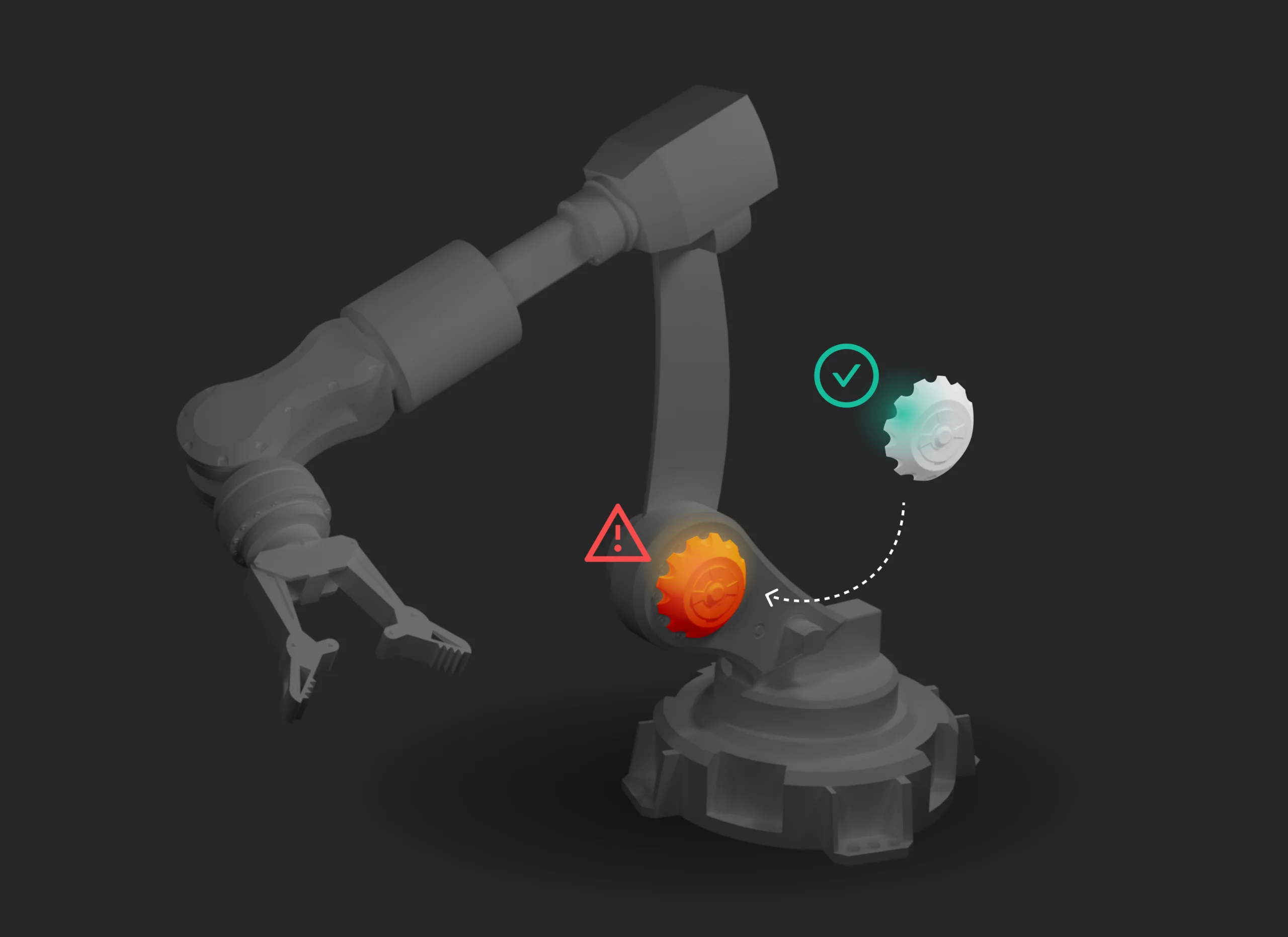
Maintenance, repair, and operations (MRO) refers to the components, equipment, consumables, and processes required to keep an industrial plant, production line, and automation system running efficiently—without directly becoming part of the final product.
In automated environments, MRO encompasses everything from structural framing, linear motion systems, and robotic end-effectors to PLC modules, custom brackets, and wear-and-tear tooling. To dive deeper into the logistics of these parts, review our breakdown of MRO parts.
The True Cost of Downtime
When an automation component fails, the financial impact is rarely limited to the replacement part’s invoice price. Direct, out-of-pocket expenses are a clear starting point, but that number is incomplete. The indirect and long-term consequences often push the true cost of an outage two to three times higher.
To capture the true economic drain of an outage, operations and finance experts look at downtime as a dual equation:
Total Downtime Cost = Direct Costs + Indirect Costs
Quantifying Direct Costs
Direct costs are the immediate, highly visible financial bleeds that appear on your accounting sheet during or right after a failure event.
Direct Costs = Lost Production Revenue + Direct Labor Bleed + Emergency Sourcing Fees + Scrapped Material Cost
- Lost Production Revenue: The gross margin of the items your plant failed to produce during the inactive hours.
- Direct Labor Bleed: The cost of paying idle floor employees who are unable to perform their duties because their machinery is down.
- Emergency Sourcing Fees: Premium-rate maintenance labor, rush processing, and expedited shipping fees paid to quickly secure a replacement part.
- Scrapped Material Cost: The financial value of perishable goods, raw materials, or in-process batches that spoiled, aged out, or were ruined when the line abruptly stopped.
Accounting for Hidden Indirect Costs
The bleeding rarely stops the moment a machine turns back on. To calculate a precise number, your facility must account for the indirect operational drag that follows an outage:
- Overhead Allocation: Fixed facility costs—such as building leases, insurance, depreciation, and baseline utilities—continue to run even when the line is generating zero commercial value.
- Ramp-Up and Rework Time: Automation systems rarely snap back to $100\%$ efficiency instantly. You must factor in the cleanup hours, material handling delays, and the inevitable calibration scrap produced during the restart phase.
- Supply Chain & SLA Penalties: Contractual penalties, late-delivery fees, or violations of customer Service Level Agreements (SLAs) triggered by production delays.
- Reputational Damage: The long-term, compounding revenue loss stemming from diminished customer trust, potential client churn, or the extra public relations and sales efforts required to win back market share.
Moving from a reactive “break-fix” model to a structured lifecycle approach, engineering and procurement teams can stabilize their OEE, protect their cash flow from these hidden variables, and eliminate systemic supply chain vulnerabilities.
New Manufacturing Systems: Designing for Maintainability
Building a new production line, deploying an automated robotic workcell, or launching a greenfield manufacturing facility provides a clean slate. However, the choices made during the early design phase dictate up to 80% of the system’s lifetime MRO costs.
[Design Phase] —> [Component Choice] —> [Lifetime MRO Impact]
Configurable parts = Low inventory footprint, fast replacement
Over-customized parts = High lead time, single-point-of-failure risk
Engineers frequently fall into the trap of over-customizing components and creating intricate geometries that require long-lead-time CNC machining. When that production line goes live and a component fails, the plant is left exposed.
Core Capabilities for New Systems
To establish an optimal foundation for a new manufacturing system, engineering and procurement teams must align on five core capabilities:
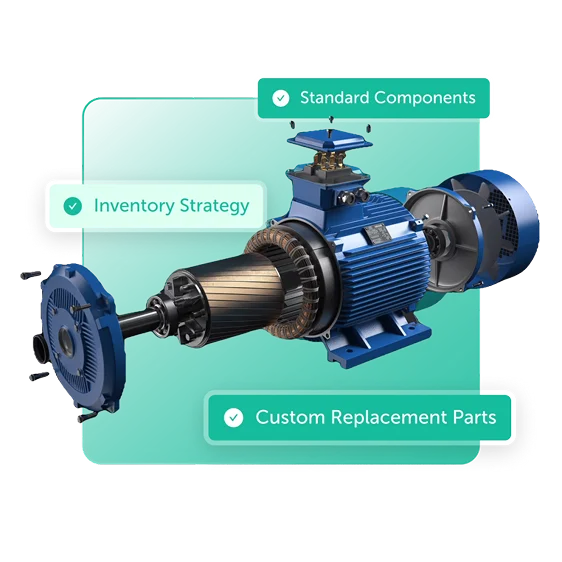
- Standard + Configurable Components: Maximize the use of components that are standard in form but configurable in dimension (such as linear shafts, aluminum extrusions, and locating pins). This allows engineers to get exact-fit parts without paying custom premiums or waiting weeks for raw fabrication.
- Custom Mechanical Components: When application requirements demand unique geometries or specialized material properties, establish reliable rapid-prototyping and production channels that transition smoothly from design to functional use.
- Supplier Consolidation: Managing hundreds of independent component vendors introduces massive administrative friction. Consolidating standard hardware, fluid power, and custom components under a unified sourcing ecosystem reduces transactional overhead and standardizes quality control.
- Preventative Maintenance Planning: Every new automation asset must launch alongside a data-driven preventative maintenance (PM) schedule that maps component lifecycles against Mean Time Between Failures (MTBF).
- Inventory Strategy Development: Determine critical spare parts lists (BOM classification) before the production line goes live, balancing on-site safety stock against external vendor availability.
Applications and Support Scenarios
- New Production Lines: Sourcing thousands of interconnected components—from structural frames to precision motion controls—while ensuring all parts arrive in sync with the build schedule.
- Robotics Deployments: Standardizing end-of-arm tooling (EOAT), mounting brackets, and sensor enclosures to simplify future maintenance cycles.
- Greenfield Manufacturing: Building a comprehensive MRO supply chain from scratch, optimizing vendor lists, and establishing localized inventory matrices for a brand-new footprint.
Scaling Manufacturing Systems: Sourcing Speed & Multi-Site Standardization
Once a manufacturing system is validated and operational, the focus shifts from design to operational scale. Scaling multiplies the variables: a single plant managing one line turns into a multi-site operation managing dozens of identical or semi-identical lines across different regions.
At this stage, the primary threats to efficiency are localized procurement silos, varying regional supplier lead times, and the costly inflation of safety stock across multiple warehouses.
Core Capabilities for Scaling Systems
Operational optimization at scale requires robust logistical integration and supply chain transparency:
- Contract Manufacturer (CM) + Supplier Coordination: Bridging the gap between internal engineering standards and external contract manufacturers ensures that scaled lines use authorized, interchangeable MRO components.
- Global Sourcing Support: Establishing a global supply chain with built-in backup mitigates geopolitical risks, regional tariff impacts, and localized component shortages.
- Factory Automation Component Sourcing: Maintaining a constant, high-velocity stream of operational hardware—such as sensors, pneumatic cylinders, actuators, and switches—supports both daily operations and planned capacity expansions.
- Just-in-Time (JIT) + Warehouse Inventory Strategies: Digital demand forecasting keeps fast-moving wear components on-site, while utilizing vendor-managed inventory (VMI) or digital manufacturing ecosystems to pull slower-moving components on demand. This strategy minimizes capital tied up in physical inventory.
- Real-Time Data Streams: Integrating RFID tracking and barcode scanning directly into your procurement software removes human error and provides absolute consumption visibility.
- Point-of-Use Distribution: Industrial vending machines function as the critical last mile of the internal supply chain. Placing fast-moving, off-the-shelf consumables directly at active workcells eliminates stockroom transit times.
- Automated Replenishment: Real-time consumption data automatically triggers purchase orders before a low-stock threshold can escalate into a catastrophic line outage.
- Ongoing MRO Support: Creating a standardized framework for processing engineering change orders (ECOs) across all active production assets without fracturing the established spare parts ecosystem.
Sourcing Models Compared
To balance cash flow against line-down risks, scaling organizations typically mix their inventory approaches based on component criticality:
| Sourcing Model | Ideal Component Type | Pros | Cons |
| On-Site Safety Stock | High-wear consumables, proprietary tooling, long-lead critical parts | Instant access, zero shipping latency | High capital lockup, footprint costs |
| Just-in-Time (JIT) | Standard catalog parts, modular automation hardware | Low holding costs, optimized cash flow | Vulnerable to transit delays |
| On-Demand Digital Sourcing | Low-volume custom components, bracketry, specialized fixtures | Eliminates physical storage, exact-fit parts | Requires highly vetted digital manufacturing partners |
Applications and Support Scenarios
- Multi-Site Manufacturing: Ensures that a plant in Ohio and a plant in Nuevo León use identical components, preventing performance variation and enabling cross-plant inventory sharing.
- CM Coordination: Enforces design and component standards when outsourcing line duplication to external automation integrators.
- Global Sourcing Standardization: Eradicates rogue spending and localized “panic buying” by giving engineers across the globe a unified, pre-approved component acquisition matrix.
Legacy Equipment & Obsolescence: Lifecycle Extensions
Every manufacturing system eventually enters its twilight phase. While machinery may remain mechanically sound, the electronic, pneumatic, or specialized mechanical components powering it will inevitably face End-of-Life (EOL) or obsolescence notices from original equipment manufacturers (OEMs).
When a critical sensor, custom casting, or specialty gear on an aging conveyor system fails and the OEM no longer supports it, the plant faces a brutal fork in the road: either undergo an incredibly expensive, unbudgeted capital rebuild of the entire machine or find an agile way to manufacture a drop-in replacement part.
Core Capabilities for Legacy Management
Mitigating obsolescence means eschewing traditional procurement catalogs in favor of advanced digital manufacturing and reverse engineering:
- Obsolete Component Sourcing: Navigating specialized industrial networks, certified aftermarket channels, and alternative component mapping to find functional drop-in replacements for discontinued parts.
- Reverse Engineering (No 2D Drawings Needed): Using modern 3D laser scanning, industrial CT scanning, and precision coordinate measuring machines (CMM) to reconstruct the exact digital CAD geometry of a physical part. This eliminates the need for original 2D blueprints.
- Additive + Custom Manufacturing: Deploying industrial 3D printing (metal and polymer) alongside rapid CNC machining to produce low-volume, high-complexity legacy components and bypass expensive traditional tooling constraints.
- Strategic Spare Inventory: Analyzing aging assets to identify single points of failure, then pre-fabricating or reverse-engineering those critical components before a failure occurs.
Reverse Engineering Obsolete Components
When a component is discontinued, waiting for a breakdown to plan a workaround is a recipe for catastrophic downtime. A reverse engineering workflow turns legacy components into digital assets:
- Capture: The worn or broken legacy component is scanned on-site or sent to a digital manufacturing partner.
- Remodel: Advanced CAD software extracts the functional geometry, compensates for physical wear or breakage, and establishes precise nominal dimensions to replicate the part.
- Manufacture: The validated file is produced via high-precision CNC machining or additive manufacturing in days rather than months. The design can then be scaled for higher volumes using injection molding or casting.
Applications and Support Scenarios
- Aging Production Lines: Keeping decades-old assembly lines profitable by manufacturing custom wear components that the original OEM stopped producing.
- Conveyor Systems: Replacing custom drive sprockets, specialized guide rails, or structural wear plates to keep massive logistical sorting facilities from stalling out.
- Unsupported Equipment: Developing an independent, reliable source of supply for high-value European or Asian machinery when original manufacturers have gone out of business or exited the market.
MISUMI + Fictiv Ecosystem for MRO Solutions
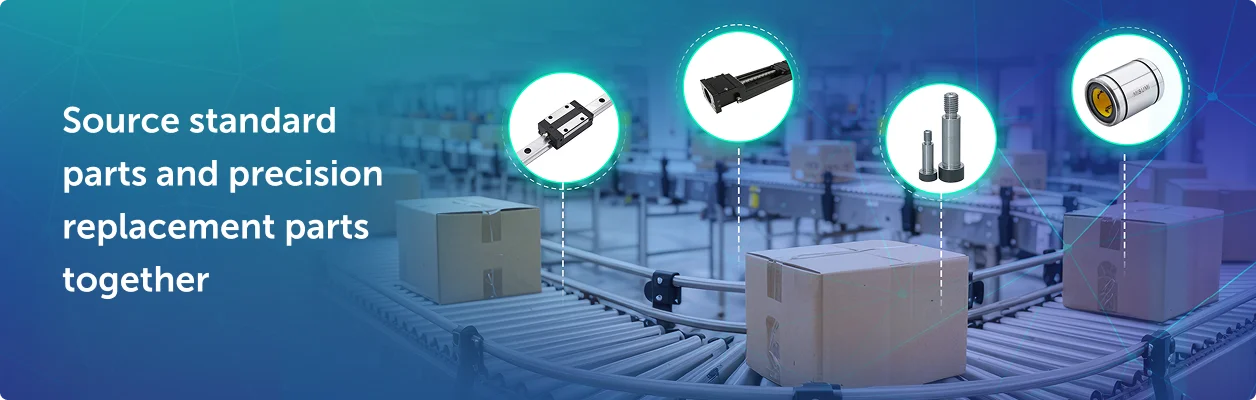
A comprehensive industrial MRO strategy can’t exist completely in a standard components catalog, nor entirely in a custom machine shop. It demands a hybrid ecosystem that handles standard configurations and custom parts simultaneously.
By pairing the configurable component logic of MISUMI with the agile, digital manufacturing ecosystem of Fictiv, engineering and procurement teams gain an end-to-end MRO lifeline. Whatever stage your manufacturing operation is in, the goal is the same: consolidate your supply chain, protect cash flow, and keep the line running.
Streamline Your MRO Sourcing
Stop chasing tracking data and dealing with erratic component lead times across fractured vendor networks. Partner with an industrial MRO specialist to consolidate your supply chain, secure structured volume pricing, and eliminate procurement friction across your entire facility.
Contact an MRO Sourcing Specialist to Optimize Your Supply Chain
Transition from CAD to Custom Parts in Days
Don’t let custom mechanical modifications, specialized brackets, or hard-to-find components stall your production timeline. Create a free account to get instant Design for Manufacturing (DFM) feedback, transparent pricing, and access to high-velocity custom fabrication.
Create Your Free Fictiv Account to Start a Manufacturing Quote
Talk to a Fictiv expert about your project, or upload your parts to start a free quote.
Frequently Asked Questions (FAQs) About Automated MRO Platforms
What is an automated MRO system, and how does it improve factory efficiency?
An automated MRO system connects smart inventory tools, digital procurement software, usage tracking, and automated replenishment workflows to handle maintenance supplies with minimal manual effort. Instead of relying on manual auditing or frantic emails, these systems give procurement teams real-time visibility into parts consumption. This allows factories to match their inventory directly to active production demands, lowering overhead while protecting machine uptime.
Why are traditional, manual MRO workflows failing modern automation lines?
Traditional MRO processes rely on disconnected spreadsheets, manual floor counts, and fragmented ordering across hundreds of independent vendors. When lines move at 2026 velocities, these slow, manual handoffs create massive visibility blindspots. This lack of data causes plants to cycle between two costly extremes: overstocking non-essential parts to avoid risk, or facing catastrophic downtime because a critical, long-lead component was completely overlooked.
How do engineering and procurement collaborate to minimize lifetime machine MRO costs?
True lifecycle optimization requires engineering to design for maintainability and procurement to optimize for velocity. During the initial design phase of a new system, engineering should maximize the use of standard and dimensionally configurable components rather than entirely custom parts. This allows procurement to leverage unified digital sourcing platforms, establish automatic replenishment thresholds, and lock in predictable volume pricing before the asset ever turns on.
How does the MISUMI x Fictiv partnership address the entire Bill of Materials (BOM)?
Most programs fail because they only treat the symptoms of an unstable supply chain—they focus entirely on standard catalog hardware or entirely on emergency machining. The co-branded MISUMI and Fictiv ecosystem provides a unified platform that covers your entire BOM. MISUMI handles the high-velocity, automated procurement of standard and configurable parts, while Fictiv seamlessly manages the custom, precise, or completely obsolete components through an agile digital manufacturing platform.
How does smart inventory automation change traditional MRO procurement?
Traditional MRO relies on manual, periodic audits, which inevitably lead to inaccurate stock counts and emergency shortages. Smart inventory automation digitizes this workflow by tracking parts consumption in real-time as components are used on the floor. This continuous stream of data connects physical usage directly to digital procurement platforms, allowing systems to automatically reorder fast-moving components before an engineer ever realizes a shelf is running low.
Why is data visibility the most critical factor when scaling a multi-site MRO strategy?
Without centralized data visibility, each manufacturing plant operates as an isolated island. This lack of transparency causes localized inventory hoarding, duplicate orders of the same critical spares across different regions, and fragmented vendor spend. By establishing a connected, automated inventory network, corporate procurement gains a single pane of glass to view true component usage rates, optimize volume discounts, and seamlessly balance stock levels between plants.