



Time to read: 9 min
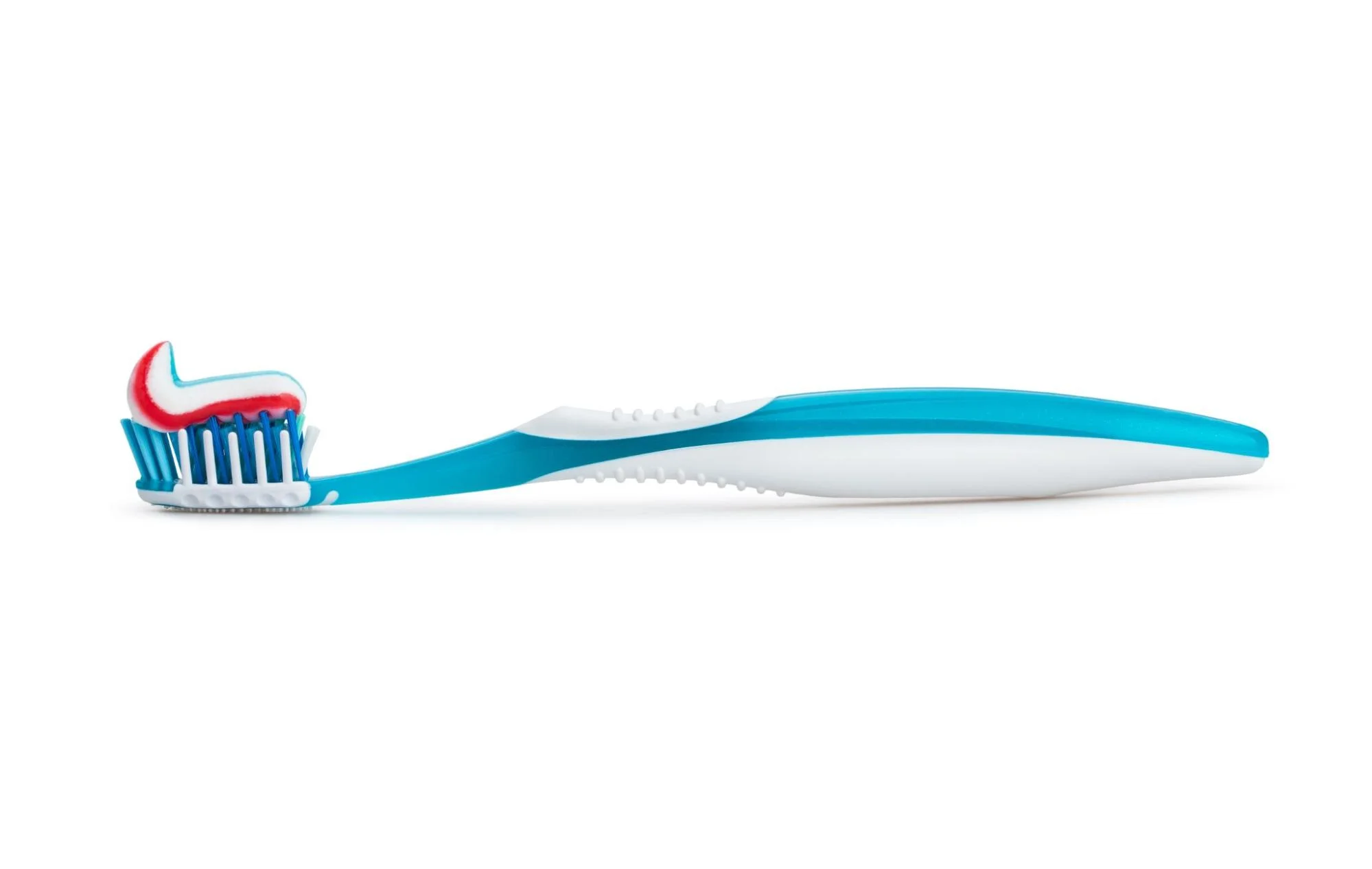
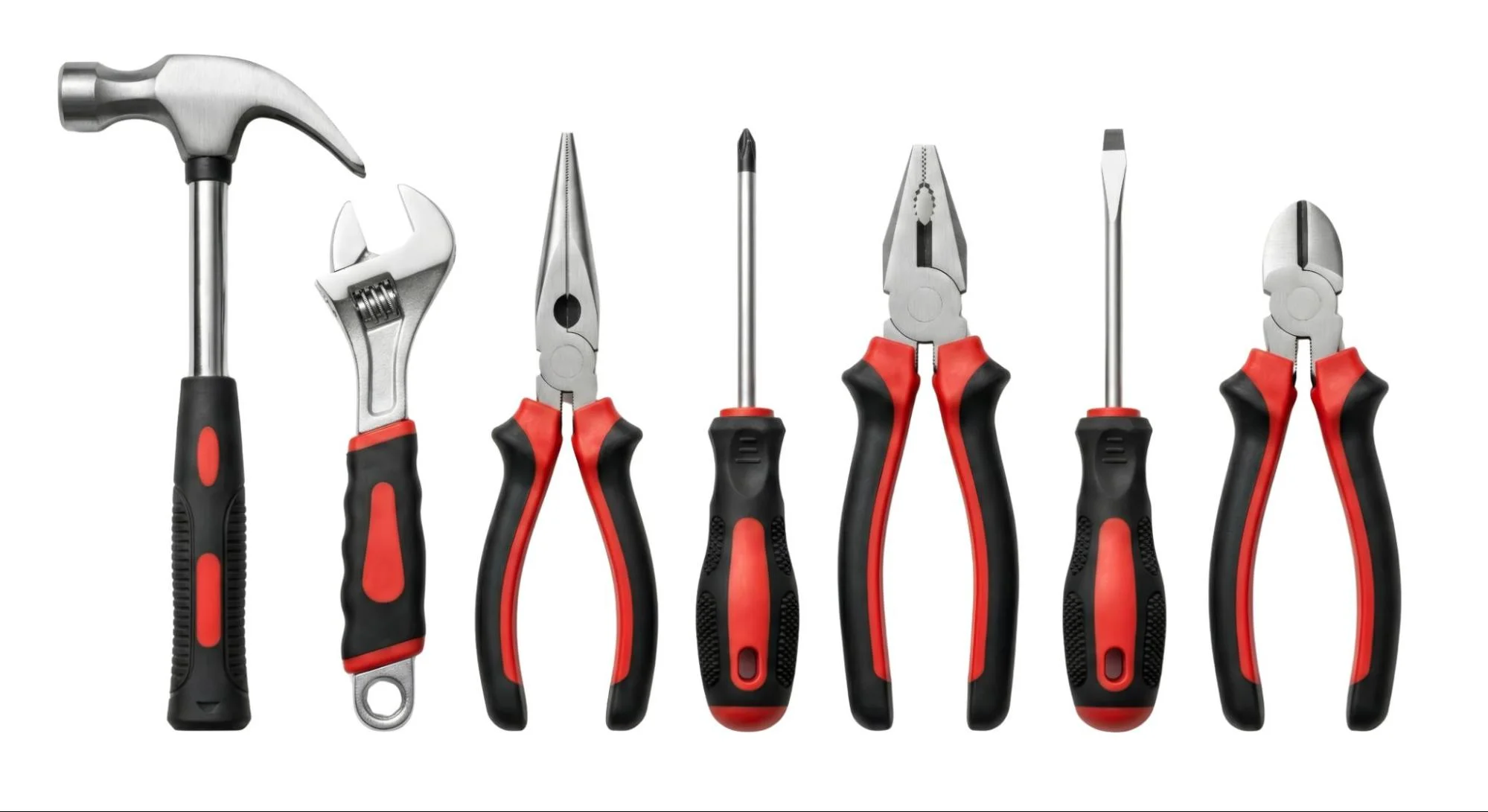
Overmolding is widely used to combine materials with different properties—such as rigid substrates and soft-touch elastomers—into a single component. Common examples include tool grips, seals, and consumer products like toothbrushes. However, successful overmolding depends heavily on material compatibility. Poor adhesion between materials can lead to delamination and part failure, making proper material selection and interface design critical early in development.
An overmolded assembly is created from two materials using an injection mold, with one material molded over the other. It allows the design of components that combine the advantages of both materials: a hard, durable base beneath a softer, more flexible outer layer.
This article will further discuss how overmolding works, common overmolding materials used, DFM (Design for Manufacturing) considerations, and how to choose compatible materials.
How Overmolding Adhesion Works
Overmolding adhesion depends on the development of interlocking forces by both chemical and mechanical means. Several processes, including interdiffusion and polymer chain entanglement, contribute to chemical adhesion.
High-surface-energy materials generally bond better than low surface energy plastics because their surfaces wet more readily—meaning liquids spread and attach rather than bead. Mechanical retention is a function of both designed-in macrofeatures (such as ribs or holes) and microfeatures (such as surface roughness and porosity).
Chemical Bonding
The factors that contribute to chemical bonding in overmolding include:
Surface energy: The surface energy of a material (also called surface free energy) indicates how strongly the molecules on the substance’s surface attract one another and how easily liquids can wet the substance. Therefore, high-surface-energy substrate materials like nylon and polycarbonate allow overmolding materials to spread easily and adhere to the substrate surface, forming strong bonds.
Low-surface-energy substrate materials, such as polypropylene or polyethylene, tend to cause liquid overmolding material to pool and bead, which results in poor adhesion between the two materials.
Polymer chain compatibility: If the substrate and the overmolding material have polymer chains with similar chemistries, those chains are more likely to interact, entangle, or co-crystallize at the interface between the two materials. This improves the interfacial bond.
Melt temperature interaction: The temperature should be high enough that the substrate surface softens slightly, allowing limited interfacial softening and molecular interdiffusion in compatible material pairings.
Molecular interdiffusion: The molecules of the substrate and overmolding material can diffuse into each other at the interface, entangling their polymer chains. This interdiffusion is promoted by a softening of the substrate surface and an overall higher temperature, which provides more energy and higher rates of diffusion to the molecules at the interface.
Mechanical Bonding
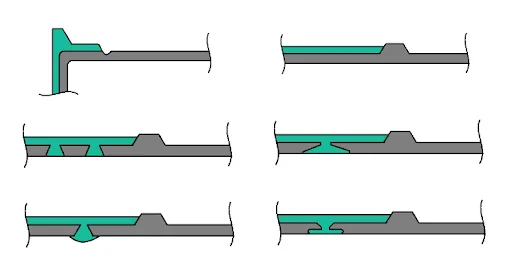
Designed-in physical features can improve retention of the outer material on the substrate. Overmolding works best when the inner and outer materials are chemically compatible, but even incompatible combinations can be keyed together using some of these mechanical features:
- Undercuts: The substrate material can be molded with protrusions that allow the overmold material to flow underneath the protrusion and mechanically interlock with the undercut once solidified.
- Texturing: A texture impressed on the bonding surface of the substrate provides more surface area for adhesion with the overmold material.
- Through-holes: Overmold material can flow into pre-made through-holes in the substrate, providing anchor points for the outer material layer.
- Retention features: The substrate can be molded with features such as ribs that protrude from the surface, which provide mechanical grip locations for the overmold material.
Common Overmolding Materials and Their Compatibility
TPE
Thermoplastic elastomers (TPE)—and more specifically, styrenic polymers such as TPS (thermoplastic styrene) and SEBS (styrene-ethylene-butylene-styrene)—are widely used for tool grips, comfort features on equipment handles, and seals. These elastomers are typically paired with ABS and polycarbonate substrates.
TPU
Thermoplastic polyurethane (TPU) offers excellent tear resistance and abrasion resistance, making it well-suited for high-wear elements such as rugged housings and wearable bands. It is commonly overmolded onto various grades of polycarbonate and ABS.
TPV
TPVs (Thermoplastic Vulcanizates) are polyolefin-based elastomers in which an EPDM rubber phase is dynamically vulcanized during compounding, resulting in a material with rubber-like elasticity and thermoplastic processability. TPVs are widely used for overmolding on PP due to their chemical similarity and good resistance to heat, weathering, and automotive fluids.
TPO
TPOs (Thermoplastic Olefins) are blends of polypropylene and elastomeric phases (typically EPDM or similar rubbers) that are not fully crosslinked. They offer good compatibility with PP substrates and are commonly used in automotive and industrial applications where moderate flexibility and cost efficiency are required.
TPC
TPCs are used in engineered assemblies that need flexibility, fatigue resistance, and strong chemical/temperature performance. They are more niche in overmolding than TPE/TPU, but they can be useful in demanding industrial applications when matched to the right substrate and process.
Silicone / LSR
Silicone (or liquid silicone rubber, LSR) is used in applications where heat resistance, chemical resistance, or biocompatibility is important. Many LSR systems still require primer or surface treatment, especially on difficult thermoplastics, but self-bonding LSR grades are also available for selected substrates such as certain nylons, PBTs, and metals. Adhesion is highly supplier- and grade-specific, so lab validation is essential.
Overmolding Material Compatibility Chart
The table below indicates the best overmolding polymers to pair with common substrates. Note that testing of the specific grades of substrate and polymer is recommended before proceeding.
| Substrate | Overmolding Material | Notes | ||
| TPE | TPU | Silicone | ||
| ABS | Good | Good | Limited | Surface prep of the ABS will improve adhesion further |
| Polycarbonate (PC) | Very Good | Good | Limited | Preheat temperature is carefully selected for surface softening |
| Nylon | Moderate | Moderate | Limited | Moisture content of nylon affects bonding |
| Polypropylene (PP) | Requires specialized TPE | Limited | Limited | Low surface energy; pairs best with TPV overmolding material. |
Common Overmolding Substrates
Below are some notes on common pairings of overmold material and substrate:
ABS
ABS, with its high surface energy, is a solid choice for an overmolding substrate. It is commonly paired with TPE or TPU overmolding materials. Materials with polar chemistry typically have the best adhesion to ABS.
Polycarbonate
Polycarbonate (PC) is compatible with many TPE and TPU grades. In some insert-overmolding processes, controlled substrate preheating can improve wetting and interfacial bonding, but the correct preheat window is highly grade- and process-dependent. When the liquid TPE is injected into the overmold space at higher temperatures, the PC surface should remain just below its softening temperature in order to prevent distortion.
Nylon
Nylon can be challenging because moisture content strongly affects molding consistency and adhesion performance. Drying the substrate to the resin supplier’s recommended moisture level is often critical. Some TPE grades are specifically formulated to bond to PA without primer, while other combinations may require plasma, corona, chemical surface treatment, or a primer system.
Polypropylene
Polypropylene is difficult to use as an overmold base material due to its low surface energy. Standard TPE and TPU grades typically exhibit poor adhesion to PP. For PP overmolding, engineers typically select polyolefin-compatible TPE grades (such as TPV or TPO) formulated for adhesion to polypropylene. In these cases, adhesion is driven primarily by polymer compatibility, interfacial wetting, and grade-specific formulation, rather than strong intrinsic chemical bonding.
Metal
For thermoplastic overmolding onto metal, retention is often enhanced through a combination of mechanical lock features (such as holes, undercuts, and surface texture) and surface preparation techniques. These may include cleaning, etching, or the application of adhesion-promoting primers.
For example, properly prepared aluminum surfaces combined with compatible primer systems can significantly improve polymer adhesion. However, the effectiveness of these treatments is highly dependent on the specific metal, polymer, and processing conditions. For silicone/LSR systems, primers or self-bonding grades may provide strong chemical adhesion to selected metal substrates.
Materials That Are Difficult to Overmold
Not all materials are equally suitable for overmolding. Some substrates present consistent challenges due to their low surface energy and limited chemical compatibility, which can lead to poor adhesion without special measures.
Polypropylene (PP)
Polypropylene is one of the most challenging common substrates for overmolding due to its low surface energy. Standard TPE and TPU grades typically do not bond well to PP.
To improve adhesion, engineers typically use:
- Polyolefin-compatible TPE grades (such as TPV or TPO)
- Mechanical retention features (undercuts, holes, texture)
- Surface treatments (plasma or corona)
Even with these approaches, adhesion performance is highly dependent on material grade and process conditions.
Polyethylene (PE)
Polyethylene (PE), including HDPE and LDPE, is also difficult to overmold for similar reasons. Its nonpolar chemistry and low surface energy make it resistant to wetting and chemical bonding.
Adhesion to PE is typically:
- Limited with standard elastomers
- Improved only with specialty adhesive grades or surface treatments
In many cases, designs rely primarily on mechanical interlocking rather than chemical bonding.
Other Low Surface Energy Plastics
Other materials with low surface energy—such as acetal (POM) and fluoropolymers (e.g., PTFE)—are also difficult to overmold.
These materials resist wetting by molten polymers and exhibit minimal chemical interaction at the interface.
As a result, successful overmolding often requires:
- Aggressive surface preparation
- Specialized adhesive systems
- Or purely mechanical retention strategies
Need more material selection advice for injection molded parts? Ask our Materials.AI or download our Injection Molding Material Selection Guide.
Key Factors That Affect Overmold Adhesion
The table below summarizes the key factors (other than simple pairing of compatible materials) that will influence how the bond between your overmolded assembly components holds up over time.
| Factor | What It Impacts | Negative Results | Corrective Actions |
| Cleanliness | Wetting | Beading of overmold liquid, delamination | Clean with isopropyl alcohol (IPA) |
| Substrate melt/overmold temperature overlap | Molecular interdiffusion | Poor chemical adhesion | Preheat substrate to just below melt temperature |
| Time between shots | Cooling at substrate surface (interface with overmold) | Skin formation on substrate | Minimize time between shots, consider heated runners |
| Injection pressure during overmolding | Incomplete wetting and filling | Air traps, incomplete fill | Increase injection pressure |
| Moisture content (particularly nylon) | Hydrolysis of overmold material and formation of voids | Steam blisters | Drying and sealing of nylon substrate before overmolding |
| Texture at interface | Mechanical bonding | Overmold peeling under shear stress | Add surface texture, etching |
| Environmental exposure in service (e.g., humidity, chemicals) | Bond longevity | Failure in adverse environmental conditions | Prolonged exposure testing |
DFM Considerations for Overmolding
Designing for manufacturability (DFM) has a measurable impact on the success and profitability of your project. Assessing your substrate and overmold material selection with DFM in mind early in the design process is critical. Fictiv can provide advice on the complex details of the injection molding and overmolding processes that influence cost and manufacturability.
In designing an overmolding process, a key decision is whether to use two-shot molding or insert molding. Two-shot molding uses the same machine and process to inject a second shot over the substrate, whereas insert molding places previously molded components into a new mold.
Overmolding design will also consider features such as draft angles and gate placement. It’s also important to consider tooling complexity. Be sure to give sufficient consideration to manufacturing process selection and seek expert advice before moving ahead with production.
Practical DFM Checklist:
- Design mechanical retention into the interface when chemical adhesion is uncertain.
- Account for shrinkage mismatch between substrate and overmold to reduce warpage or cupping.
- Use proper shutoffs to prevent flash onto cosmetic surfaces.
- Minimize the time between shots in two-shot molding to preserve interface temperature.
- Control gate placement so flow fronts fully wet the bond area rather than meeting at a weak knit line in the highest-stress region.
- Validate bond strength after environmental conditioning, not just as-molded.
Work With Experts in Overmolding
Any overmolding project includes a significant number of variables, and no two projects are the same, so working with experts in injection molding and overmolding is strongly advisable. Fictiv supports multiple processes and can offer guidance when choosing between insert molding and two-shot molding—drawing on DFM principles and the expertise of its in-house experts to provide input on material selection and geometry details.
Upload your part design to the Fictiv platform to get a free quote and DFM feedback. Get expert insights that can improve the manufacturability of your project.
Overmolding Materials and Substrates FAQ’s
What materials bond best in overmolding?
TPE and TPU bond well to high-surface-energy plastics like ABS and polycarbonate, while TPV and TPO are better suited for polypropylene substrates.
Why is polypropylene difficult to overmold?
Polypropylene has low surface energy, which prevents proper wetting and chemical bonding. Specialized elastomers or mechanical retention features are typically required.
Can silicone bond to thermoplastics in overmolding?
Yes, but adhesion depends on the specific grade. Many applications require primers or self-bonding LSR formulations validated through testing.
What causes overmolding delamination?
Delamination is typically caused by poor material compatibility, low surface energy, improper temperature control, contamination, or insufficient mechanical retention features.
Is mechanical bonding enough for overmolding?
Mechanical bonding can compensate for poor chemical compatibility, but the strongest designs combine both chemical adhesion and mechanical interlocking.