
Finishing Services

Media Blasting

At a glance

Applicable Materials

Colors

n/a

Applications

Cosmetic parts (the surface of your Macbook Pro has been bead blasted)

Texture

Matte

About the Process

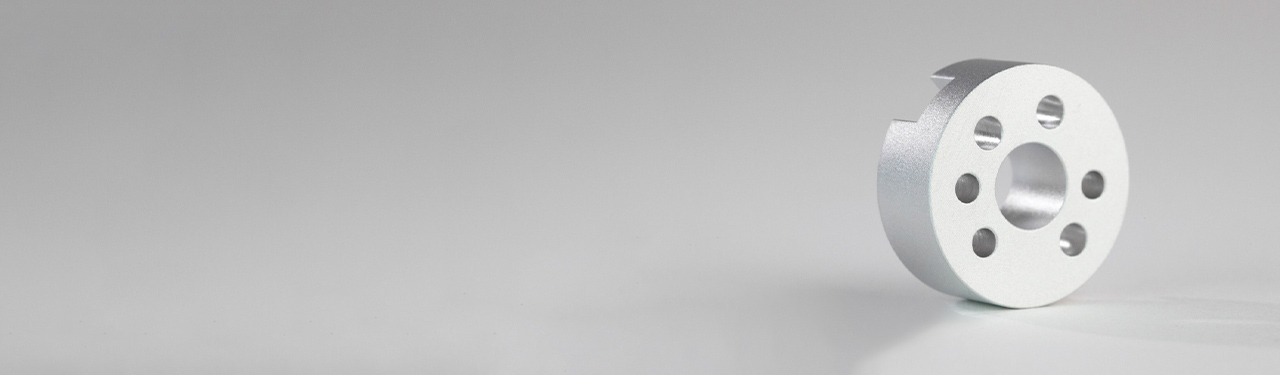
Media blasting uses a pressurized jet of abrasive media to apply a matte, uniform finish to the surface of parts. The most common media used are varying sizes of glass beads or sand, though for other levels of abrasion, things like plastic beads have also been used.

This process is used to create a uniform, matte finish on parts, but can also be used to hide machine marks or remove small flaws in parts prior to anodizing or other plating processes.

Design considerations

  • Plugging threaded/reamed holes not required unless tolerances are very tight, as thickness change is minimal.
  • Avoid blasting thin walls, as they are prone to deformation.
  • Parts with intricate geometries may be difficult or impossible to uniformly finish.

YOU MIGHT ALSO BE INTERESTED IN

Scaling CNC to Casting Guide

How to Transition from CNC Machining to Casting for Production Scale Identifying the Right Parts for Casting CNC vs. Casting: Fundamental Differences Casting Process Selection (DFM) Design Adjustments for Transitioning from CNC to Casting Casting Design for Manufacturability (DFM) Considerations Materials & Performance Considerations Hybrid Strategy: Casting + CNC Finishing Simulation & Validation Tooling & […]

Learn More

Prototyping Lead Time: Process Timelines and How to Reduce Delays

Prototyping lead time is often framed as a simple question: “How long will it take to get my part?” In reality, the answer is rarely determined by machine time alone. A prototype expected in days can easily take weeks—not because of production constraints, but because of delays in quoting, design iteration, manufacturability feedback, and supplier […]

Learn More