







Time to read: 3 min
CNC machining involves far more than simply uploading a CAD model and cutting parts. Every part is shaped by the material, machine types, cutting tools, finishes, and design constraints that work together to determine cost, quality, and performance.
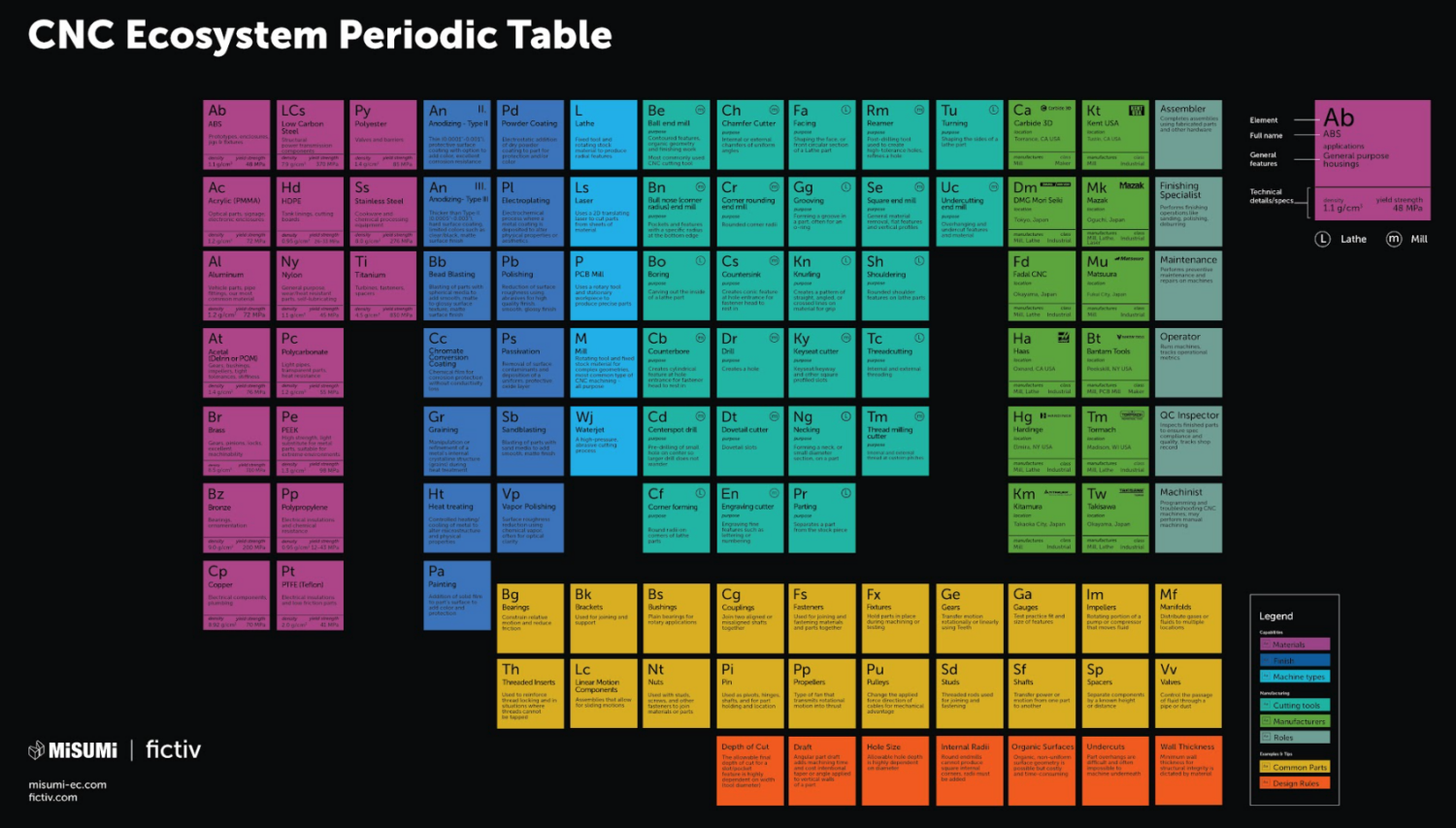
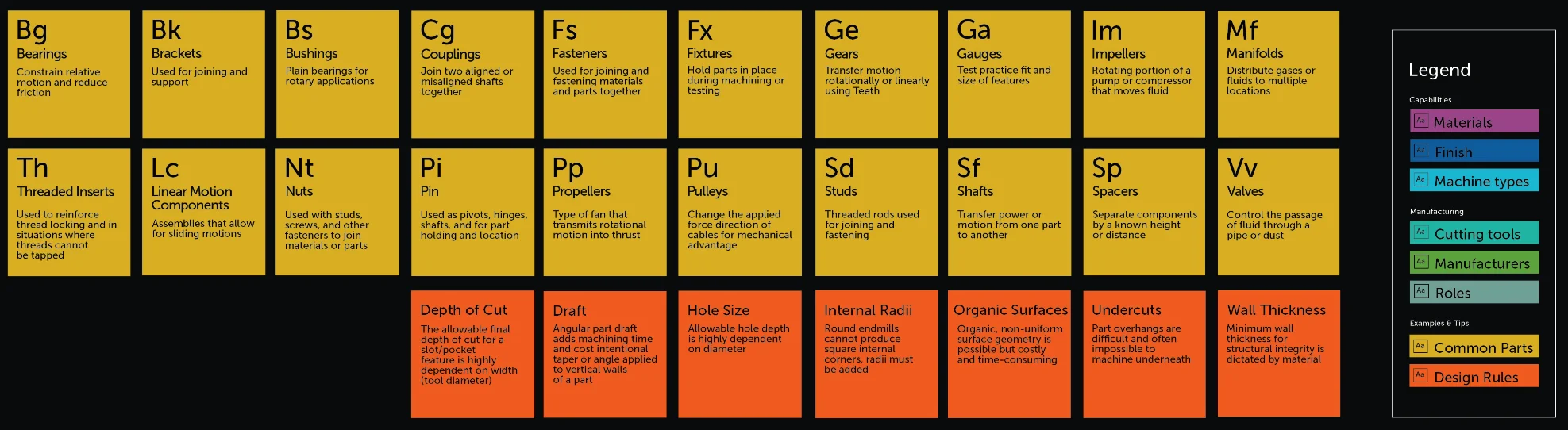
To help engineers better understand these relationships, the Fictiv team created the CNC Periodic Table of Elements—a visual guide to the foundational components of CNC machining.
Modeled after the classic chemistry periodic table, this chart organizes the core “elements” engineers work with every day when designing and manufacturing CNC parts. Instead of atomic numbers and symbols, it highlights the practical building blocks of machining to show how it all comes together at a glance.
How to Read the CNC Periodic Table
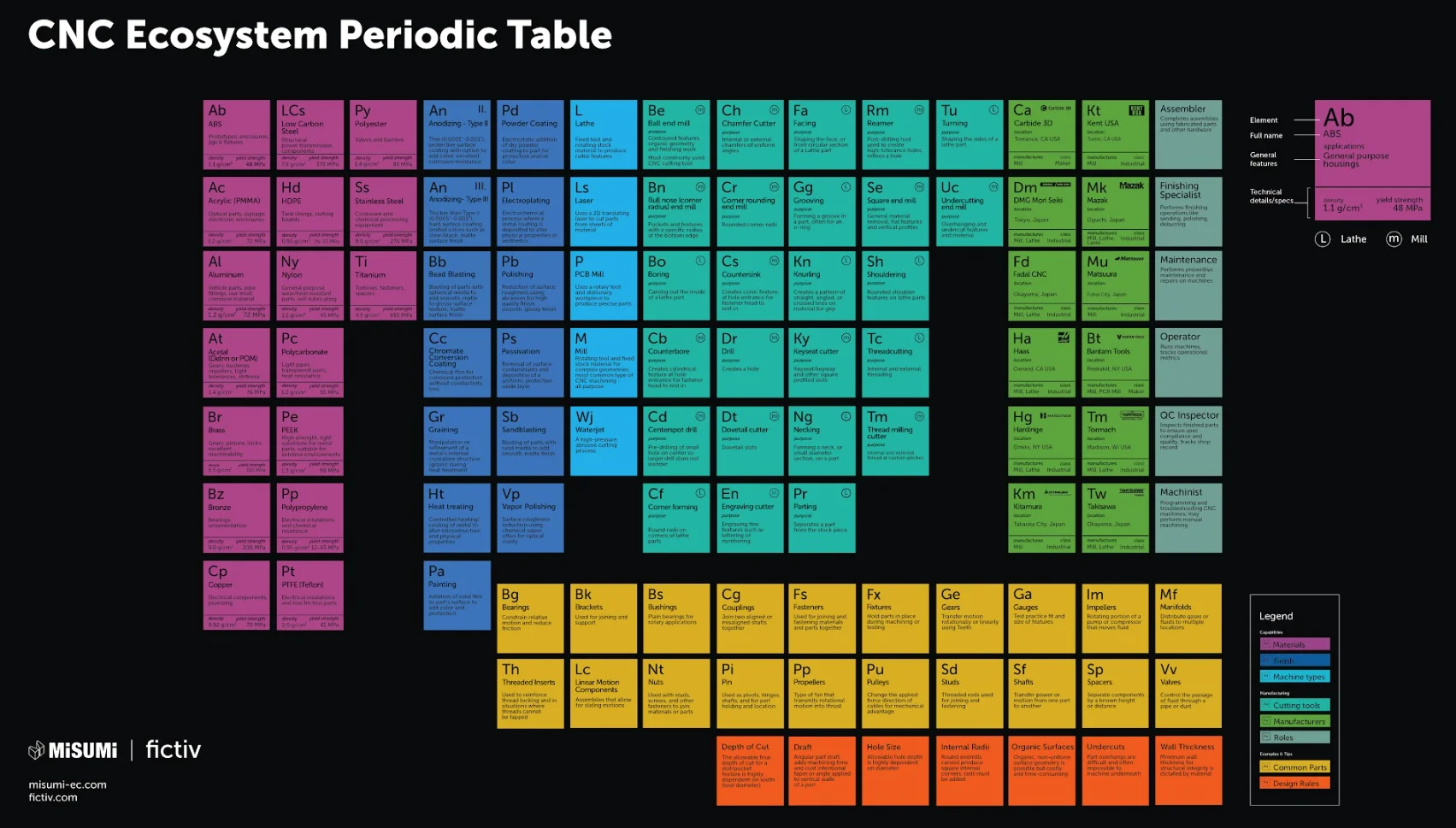
The CNC Periodic Table is designed to be intuitive and scannable, especially for engineers navigating multiple design and manufacturing decisions at once.
The table is color-coded to group different aspects of machining into clear categories:
- Materials: Metals and plastics commonly used in CNC machining
- Finishes: Surface treatments and coatings applied after machining
- Machine Types: Equipment used to produce machined parts
- Cutting Tools: Tools that remove material during machining
- Manufacturers: Examples of well-known CNC machine builders
- Roles: The people involved in the machining process
- Common Components: Parts frequently produced with CNC
- Design Considerations: Key Design for Manufacturability (DFM) guidelines
Each “element” includes a short description and often indicates whether it primarily applies to milling, turning, or both—helping users quickly connect concepts to real-world processes.
The Key Categories of CNC Machining
While the table provides a framework for thinking holistically about machining, each category represents a critical dimension of CNC manufacturing.

Materials
Materials such as aluminum, stainless steel, titanium, and engineering plastics influence everything from machining strategy to part performance, including strength, weight, and thermal resistance.
Finishes
Post-processing operations—such as anodizing, passivation, polishing, or plating—enhance corrosion resistance, improve aesthetics, and can extend part lifespan.
Machine Types
Different machines are optimized for different geometries. CNC mills produce complex prismatic parts, while lathes are ideal for cylindrical components like shafts and bushings.
Cutting Tools
End mills, drills, reamers, and taps physically shape the part. Tool selection directly affects tolerances, surface finish, and cycle time.
Manufacturers
Machine tool builders like Haas, Mazak, and DMG MORI are the backbone of CNC capability, influencing machine performance, precision, and feature sets.
Roles
From design engineers to machinists and quality inspectors, CNC machining is a collaborative process involving multiple specialized roles.
Common Components
CNC machining is widely used to produce components like gears, housings, brackets, shafts, and fasteners—many of which are foundational to mechanical systems.
Design Considerations
Factors such as hole depth, internal radii, wall thickness, and feature accessibility play a major role in manufacturability, cost, and lead time.
Why These CNC “Elements” Matter for Engineers
Rather than optimizing a single variable, successful CNC machining results from balancing all these elements simultaneously.
Design decisions influence:
- Which materials are viable
- What tooling strategies are required
- Which machines can produce the part
- What finishes are needed for function or aesthetics
Understanding how these elements interact helps engineers avoid common manufacturability issues, reduce machining costs, accelerate prototype iterations, and improve final part performance.
Download the CNC Periodic Table
We created the CNC Periodic Table of Elements as a quick, practical reference for engineers designing machined parts.
Whether you’re learning CNC fundamentals or refreshing your knowledge of machining processes, the table provides a clear visual overview of the key elements that shape every CNC part.
Download the PDF to keep it handy for your next design and use it as a guide when making critical manufacturing decisions.
Ready to machine some parts? Upload your design for instant CNC quoting.