





Time to read: 9 min
A living hinge is a thin, flexible strip made from the same material as the connected parts, designed to let them bend or rotate without additional hardware. They are low-cost, easy to manufacture, and have little wear or friction involved in operation. But while the idea is simple, the execution can be more complicated.
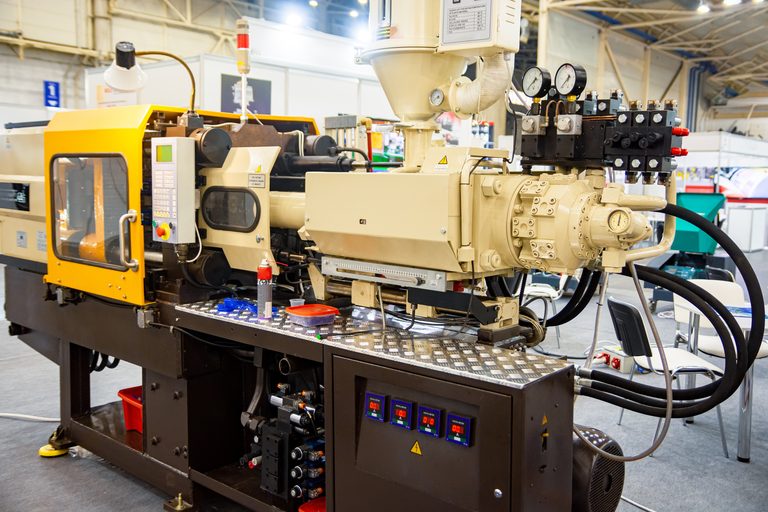
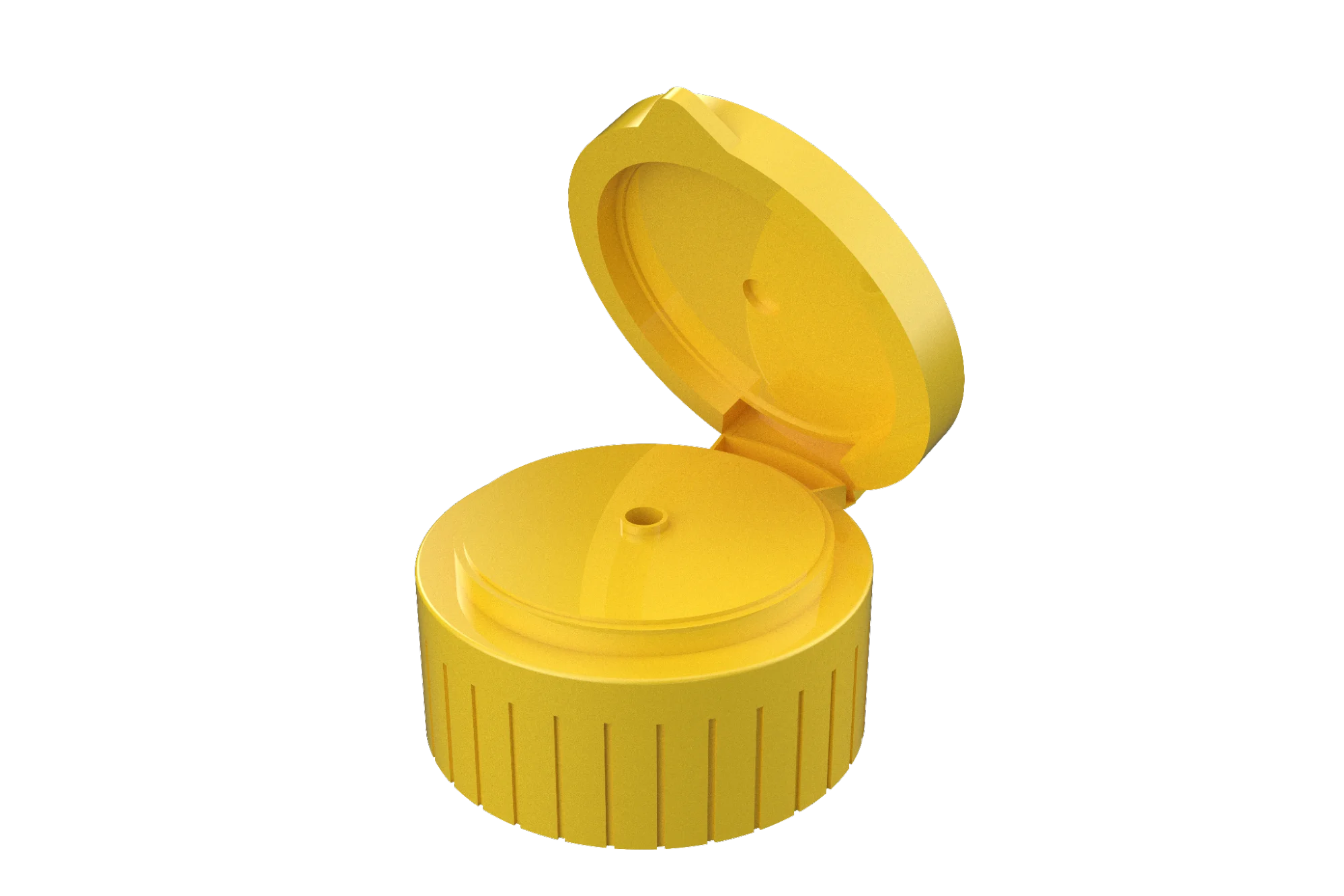
Living hinges are most commonly made by injection molding, but can also be produced using other methods, such as urethane casting and 3D printing. If you have designed or used plastic consumer products, you’ve probably come across living hinges. They are found in a wide variety of components—clamshell packaging, attached bottle caps, and electronic cases, to name a few.
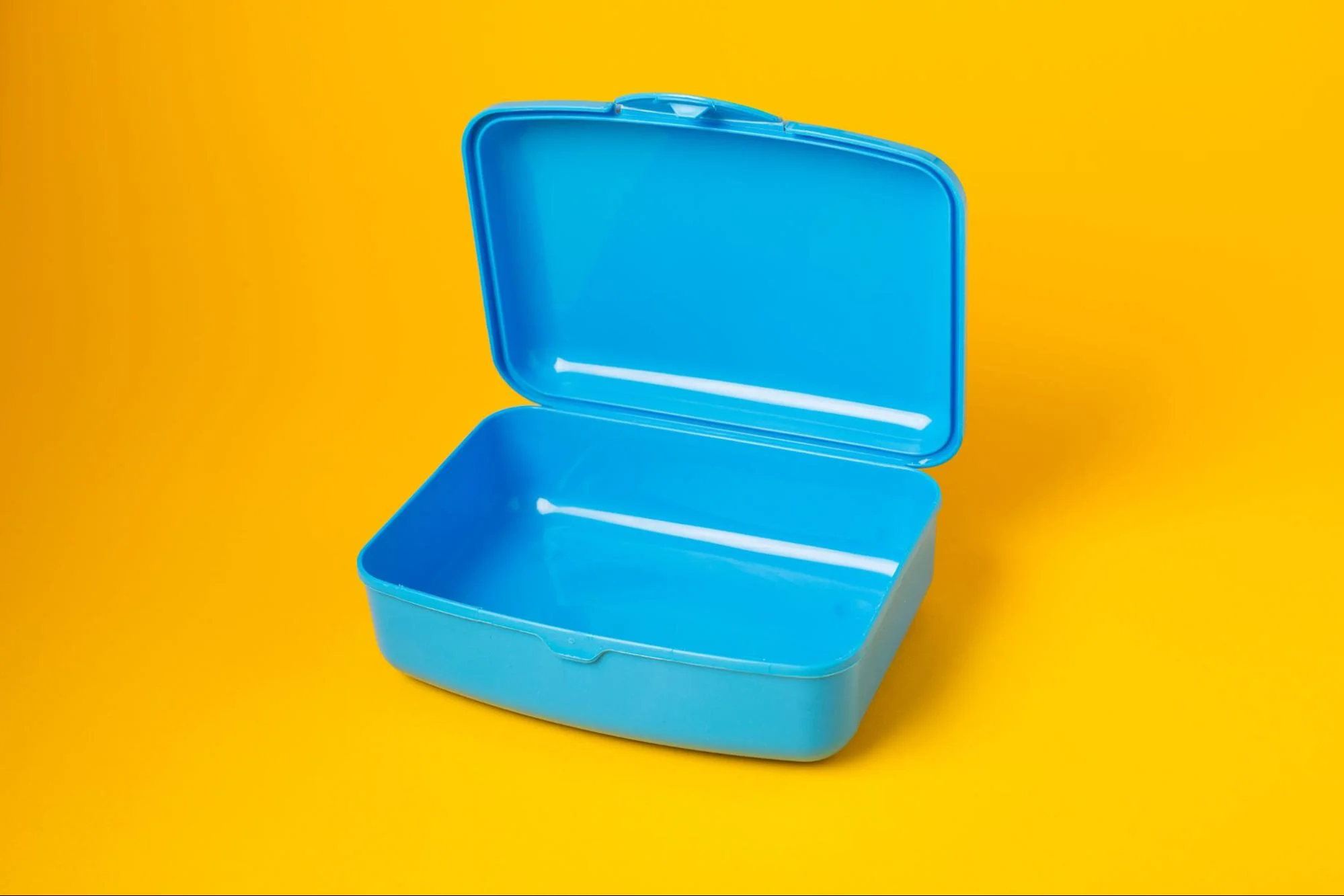
It’s alive!
Let’s take a look at some of the most important design, process, and material considerations to help you get started.
Living Hinge Dimensions and Design
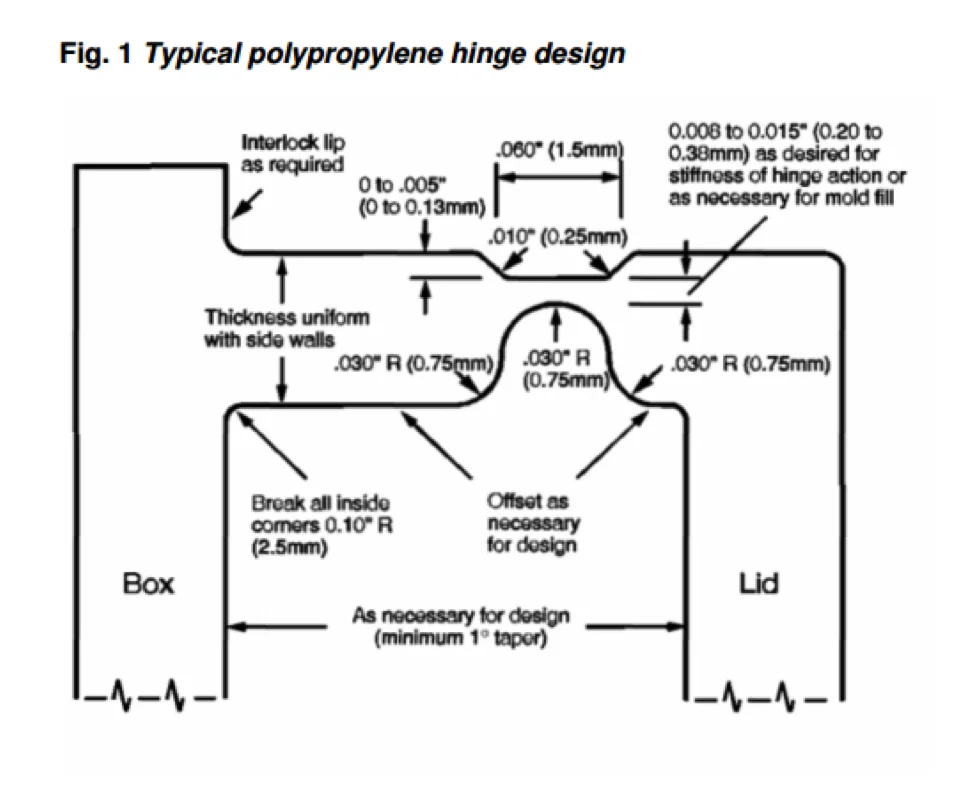
Since its introduction in the 1960s, the actual dimensions in living hinge design have changed very little. Figure 1 shows the standard polypropylene design used for injection molding.
Living Hinge Equations
Hinge Length
For a 180° bend, the ideal relationship between the length and radius of a living hinge is described by the equation: L=pi*R
where L represents the length of the neutral axis (hinge span), and R is the distance between the hinge and the attachment point (radius of curvature of the neutral axis in bending).
This equation ensures that the hinge forms a semicircle when closed, which helps to distribute stress evenly and minimize it at the attachment point.
For any bend angle, the equation is: L=(θ/180)πR
Hinge Thickness
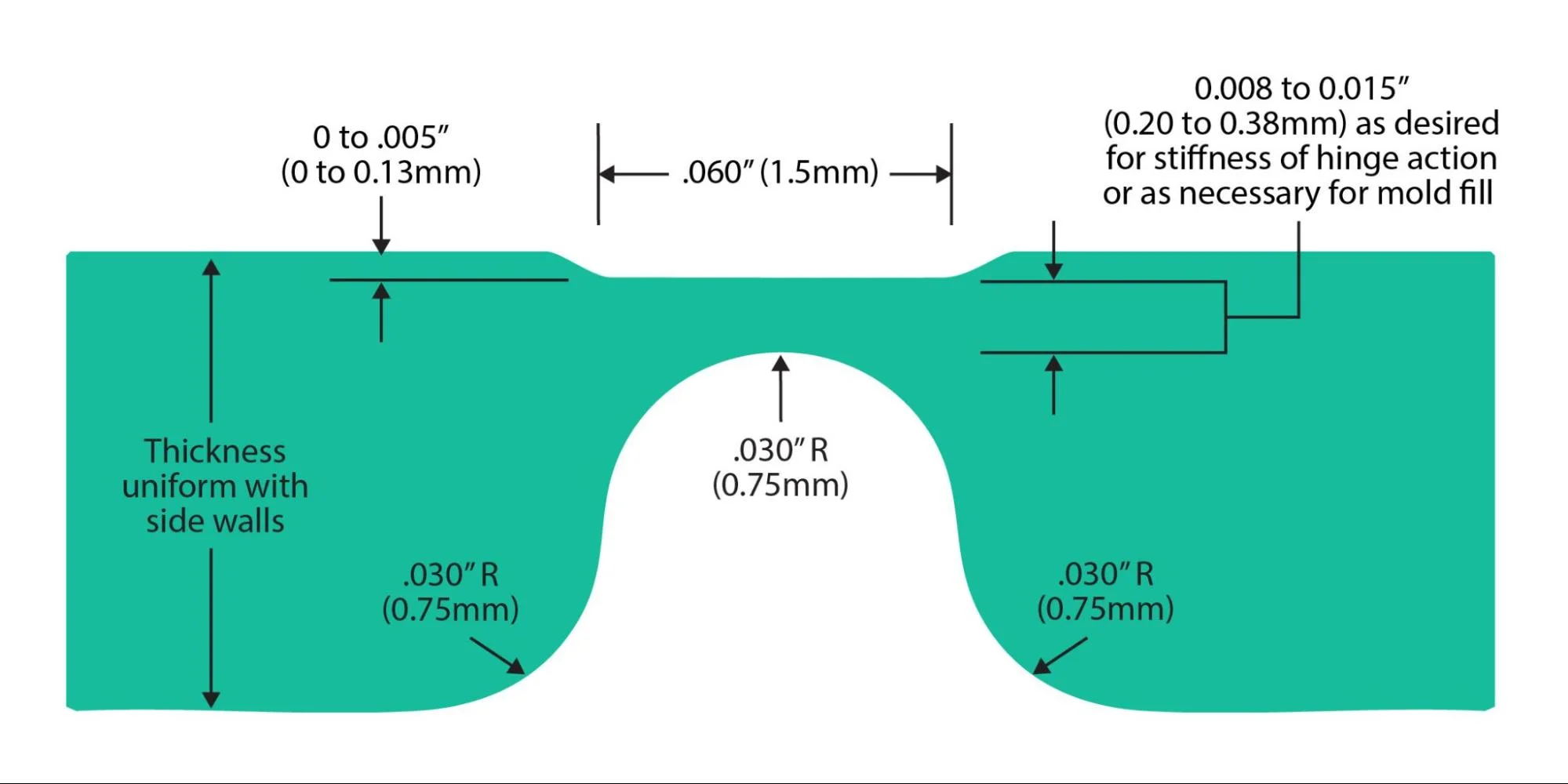
Typically, the hinge thickness should be between 0.2 mm and 0.5 mm, depending on the process and material.
For injection molding, it is usually best to start with a thinner wall, as it is easier to add plastic as needed (by removing tool steel) than vice versa.
Hinge thickness can be calculated using this simple equation:
T = H/5 to H/8
Where:
- T = thickness of the hinge
- H = thickness of the adjoining material
Living Hinge Design Best Practices
1. Add Generous Radii
Generous radii improve flow through the hinge during molding and reduce stress concentration during use.
2. Include “Shoulders”
“Shoulders” on the part create a flat recess. This ensures that the hinge will bend in the center and that the part can deform enough for the hinge to have room to close.
3. Thin and Flexible is Best
A thicker hinge may appear more robust, but the greater elongation on the surface can cause the material to exceed its yield point, shortening the lifespan of the hinge. A thinner hinge is more flexible.
4. Divide Long Hinges
Hinges longer than 6 inches should be designed in two or more parts to improve hinge life.
5. Experiment with Thickness
The thickness of the hinge will change how stiff or sloppy the hinge feels to operate. You may have to experiment with more than one thickness to find what best fits your design. It’s a good idea to use a “steel-safe” approach here, meaning that you start with thinner plastic to begin, and thicken it by removing steel as necessary.
6. Orientation Affects Strength
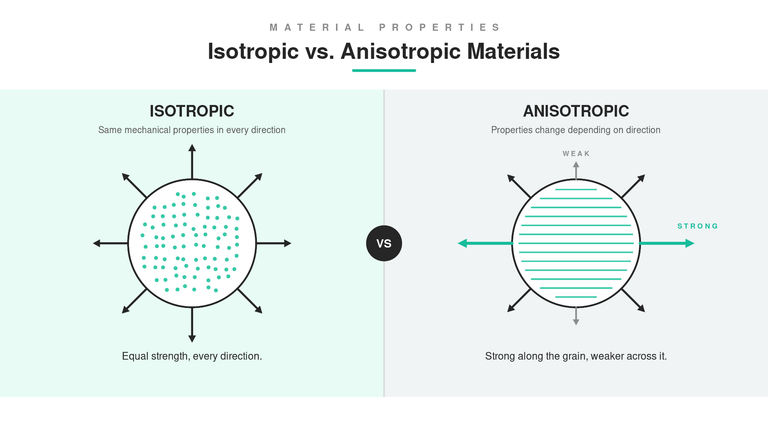
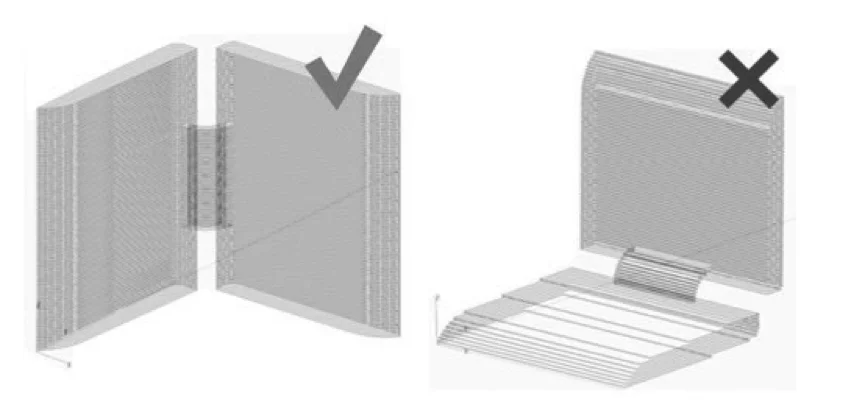
Orientation of the plastic molecules highly affects the strength of the joint and, consequently, the hinge strength; the long plastic molecules should be perpendicular to the hinge whenever possible. It is possible to make viable hinges with parallel orientation (in the case of extrusion, for instance) if your design requires it, but you won’t be maximizing the strength of your material.
While it’s helpful to use the typical polypropylene design as a starting point, make sure to tailor this foundational design to your product’s specific needs.
Living Hinge Production Methods and Materials
Living hinges can be created in final production parts through injection molding and extrusion, with injection molding as the strongest method. For prototyping, 3D printing or urethane casting are both great options.
We’re going to take a look at each of these production methods and cover the best material options and important design considerations unique to each.
For quick-turn prototypes (3D printed parts in 24 hours), you can simply upload your files below for instant quotes in 3D printing and urethane casting.
Living Hinge Design for Injection Molding
Injection molding is the strongest way to build living hinges and is great for production parts.
Best Material Option – Polypropylene
Due to its toughness and ductility, polypropylene is the best material choice for living hinges. A well-designed, injection-molded PP hinge can have an almost infinite service life, reaching several million flexes.
Polyethylene is the second most common living hinge material, with properties similar to polypropylene.
Design Tips for Injection Molding Living Hinges
One of the most important design rules in injection molding is to maintain uniform wall thickness. In uneven walls, the different rates of contraction during cooling can cause residual stresses, warping, and even breaking in your design.
However, when designing a living hinge, you actually need to do the opposite by creating non-uniform walls; for the hinge to be flexible, it must be much thinner than the connecting rigid part.
Potential issues can be reduced or resolved entirely if you think carefully about where the gates in the mold will be placed. Proper gate placement in relation to the hinge will ensure optimal flow pressure and fill, without knit lines or defects. You will also want to choose the best type of gate. There are options, such as a fan gate, that are better for injecting into long, thin sections.
Note that immediately after molding, the hinge should be flexed a few times. This will cold-draw the plastic, greatly increasing its service life. A trick of the trade that simplifies tooling modification is to start with the flat section above the hinge having a depth of at least .015 inch and a hinge thickness of .006 inch”.
Another tip to consider when injection molding living hinges is that, depending on the design, the hinge may need to be molded “open”. For instance, if you have a bottle cap with two closed surfaces, they may need to be created parallel or at an angle in the tool for it to be moldable as one piece.
Living Hinge Design for Urethane Casting
Urethane casting is a great option for bridging the gap between prototype and production. However, there are some differences to consider between urethane casting and injection molding, especially regarding living hinge design.
Best Material Options
Urethane resins are a huge family and come in hundreds of different properties. Manufacturers in different countries and states have different resins on hand, including some similar to polypropylene—the best material for living hinges.
Within the family of these PP-like materials, there is a tradeoff related to the durometer of the material — you can have rigid parts with a short-lived hinge or a flexible hinge and soft part walls. Some recommended materials are the Hapflex ™ 600 series and BCCplastics BC8160 resin, specifically formulated for living hinge applications.
Manufacturers may have other suitable resins in stock and should be able to help you choose one for your design.
Design Tips for Urethane Casting Living Hinges
When you cast in a polyurethane, the flow pressures are much lower than in injection molding, so a trade-off has to be made. The reduced pressure means the resin will flow less, so the hinge can’t be made as thin while still producing reliable parts.
Because of this, we recommend starting with a thickness slightly thicker than your injection molding design and choosing a urethane in the low Shore D range. BJB FD-45 is a good place to start—Shore 45A, 735% Elongation, and castable.
As mentioned earlier, high durometer resins will retain part rigidity but give the hinge a limited life, while low durometer resins result in a more flexible hinge and softer part.
Living Hinge Design for 3D Printing
There are a lot of great options for prototyping hinges with 3D printing to test different thicknesses, placements, and shapes. The resulting part won’t be as strong as an injection-molded part, but it should withstand enough flexes to properly test the component.
Best Material Options
When selecting the best 3D printing materials for living hinges, you should look for plastics with good elongation and flexibility. Nylon is a great option, for example.
Another great option is to prototype your part as a multi-material piece with a combination of VeroWhite and Rubber-like. Here’s a resource to help you prepare files for printing in two materials, giving you the functionality of a living hinge without sacrificing strength and resistance in the body if that’s crucial to your part’s performance.
Design Tips for 3D-Printed Living Hinges
When creating hinges in 3D parts, the build orientation is very important. For the hinge to have maximum strength, the horizontal build plane should be perpendicular to the hinge direction.
Best results occur when the hinge thickness is at least twice the resolution of your print. Given that Nylon has a resolution of 0.254mm, we recommend starting with 0.5mm as a minimum thickness.
Following these instructions should ensure your print gets at least 100 flexes in its testing cycle.
Living Hinge vs. Mechanical Hinge Comparison
While both hinge types allow rotational movement, they differ significantly in cost, manufacturing complexity, and long-term performance.
Living hinges, formed as a single piece without hardware, are extraordinarily cost-efficient and are ideal for high-volume plastic products. With virtually friction-free operation, a well-designed polypropylene hinge can endure millions of cycles. Their simplicity does come with trade-offs: they demand careful geometric design and are best suited for lightweight loads and consumer applications.
Mechanical hinges, by contrast, consist of assembled components, such as pins, knuckles, and hardware. These parts add cost and complexity, but offer far greater load-bearing capability. They maintain controlled rotational resistance and withstand much higher stresses, though friction introduces wear over time. Mechanical hinges are therefore the preferred choice when precise motion, structural strength, or long-term mechanical stability is required.
Takeaway:
If low cost, high cycle life, and simplicity matter, living hinges are ideal. If load-bearing or controlled movement is required, a mechanical hinge is better suited.
How Long Do Living Hinges Last?
Living hinge lifespan depends heavily on the material, design geometry, and manufacturing method.
- Injection-molded polypropylene hinges can achieve millions of flex cycles, often considered “near-infinite” life when properly designed.
- Polyethylene hinges are also durable but slightly less robust than polypropylene.
- Urethane-cast hinges have shorter lifespans due to thicker hinge requirements and material behavior.
- 3D-printed hinges are intended for testing and may last tens to hundreds of flex cycles, depending on material and print orientation.
Several design factors strongly influence hinge longevity: appropriate thickness (usually in the 0.2–0.5 mm range), polymer chain orientation perpendicular to the hinge, smooth radii without stress concentrators, post-mold cold drawing, and high-toughness materials with excellent elongation. When these conditions are met, a living hinge can easily last the full lifetime of the product.
Living Hinge FAQs
1. What materials are best for living hinges?
Polypropylene is the best material for a long-lasting living hinge due to its toughness, ductility, and ability to withstand millions of flex cycles. Polyethylene is the second most common alternative. For prototypes, cast urethanes and flexible 3D-printed materials like nylon can also be used.
2. How thick should a living hinge be?
Most living hinges are between 0.2 mm and 0.5 mm thick. A common rule of thumb uses the formula T = H/5 to H/8, where T is hinge thickness, and H is the thickness of the adjoining walls.
3. How does a living hinge work?
A living hinge works by concentrating flex in a thin section of material that bends repeatedly. When designed correctly—with proper radii, thickness, and flow orientation—it can withstand millions of cycles with minimal stress or wear.
4. What are the most common applications for living hinges?
Living hinges are found in bottle caps, clamshell packaging, electronic enclosures, plastic cases, and many consumer products requiring low-cost, durable rotational movement.
5. How do you design a long-lasting living hinge?
To maximize hinge life, use generous radii, keep the hinge thin and flexible, orient plastic molecules perpendicular to the hinge, and consider splitting hinges longer than 6 inches into smaller sections.
6. What manufacturing methods can create a living hinge?
Injection molding produces the strongest living hinges. Urethane casting and 3D printing can also create hinges for prototyping or low-volume runs.
Key Takeaways for Living Hinge Design
Designing living hinges can seem complicated at first, but once mastered, can result in substantial cost savings.
A traditional hinge could require several molding operations, an assembly operation, increased parts, and friction between parts, causing wear, whereas a living hinge can be made and included in your design in just one operation, and the friction is reduced to nothing.
Invest in thoughtful design at the prototyping stage, and you’ll save time, effort, and money when ready for higher volume production.
Ready to test your living hinge design with real parts? Get an instant quote today.