



Time to read: 11 min
As product design cycles accelerate, the demand for large-format industrial 3D printing has shifted from rapid prototyping to functional applications. Moving beyond the constraints of consumer-grade desktop systems, large-scale 3D printing enables engineers to produce full-scale components, enclosures, jigs, and fixtures without the lead times associated with traditional tooling.
What Is Large Format 3D Printing?
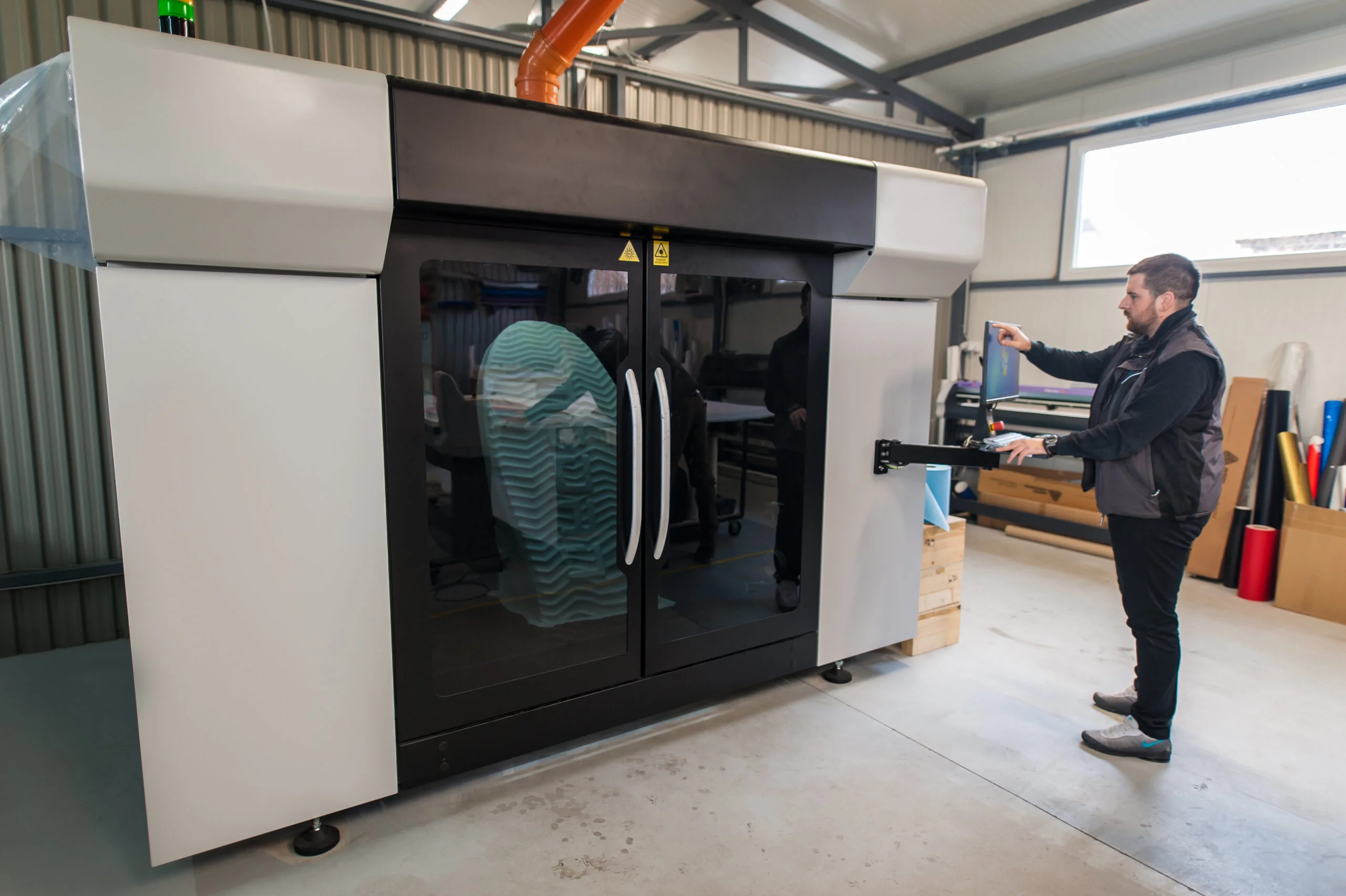
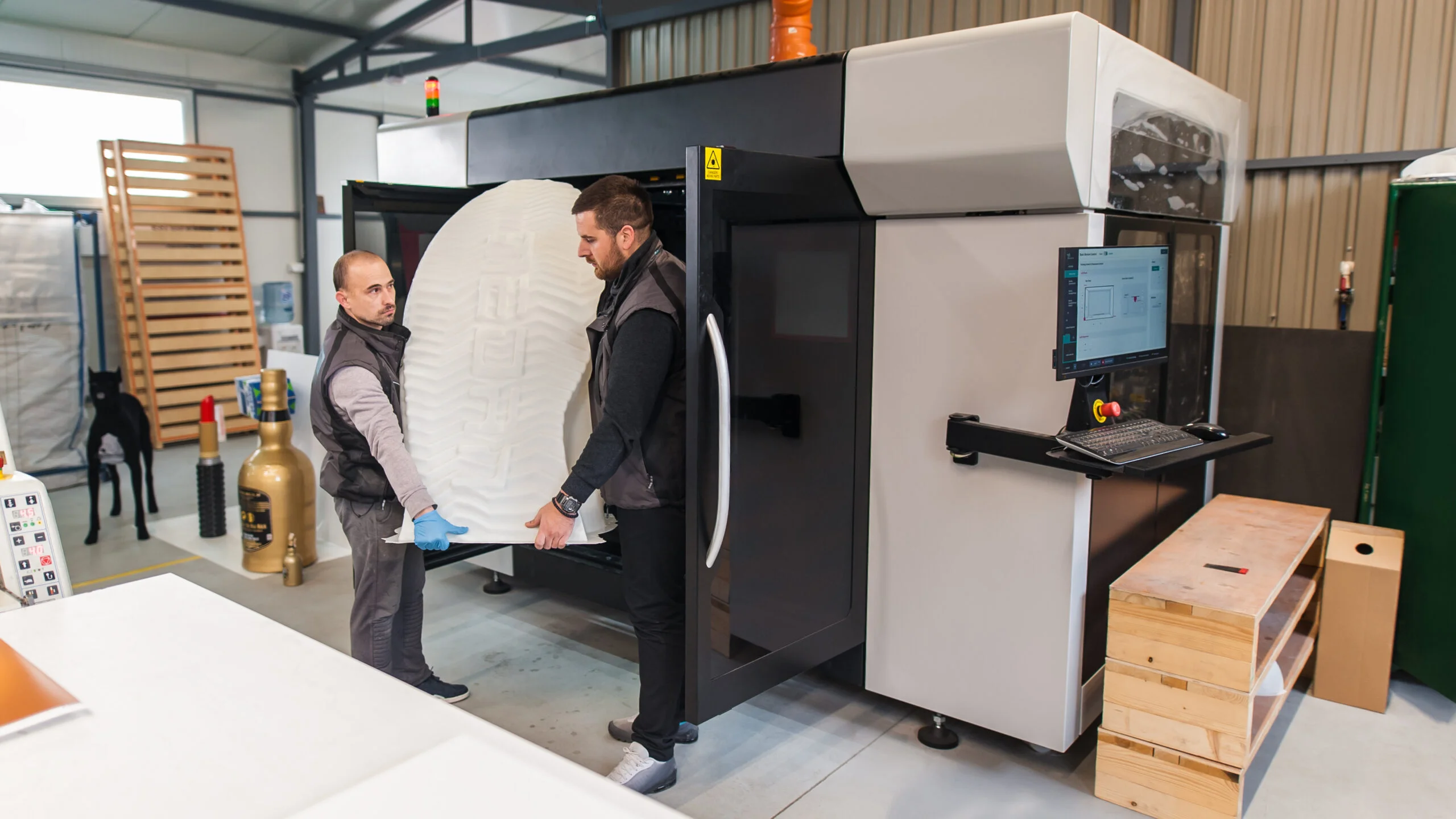
In an industrial context, “large” format 3D printing refers to build volumes exceeding 500 mm in any dimension. While most consumer machines focus on smaller parts, large-scale 3D printing requires advanced thermal management, high-flow extrusion, or vat-based systems capable of maintaining structural integrity across larger volumes of material. Industrial 3D printing systems often accommodate parts up to 914 x 610 x 914 mm (36 x 24 x 36 in).
There are two primary categories in 3D printing: consumer (“desktop scale”) and industrial additive manufacturing. Desktop-scale systems are normally entry-level solutions found in shared workspace and R&D labs. While cost-effective, many of them are limited by thermally uninsulated environments, filament flow rate constraints, and structural instability.
Industrial large-format 3D printing moves the process out of the laboratory and into the production facility. These systems handle the unique processing demands of oversized printed parts with active thermal management of the print area, advanced filament extrusion dynamics, and the ability to process reinforced, high-temperature engineering thermoplastics.
When designers begin laying out large 3D-printed parts, they have to consider more than just the shape of the final product. They have to think about the thermodynamic processes that will occur during the actual build. Transitioning to industrial-grade large-format printing aligns the machine’s engineering envelope with the geometry’s physics, ensuring the finished part is fully functional.
3D Printing Techniques for Large-Scale Parts
By selecting the correct process, you can achieve consistent results in large-scale additive manufacturing:
Large-Format FDM (Fused Deposition Modeling)
Large-Format FDM is effective for fabricating lightweight manufacturing tooling, jigs/fixtures, and even massive functional parts like robotic end-effectors and structural housings.
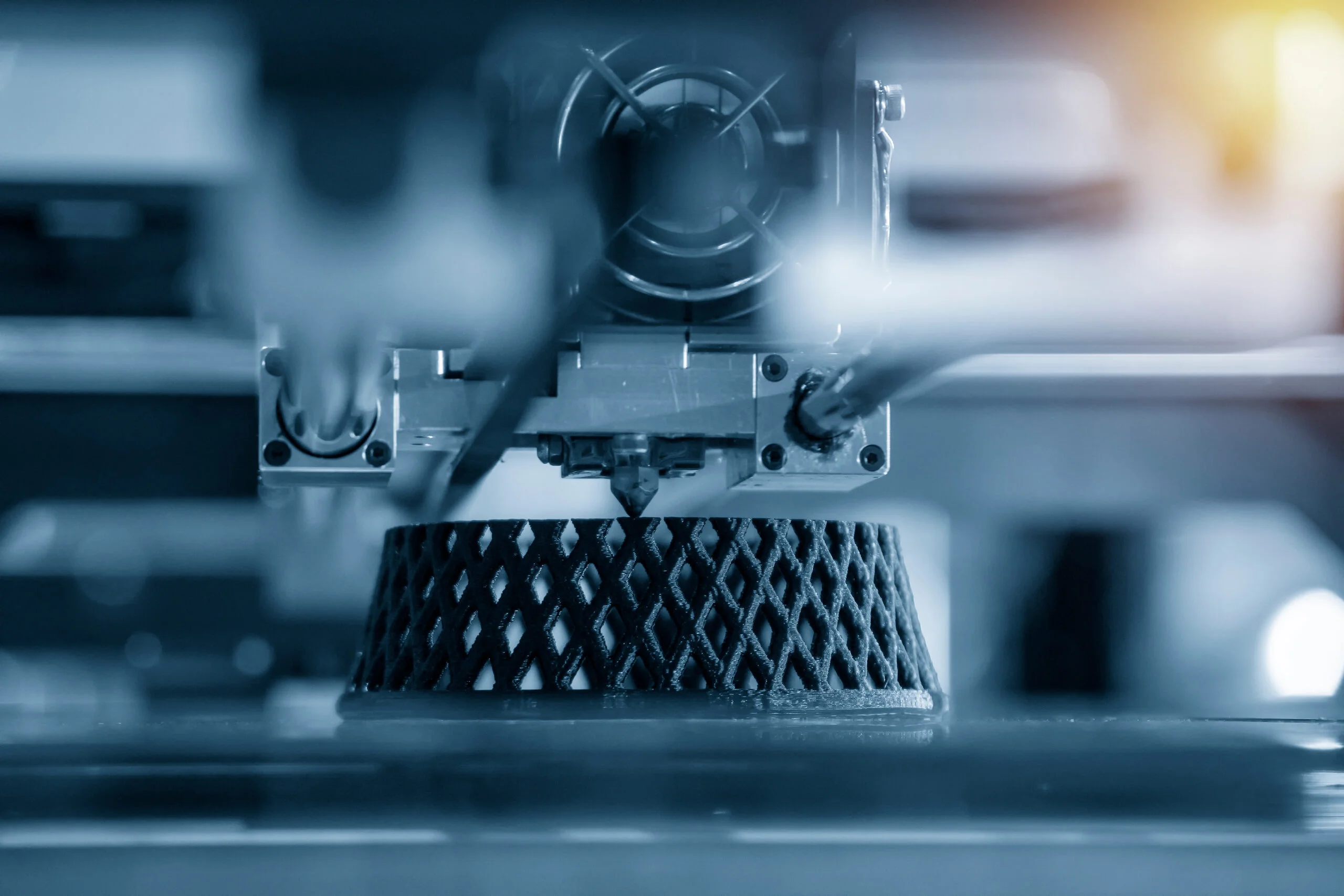
By scaling up to wide-diameter nozzles (typically 0.6 mm to 1.2 mm or larger) and high-diameter filament inputs, industrial FDM systems can process high-performance, carbon fiber-reinforced composites to deliver heavy-duty structural components. However, scaling a filament-fed FDM system up introduces a major thermodynamic bottleneck: the volumetric extrusion limit. The maximum print speed is fundamentally governed by how quickly heat can penetrate the core of a solid polymer wire as it passes through the hotend.
To maintain structural integrity across a 500 mm+ build without stalling the drive gears, industrial large-format FDM printers utilize extended melt-zone hotends, dual-element heating arrays, and forced-convection active build chambers. These active thermal environments are critical for managing the inter-laminar bond strength of the part. If the ambient chamber temperature drops too far below the material’s glass transition temperature, the previously deposited bead will cool and solidify completely before the next layer arrives. This prevents the polymer chains from cross-linking and diffusing across the layer interface, resulting in brittle parts prone to splitting under load.
For large-scale high-performance thermoplastic builds, maintaining tight control over this localized thermal gradient is the only way to prevent warping and ensure true structural performance.
Large SLA (Stereolithography)
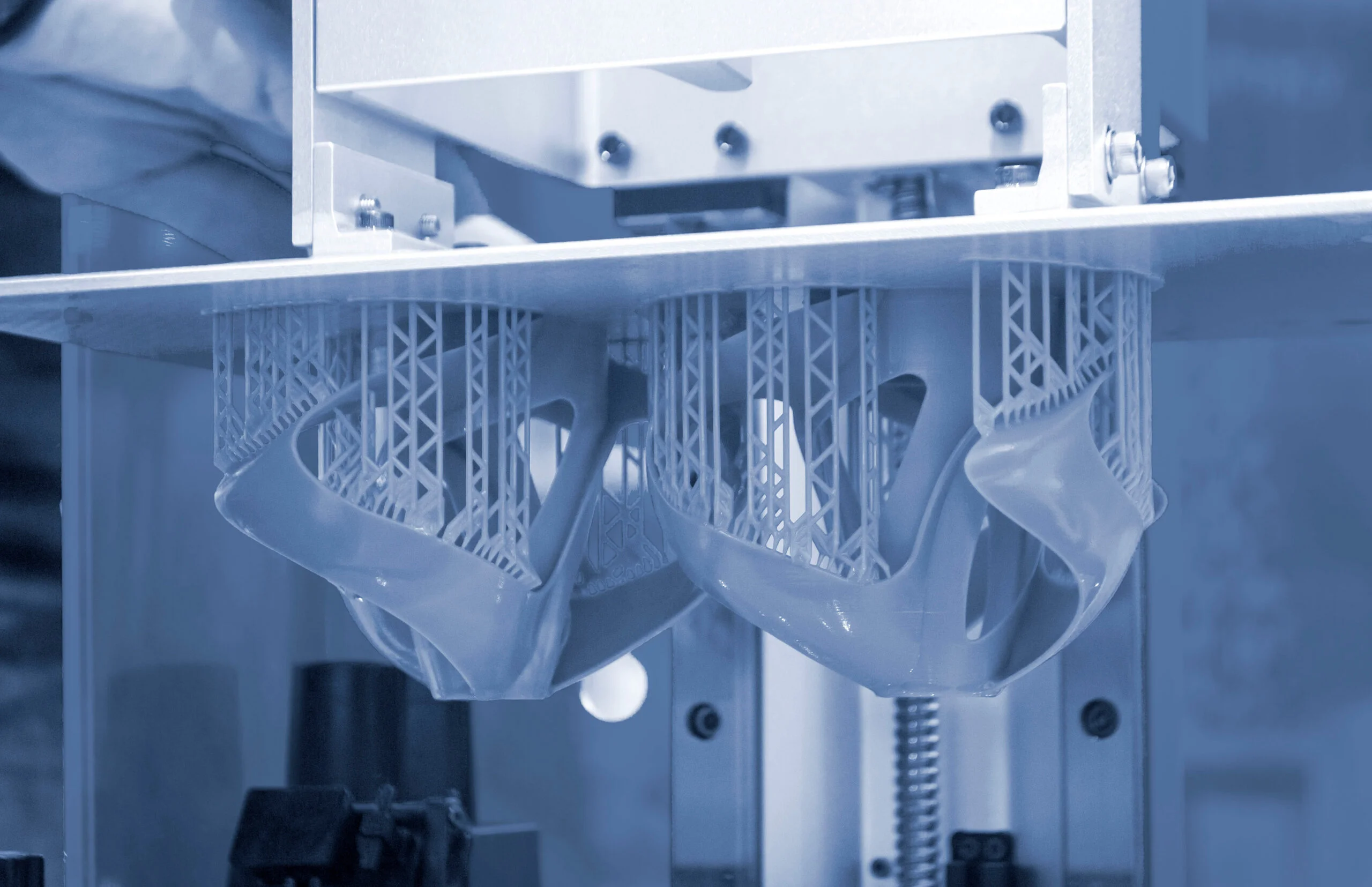
Large SLA printing is the best option for oversized components where premium surface finishes and feature resolutions take priority. Using precise UV laser systems to cure liquid photopolymer resins, large SLA produces aesthetic prototypes, clear fluidic housings, and master patterns for low-volume urethane casting without visible layer lines.
However, scaling a vat-based photopolymerization build-up introduces hydrodynamic and mechanical challenges that don’t exist on smaller platforms. Every time a new layer is cured, the build platform lifts vertically to break the vacuum seal between the freshly cured resin and the vat’s bottom membrane. For large-surface-area parts, these peel forces scale nonlinearly. If your geometry doesn’t feature robust support anchoring and deliberate cross-sectional optimization, these separation forces can tear the part completely off its scaffolding or warp fine features.
Engineers must also account for low green strength. When an SLA part is inside the liquid resin vat, it exists in a partially cured, gel-like state before its final run in a UV post-curing oven. Oversized, heavy, or long overhanging features are highly susceptible to sagging, bowing, or shifting under their own weight during construction. To mitigate this green-state deflection, large SLA parts require specialized, high-density support webbing and localized wall variations designed specifically to resist gravity and peel-line dynamics.
Pellet Extrusion (BAAM)
When production timelines demand large volumetric deposition rates, industrial pellet extrusion—often referred to as Big Area Additive Manufacturing (BAAM)—is the most practical option. By melting raw plastic pellets directly in a high-output, screw-driven extruder mounted on a robotic arm or large gantry, these systems bypass the volumetric flow-rate limits of traditional filaments.
However, this high speed comes at the expense of surface quality. Pellet systems use wide extrusion nozzles that deposit heavy plastic beads, typically 4 to 8 mm wide. This creates a very pronounced “stair-stepping” texture along the part walls. While it is an excellent, cost-effective solution for large structural foundations, foundry patterns, and heavy marine tooling, any tight-tolerance mating faces or cosmetic surfaces will require secondary CNC post-machining to achieve a functional finish.
How Does Part Size Impact the Additive Manufacturing Process?
Engineers must account for the following variables when 3D printing larger parts:
Thermal Warp
Controlling thermal warp in large-format prints requires managing the distinct cooling behaviors of different polymer structures. Amorphous thermoplastics, such as ABS or Polycarbonate, experience a gradual, linear contraction as they cool past their glass transition temperature.
Because the outer shells of a large part cool faster than the insulated core, residual internal tensile stresses accumulate, leading to severe dimensional warping or bed separation. Semi-crystalline polymers like Nylon (PA12) present an even greater challenge. They undergo a sudden, sharp volumetric drop during the crystallization phase of cooling. Without an actively managed, heated build environment to slow this crystallization down, large-format parts will warp or crack along the layer lines before the print job finishes.
Internal Stress Concentration
The mismatch in cooling rates between the outer surface and the interior of a bulky part can create stresses that lead to internal voids or layer delamination. Proper design should remove excess bulk, and print parameters should be precisely tuned to minimize internal stresses.
Mechanical Anisotropy
Because all additive manufacturing processes are inherently layer-based, parts are naturally anisotropic. In standard industrial FDM profiles, you can expect about a 20% to 45% reduction in tensile strength and inter-laminar fracture toughness along the vertical Z-axis compared to the continuous X-Y plane.
This performance drop happens because the polymer chains cannot fully diffuse and entangle across the layer interfaces before the previously deposited plastic cools. When engineering large, load-bearing fixtures or enclosures, you shouldn’t rely on isotropic material datasheets without accounting for print orientation. CAD models should be oriented so that primary structural stress vectors run parallel to the build plate, utilizing the continuous strength of the extruded material strands rather than relying on the weaker layer joints.
Build Time Scaling
In additive manufacturing, build time doesn’t always scale linearly with part volume. It scales with the cross-sectional area of each layer and the layer count, both of which depend on the Z-height. For example, doubling a part’s Z-height doubles the layer count and proportionally increases total build time, independent of volume.
Part Post-Processing
Large-format parts require proportionally greater effort for support removal, surface finishing, and cleaning. The increased surface area and complex internal geometries common in large prints significantly extend post-processing time.
Large-Format 3D Printing Compared to Traditional Large-Scale Tooling
For large-scale components, the choice between additive manufacturing and traditional tooling comes down to trade-offs between speed, volume, and cost.
Additive manufacturing (3D printing) is an agile solution that allows rapid iteration of innovative new designs, while traditional methods such as injection molding and machining remain the standard in high-volume manufacturing of mechanically strong parts.
Large-Format 3D Printing vs. Molding/Machining
| Technical Factor | Large-Format 3D Printing | Large Injection Molding / Machining |
| Upfront Tooling Cost | $0 (direct from CAD) | Very high (large molds/fixtures) |
| Geometric Freedom | High (internal channels & lightened lattices) | Constrained by tool reach or draft angles |
| Lead Time | 1 to 5 days | Weeks to months (for tooling fabrication) |
| Mechanical Isotropy | Anisotropic (depends on print orientation, material, and process) | Excellent (mostly uniform grain or material density) |
| Production Volume | Ideal for 1–50 parts (prototypes/fixtures) | Ideal for 500+ parts (mass production) |
| Dimensional Tolerancing Range | ±0.2 mm to ±0.5 mm (Highly dependent on process, thermal management, and material) | ±0.02 mm to ±0.1 mm (Governed by rigid machine geometry and tool setups) |
DFM Strategies for Large-Scale 3D-Printed Parts
The inherent thermal and structural challenges of oversized parts demand a deliberate design approach. The following Design for Manufacturing (DFM) strategies are essential for producing large-scale 3D-printed parts that maintain dimensional accuracy and mechanical integrity.
Managing Infill, Wall Topography, and Mass Reduction
Avoiding 100% infill is recommended. Using gyroid or honeycomb infill reduces part mass and thermal inertia, which significantly decreases the risk of warping while maintaining the rigidity of the print.
Optimizing infill patterns and maximizing the amount of contact area between the build plate and the object being printed (for bed adhesion) helps counter the effects of thermal expansion and increase stiffness. Selecting a material like carbon fiber-filled nylon can also help reduce thermal expansion relative to many standard printing materials.
Structural Ribs for Large, Flat Surfaces
Large, flat surfaces are prone to bowing. Instead of increasing wall thickness uniformly, add ribs or gussets to the non-critical faces of the part (typically the interior or back side) to stiffen the geometry against thermal warping while leaving the critical face smooth and uninterrupted.
Splitting Large Models: Joints and Sectioning
When a design exceeds a machine’s build volume, the CAD model must be subdivided into sections. A basic dovetail or puzzle joint may be sufficient for visual models, but functional jigs and enclosures require split lines treated as engineered interfaces:
- Design a Bond-Line Gap: Incorporate a uniform clearance of 0.1–0.2 mm between mating surfaces to allow for part tolerances and to provide space for structural epoxy or polyurethane adhesive to seat properly.
- Use a Hybrid Joining Strategy: Don’t rely on adhesive alone. Combine interlocking keys or dovetails with hidden mechanical fasteners—press-fit alignment pins for shear loads, and pocket screws or heat-set threaded inserts for tensile loads.
- Export as Multi-Body STEP Files: Export directly from your native CAD software as a multi-body STEP file to preserve geometric alignment and coordinate registration across all joint interfaces before sending files to print.
Axis Orientation Strategies for Strength
If a part requires a tall Z-height, orient primary stress zones to run parallel to the build plate (X-Y plane) to leverage the higher isotropic strength of the extrusion lines. This exploits the near-isotropic strength of the fused filament direction rather than relying on the weaker interlayer bonds along the Z-axis.
Choosing the right material is as critical as choosing the right process. Fictiv’s Ultimate Guide to 3D Printing Materials and Applications covers material properties, process compatibility, and application-specific recommendations in detail.
Secondary Processing: Joining and Finishing Large Parts
When a planned product is too big to build with one print, the components must be assembled using mechanical fasteners, solvent bonding, or adhesives. A manufacturing partner that specializes in the assembly and precision finishing required to blend jointed seams can help ensure the finished part acts as a single, cohesive unit.
Streamlining Large-Part Additive Manufacturing Sourcing
Manufacturing large 3D-printed parts at an industrial scale involves navigating complex design, sourcing, and processing plans. Poor decisions can result in problems ranging from build plate adhesion failures to long, unpredictable print cycles.
Fictiv reduces these risks through automated DFM feedback that flags geometry, design, and process mismatch issues before your part hits the printer. With access to industrial-grade build volumes and expert multi-body assembly guidance, Fictiv is your partner in scaling from initial CAD model to shop floor production.
Upload your CAD model today to start a free 3DP quote.
FAQs About Large Format 3D Printing
What is considered “large format” in 3D printing?
In an industrial context, large format typically refers to build volumes exceeding 500 mm in any single dimension. Consumer desktop machines generally fall well below this threshold, while industrial systems can accommodate parts up to 914 x 610 x 914 mm (36 x 24 x 36 in) or larger, depending on the platform and process. Fictiv’s manufacturing network includes access to industrial-grade large-format systems capable of producing parts at this scale.
Which large-format 3D printing process is best for my application?
It depends on your part requirements. FDM is the most versatile choice for functional tooling, jigs, and fixtures where strength and durability matter. SLA is preferred when fine detail and smooth surface finish are critical, such as for high-fidelity prototypes. Pellet extrusion is best suited for very large structural parts where build speed and material volume take priority over surface quality.
How do I prevent warping in large 3D printed parts?
Warping is primarily driven by uneven thermal contraction during cooling. The most effective countermeasures include using optimized infill patterns such as gyroid or honeycomb to reduce thermal mass, maximizing the bed-adhesion contact area, selecting low-shrinkage materials like carbon fiber-filled nylon, and incorporating structural ribs into large flat surfaces to resist bowing.
What should I do if my part is too large for the printer’s build volume?
The part will need to be sectioned in CAD and printed as multiple pieces. Design keyed joints or dovetail features at the split interfaces to ensure self-alignment and maximize bonding surface area. Export the assembly as a multi-body STP file for geometry registration, then export each section as a separate STL for printing. Sections can then be joined using mechanical fasteners, adhesives, or solvent bonding. Fictiv’s manufacturing partners specialize in precision finishing and assembly of multi-body large-format parts.
How does large-format 3D printing compare to traditional machining or injection molding for large parts?
For low volumes and iterative design, large-format 3D printing offers significant advantages: no upfront tooling cost, lead times of one to five days, and geometric freedom that traditional processes can’t match. However, for high-volume production of 500 or more parts, injection molding and machining remain superior due to better mechanical isotropy, tighter tolerances, and lower per-part cost at scale. Fictiv supports both additive and traditional manufacturing, making it straightforward to transition from prototype to production without switching suppliers.