

Time to read: 8 min
As demand for AI data centers, hyperscale data center deployments, and high-performance computing (HPC) hardware continues to rise, engineering teams are rethinking how to design and build modern data center infrastructure.
From GPU cluster infrastructure powering AI training and inference to enterprise data storage systems supporting cloud applications, today’s facilities must balance performance, thermal efficiency, speed to deployment, and supply chain resilience.
To meet these demands, teams are increasingly adopting a hybrid sourcing strategy—combining off-the-shelf data center hardware with custom-manufactured components to optimize performance at scale.
This guide breaks down how to design modern AI infrastructure hardware, where standard components make sense, and where custom fabrication delivers a meaningful advantage.
Why High-Density AI Infrastructure Is Changing Data Center Design
Modern AI compute infrastructure, including large-scale AI clusters and NVIDIA GPU server systems, is pushing traditional server infrastructure beyond its limits. Rack densities are rising rapidly, driven by the growth of AI training and ML infrastructure hardware.
At the same time, organizations are scaling GPU server racks and AI supercomputing infrastructure faster than ever. This has led to more modular, repeatable deployment models (sometimes referred to as the “AI factory”) where infrastructure must be deployed quickly without sacrificing performance.
This shift is driving a move away from purely standardized systems toward hybrid architectures that combine commodity hardware with custom mechanical and thermal solutions.
Key Data Center Hardware Systems Using Custom and Standard Components
Rack & Enclosure Systems
Every data center rack infrastructure system starts with the physical structure. Standard 19-inch rack enclosures and open frame server racks remain widely used because they’re interoperable and readily available.
As workloads become more demanding, these systems are often extended with custom solutions. Custom server rack designs and GPU rack enclosures are used to support higher loads, improve airflow, and accommodate specialized layouts.
Common off-the-shelf components include:
- Standard rack enclosures
- Open frame server racks
- Rack mount systems
- Commodity data center racks
Custom part design opportunities include:
- Custom metal enclosures
- Rackmount chassis and server chassis manufacturing
- EMI shielding enclosures
- Thermal management enclosures
Structural customization becomes especially important in high-density server racks, where airflow, cable routing, and load-bearing requirements all intersect.
Structural Frames & Modular Infrastructure
Beyond the rack itself, structural systems enable scalability across entire deployments. Hyperscale data center environments rely on modular data center structures and precision metal frames to standardize builds while maintaining flexibility.
Custom fabrication is often required for:
- Aluminum frame assemblies
- Welded structural components
- Rack frame fabrication
- Structural metal assemblies
These systems must balance strength, weight, and repeatability to support large-scale deployment.
Power Distribution Systems
Power infrastructure must handle increasing loads safely and efficiently. Off-the-shelf components like PDUs and standard power supply systems provide a reliable baseline, but they may require customization to fit specific layouts.
Custom components commonly include:
- Power supply enclosures
- Electrical enclosures for data centers
- High-voltage power enclosures
- Busbar mounting systems
As power densities rise, mechanical design plays a larger role in ensuring thermal safety and efficient routing.
Cooling & Thermal Management Hardware
Thermal management is a primary challenge in modern AI data centers. High-density GPU clusters generate significant heat and require advanced cooling strategies. Without optimized cooling systems, performance degrades, and hardware reliability suffers.
Off-the-shelf cooling systems provide core functionality, but custom hardware is often needed to optimize performance. This includes:
- Liquid cooling manifolds
- Cold plate housings and cooling plate assemblies
- Airflow ducting and baffles
- Structural frames for liquid cooling loops
Cooling performance is highly sensitive to geometry. Even small design adjustments can measurably improve heat dissipation and system efficiency.
Compute & Networking Integration
Servers, storage, and networking hardware are largely standardized, but integrating them efficiently requires thoughtful mechanical design.
Custom or off-the-shelf components—such as cable management systems, mounting brackets, and retention features—improve serviceability, reliability, and space utilization. These integration details can determine how easily systems can be deployed and maintained.
Custom vs. Off-the-Shelf Data Center Hardware: When to Use Each
In most cases, data center design relies on a combination of custom and off-the-shelf components.
| Criteria | Off-the-Shelf Components | Custom Components |
| Speed to Deployment | Fast, readily available | Longer upfront, faster at scale |
| Cost | Lower upfront | Optimized at volume |
| Performance | Standardized | Optimized for use case |
| Flexibility | Limited | Highly customizable |
| Integration | May require adaptation | Designed for system-level fit |
Off-the-shelf data center hardware is ideal when speed and standardization are priorities. Custom components become critical when optimizing thermal performance, increasing density, or solving integration challenges.
Manufacturing Processes for Data Center Components
Different manufacturing methods are used depending on the part function and production scale.
| Process | Typical Applications | Key Benefits |
| CNC Machining | Cooling manifolds, precision housings, CNC aluminum enclosures | Tight tolerances, high performance |
| Sheet Metal Fabrication | Rack enclosures, panels, rack mount systems | Scalable, cost-effective |
| Injection Molding | Plastic housings, cable management | Lightweight, high-volume |
| Assembly & Integration | Box build, electromechanical assembly | Faster deployment |
These processes are often combined to create complete AI infrastructure hardware systems.
Design for Manufacturability (DFM) in Data Centers
Design for manufacturability ensures that custom components can be produced efficiently while meeting design and performance requirements.
Thermal and mechanical systems must be designed together. Airflow paths, cooling interfaces, and structural components all interact, and misalignment can reduce efficiency or create failure points.
Modularity is equally important. Components should be easy to access and replace, particularly in high-density environments where downtime is costly.
Key DFM considerations include:
- Aligning airflow with structural geometry
- Designing for serviceability and modular replacement
- Maintaining tight tolerances for interoperability
- Selecting materials based on thermal and structural needs
Finishing & Surface Treatments
Finishing plays an important role in durability, aesthetics, and performance.
Surface treatments such as anodizing and powder coating improve corrosion resistance and extend part lifespan. In thermal applications, finishes can influence heat dissipation, while in electrical systems, they may affect conductivity or insulation.
Other considerations include:
- EMI shielding effectiveness
- Wear resistance for high-contact components
- Environmental protection for long-term deployments
Selecting the right finishing process helps ensure reliability in demanding AI data center environments.
Sourcing Strategy for AI and Cloud Infrastructure Hardware
Manufacturing Challenges in AI Data Center Hardware
Scaling large-scale AI clusters introduces sourcing and design challenges:
- Tight tolerances for cooling interfaces
- Complex assemblies combining metal + electronics
- Scaling from prototype to production
- Supply chain fragmentation and volatility
Many teams address this by combining off-the-shelf sourcing with digital manufacturing. This allows prototyping and production to run in parallel, reducing delays and improving flexibility.
This approach supports faster deployment of:
- GPU server racks
- AI supercomputing infrastructure
- Enterprise data storage systems
Accelerating AI Data Center Hardware Validation: Case Study
A leading global consumer electronics company needed to rapidly validate next-generation AI data center hardware but faced internal capacity constraints and slow traditional suppliers. What began as a small batch of PCB housing assemblies quickly scaled into 170 complex builds, combining thousands of tight-tolerance machined parts with a large volume of off-the-shelf components.
By applying a hybrid approach—pairing custom CNC machining and assembly with strategic sourcing of OTS components—along with deep DFM collaboration and production sequencing, the team eliminated bottlenecks and enabled continuous validation. The result was 170 full assemblies delivered in under two months, accelerating validation timelines by approximately three months and achieving 4x faster execution than traditional suppliers.
👉 See how this program was executed in our real-world case study
Accelerating Data Center Hardware Development
As AI data centers and cloud infrastructure hardware continue to scale, the ability to balance standardization with customization becomes a key advantage.
Standard or configurable off-the-shelf components provide a strong foundation, while custom mechanical systems can enable improved thermal performance, higher density, and more efficient designs.

Build Custom Data Center Hardware Faster
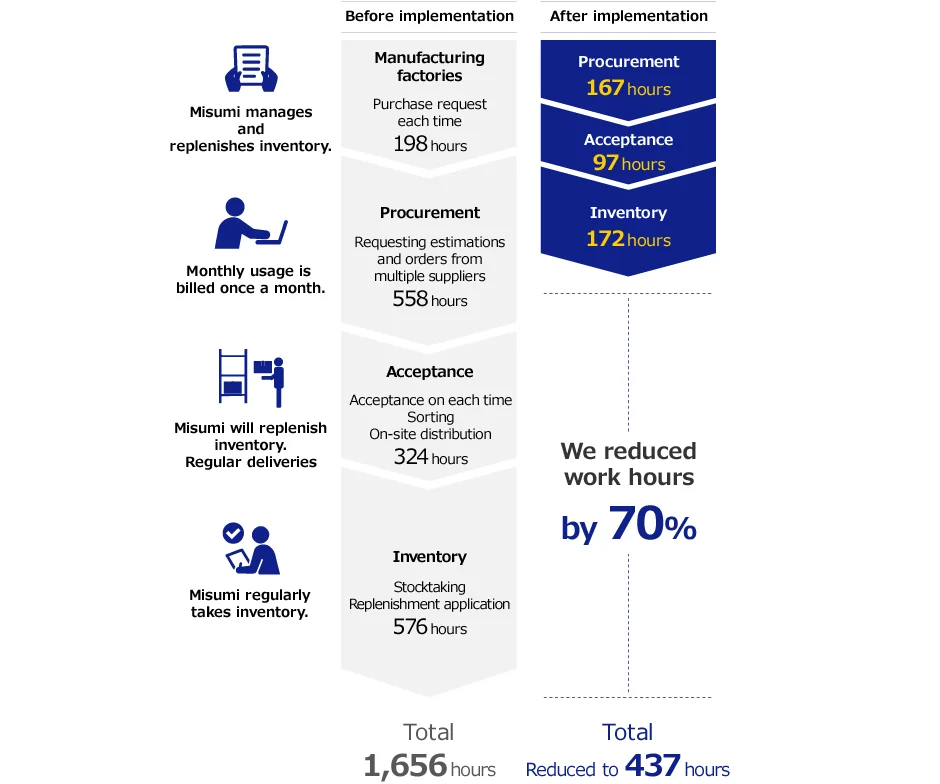
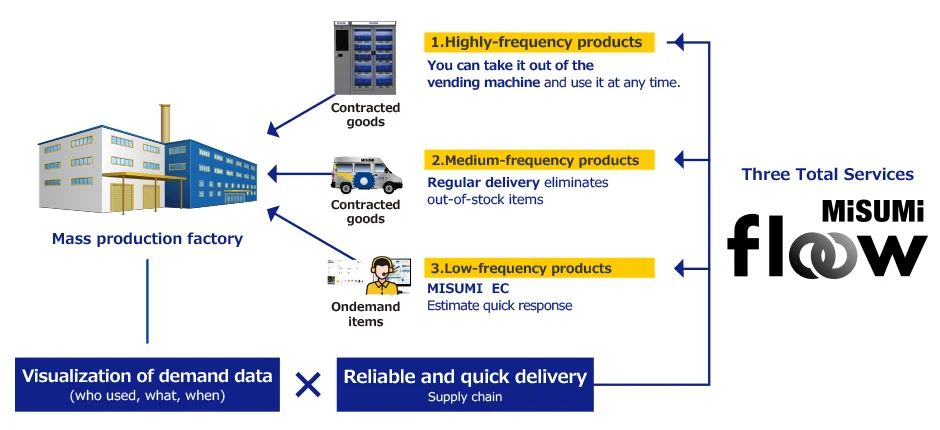
Fictiv helps teams design and manufacture high-precision mechanical parts, from custom server racks to thermal management hardware and electronic enclosures. With capabilities spanning CNC machining, sheet metal fabrication, and electromechanical assembly, Fictiv enables faster development of next-generation AI infrastructure hardware. Through our partnership with MISUMI, we also streamline sourcing of off-the-shelf components—enabling a fully integrated approach that combines custom manufacturing with reliable, fast-turn standard parts.
Get a quote today to accelerate your next data center build.
Data Center Hardware FAQs
What is AI data center infrastructure?
AI data center infrastructure refers to the physical systems that support large-scale AI workloads, including GPU cluster infrastructure, server racks, cooling systems, power distribution, and networking hardware.
Designing this infrastructure requires balancing compute density, thermal performance, scalability, and speed of deployment.
What hardware is used in AI data centers?
AI data centers rely on a combination of standardized and specialized hardware, including GPU servers, data center racks, rackmount enclosures, power distribution units, cooling systems, networking hardware, and enterprise storage systems.
Custom mechanical components such as enclosures, thermal management hardware, and structural frames are often used to optimize performance and integration.
What is the difference between AI infrastructure and traditional data center infrastructure?
Traditional data centers are typically optimized for general-purpose computing and storage, while AI infrastructure is designed for high-density, parallel processing workloads.
AI data centers often require higher power densities, advanced cooling solutions, GPU-optimized rack configurations, and more complex integration of compute, power, and thermal systems.
When should you use custom components in data center design?
Custom components are typically used when standard hardware cannot meet performance, space, thermal, or integration requirements.
This is especially common in high-density GPU rack deployments, thermal management optimization, space-constrained environments, and complex electromechanical assemblies.
What manufacturing processes are used for data center hardware?
Common manufacturing processes for data center hardware include CNC machining, sheet metal fabrication, injection molding, and electromechanical assembly.
These processes are used to produce precision components, enclosures, rack structures, cooling hardware, plastic housings, and integrated assemblies.
How can you accelerate AI data center hardware development?
AI data center hardware development can be accelerated through parallel prototyping and production, hybrid sourcing, DFM optimization, supplier coordination, and assembly planning.
A hybrid approach that combines off-the-shelf components with custom manufacturing helps reduce bottlenecks and enables faster validation and deployment.