








Latest articles

Article

Problems with MCAD-ECAD Integration and How to Solve Them

Designing complex PCBAs for external enclosures requires meticulous attention to detail, ensuring compatibility between both mechanical and electrical aspects. In this article, we’ll discuss the importance of this integration and common problems that often arise during the process, then provide ways to avoid them.  Why MCAD and ECAD Integration is Important  Electronics and mechanical systems […]

Article

Understanding the Finite Element Method

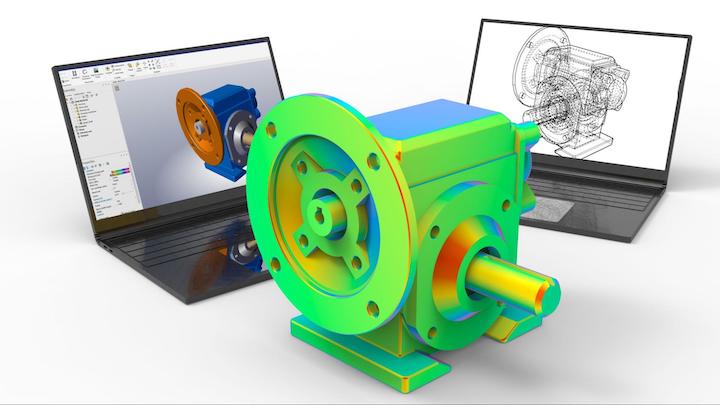
The Finite Element Method (FEM) is a numerical analysis technique used to obtain approximate solutions to complex engineering and mathematical problems. It involves dividing a complicated object or system into smaller, more manageable parts, known as finite elements. These elements are connected together by nodes, and the governing equations for the entire system are expressed […]

Article

10 Tips to Improve Your CAD Designs for CNC Machining

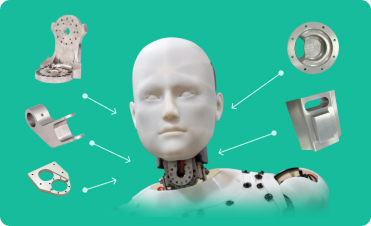
The ultimate goal of DFM (Designing for Manufacturing) for CNC machining is to design parts that achieve the design requirements while reducing the complexity of machining operations and the potential for quality issues. When designing for CNC machining, the maxim, simplicity is the ultimate form of sophistication, applies.  Despite its automated nature, CNC machining can […]

Article

ENGINEERING FUNDAMENTALS Refresh: Ductility, Strain, and Toughness

Ductility, strain, and toughness are fundamental concepts in the field of engineering, particularly in materials science and mechanical engineering. Ductility is a measure of a material’s ability to deform plastically (permanently) before fracture. In other words, it’s a measure of a material’s ability to stretch or bend without breaking. Ductile materials, such as copper and […]

Article

Acrylic Injection Molding

Acrylic is a clear and commonly used injection molding plastic. The chemical name for acrylic is Poly(methyl methacrylate), which can be shortened to PMMA. The main advantage of injection molded acrylic is its transparency and shatter resistance. Acrylic is also strong and lightweight, which makes it a great substitute for glass. In addition, PMMA resists […]

Article

Polycarbonate Injection Molding

Polycarbonate injection molding is used to produce parts from polycarbonate (PC) plastic, a tough, transparent, and heat-resistant polymer with applications ranging from automotive parts and electronic components to consumer products and medical equipment. Polycarbonate is a commonly used thermoplastic that combines high durability and impact resistance with excellent mechanical properties such as high strength, stiffness, […]

Article

Nylon Injection Molding

Nylon is an engineering thermoplastic and commonly used injection molding material that is a polyamide (PA). It exhibits high crystallinity, an important attribute that improves a plastic’s mechanical strength and thermal performance. Nylon’s material properties support its use as a replacement for metal and make it a good choice for pump parts, fan blades, cable […]

Article

Polyethylene Injection Molding

Polyethylene injection molding produces parts from polyethylene (PE), the world’s most commonly used plastic material. This thermoplastic polymer has a variable crystalline structure that, in part, determines its material properties. With plastics, the degree of crystallinity has a significant effect on hardness and density. In turn, this affects attributes such as stiffness and flexibility. Applications […]

Article

POM Injection Molding

POM injection molding produces parts made of polyoxymethylene (POM), an engineering thermoplastic that includes both homopolymer and copolymer versions of acetal. Homopolymer acetal has a highly ordered crystalline structure for increased strength, but can be difficult to process because of its precise melt temperature. Copolymer acetal has a wider range of processing temperatures, but is […]

Article

Engineering Fundamentals Refresh: Strength vs. Stiffness vs. Hardness

This article was originally published in February 2017 by Humberto Villasenor. The content has been updated. Understanding the differences between the mechanical properties of strength vs. stiffness vs. hardness is foundational in mechanical engineering, yet these properties are often confused. These properties are related, but they have important differences:  For this article, we’ll review the […]