







Time to read: 8 min
Material strength is a primary design factor directly linked to product performance. High-strength materials allow for smaller parts, thinner walls, higher load-bearing capacity, and greater resistance to deformation. More strongly bonded materials also withstand extreme operating conditions better without deformation or failure.
Material selection for CNC machining, though, is rarely as simple as selecting the strongest or hardest option available. High-strength materials come with trade-offs, including machining difficulties, higher costs, and tolerance challenges.
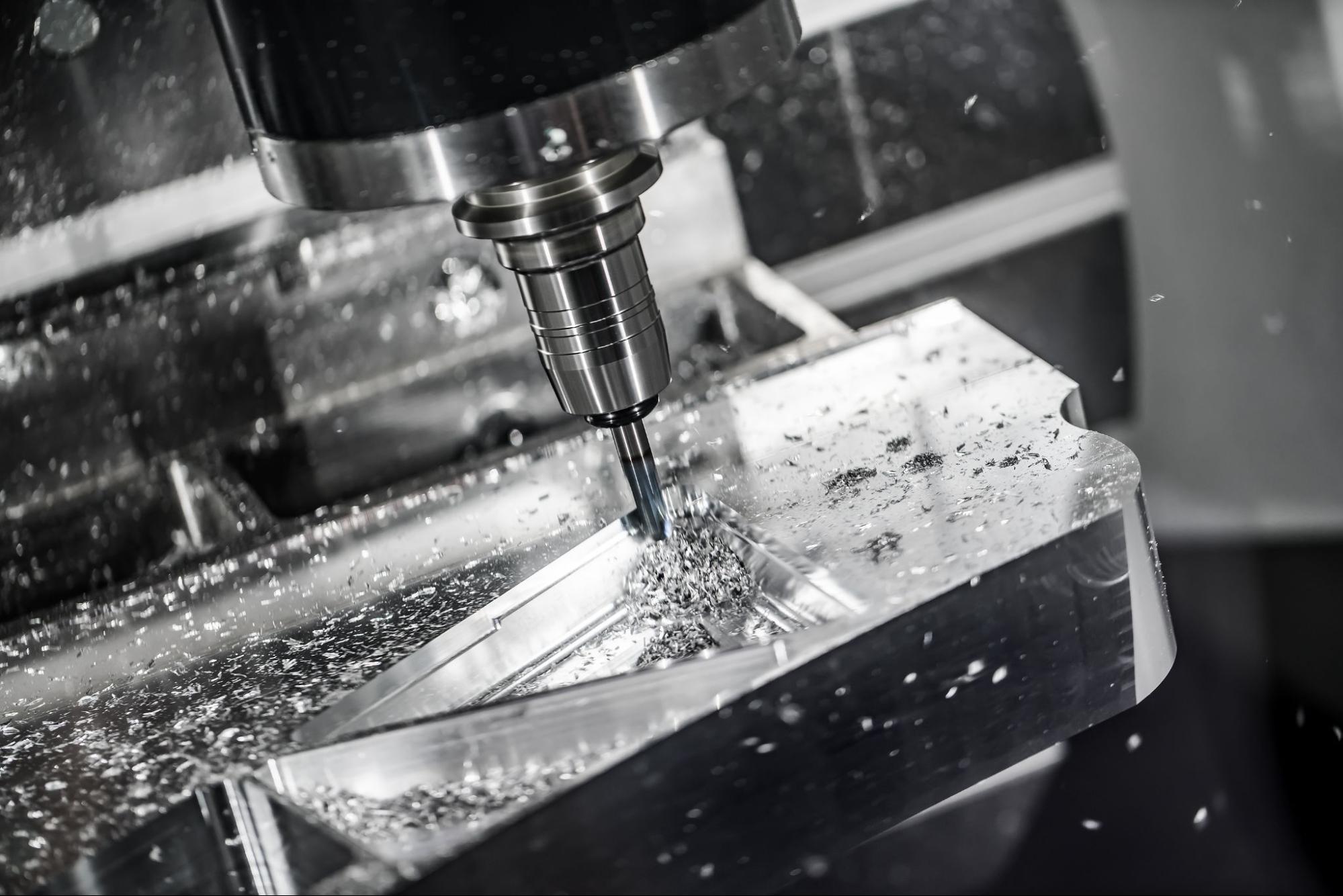
High-strength CNC materials include titanium, alloy steels, stainless steels, and engineering plastics like PEEK, selected based on strength, weight, and machinability requirements.
To help you make the right material choices, this article will cover what “high strength” really means, common CNC materials for high-strength applications, and design, cost, and lead time considerations.
What “High Strength” Means (So You Pick the Right Property)
“High strength” might sound simple, but it is often misunderstood. Different material strength properties control different failure modes, and choosing the wrong one can have detrimental consequences—unnecessarily higher costs, machining difficulty, premature component failure, and overdesigned components, to name a few.
The 4 Material Properties People Confuse
Yield vs. Tensile Strength
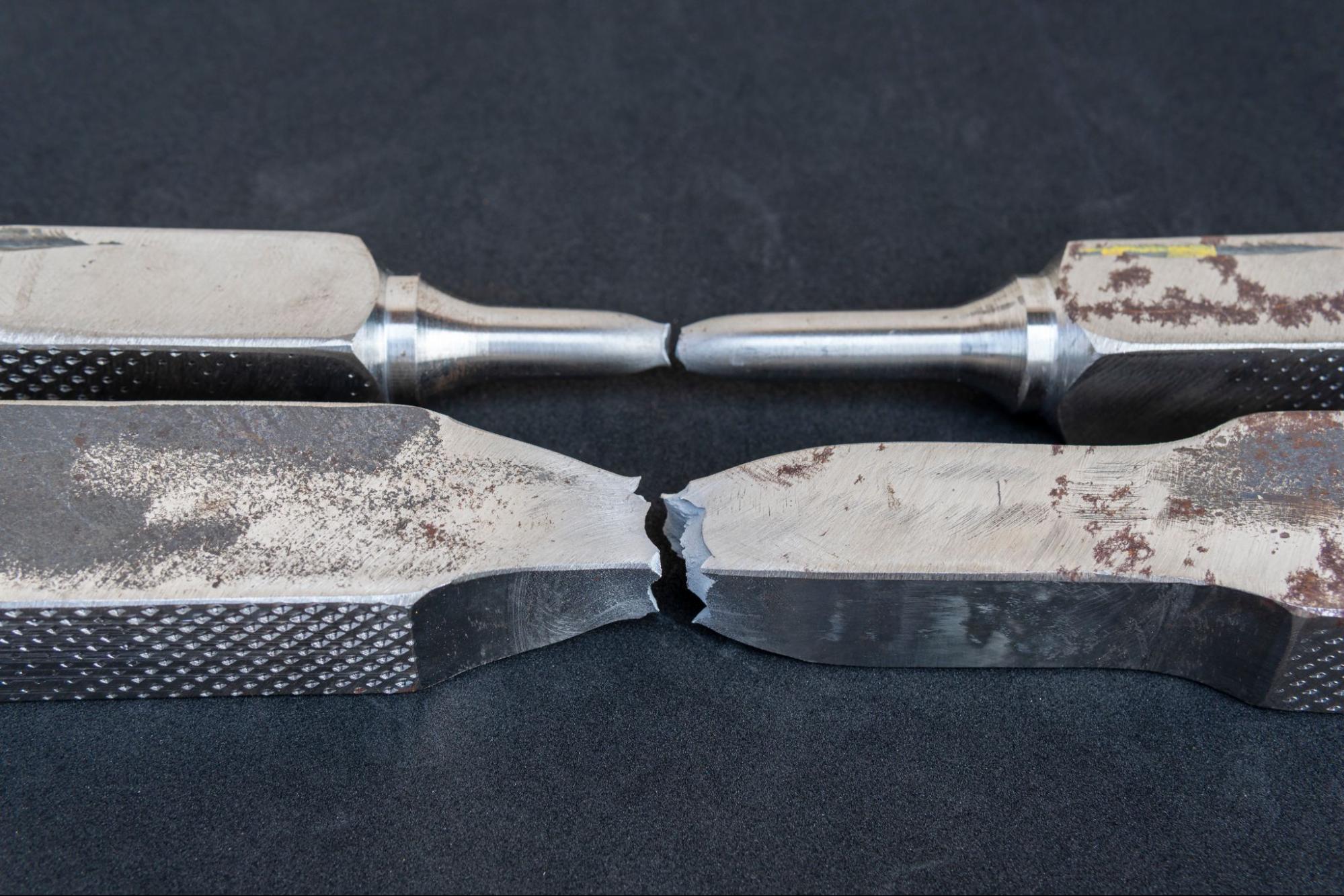
Yield strength is the stress at which a material begins to deform plastically (permanently). Below this point, deformation is elastic, meaning the material returns to its original shape once the load is removed. Tensile strength or ultimate tensile strength (UTS) is the maximum stress a material can withstand while being stretched before necking occurs, which leads to eventual fracture.
For most structural components, yield strength matters more than UTS because permanent deformation becomes a problem long before fracture occurs. Having a relatively large gap between yield strength and tensile strength is usually a good thing, as it indicates that the material is ductile and will give plenty of warning (visible bending or necking) before it snaps.
For very brittle materials, the yield strength is less significant, as these materials don’t bend or neck before they break. Tensile strength is the most important factor because it results in instant failure once the limit is reached.
Hardness vs. Toughness
Hardness measures a material’s ability to resist surface deformation and wear (dents, abrasions, and scratches). Toughness refers to its ability to absorb energy from impacts without fracturing.
Many ceramics, for example, are hard but not tough. They resist surface wear well, but fracture easily upon impact. In contrast, many metals are tough but not necessarily hard. They can withstand impact energy without fracturing, but may be prone to denting and scratching.
Fatigue vs. Static Strength
Static strength measures a material’s ability to withstand a single load without failing. Fatigue strength is similar to static strength, but refers to a material’s ability to withstand repeated loads without failing. Many CNC components fail due to fatigue rather than static overload, and it’s common for designers to overlook fatigue and design for maximum load rather than repeated cycles.
Creep Strength (Resistance to Stress in High-Temperature Environments)
Another common mistake is selecting a high-strength alloy that performs well at room temperature but degrades under sustained heat. Materials behave differently at different temperatures, and this needs to be taken into account when selecting materials for high-temperature applications. Yield strength, tensile strength, and static strength are reliable at ambient temperatures, but at elevated temperatures, these values may no longer reflect a material’s capabilities.
Under sustained heat and load, a material may gradually deform even if the applied load stays below its specified yield strength. The rate of that deformation is the creep rate, measured in percent or strain per hour. This property is critical for components like turbines, engines, exhaust systems, and others that face extreme temperatures.
Strength Properties and When They Matter
| Property | What It Controls | Common Use Case | Common Mistake |
| Yield Strength | Permanent deformation limit | Structural brackets, load-bearing housings | Confusing it with tensile strength |
| Tensile Strength | Maximum fracture limit | Fasteners, cables, pull-tested parts | Over-specifying when yield governs design |
| Hardness | Wear resistance, surface durability | Gears, dies, contact surfaces | Assuming hardness is the same as toughness |
| Toughness | Resistance to impact fracture | Shock-loaded components | Ignoring it in cold environments |
| Fatigue Strength | Life under cyclic loading | Shafts, rotating parts, springs | Designing only for static load |
| Creep/Temp Strength | Long-term stability at heat | Turbine components, exhaust systems | Using room-temp data for hot service |
Strength vs. Strength-to-Weight Ratio
In many applications, strength alone is not the only design priority. Engineers often evaluate specific strength, which is a material’s strength relative to its density. Materials like titanium and high-strength aluminum alloys offer excellent strength-to-weight ratios, making them ideal for aerospace, robotics, and automotive components where reducing mass is critical.

Move faster with a partner built for regulated programs.
Upload your part and get a compliant quote—from a team with the systems, workflows, and experience to keep your program on schedule.
See what your part would costHigh-Strength Materials You Can CNC Machine
Choosing the right high-strength CNC materials comes down to specific use cases. Examples of high-strength CNC machining materials include:
- High-strength aluminum alloys (7075)
- Alloy steels (4140, 4340)
- Precipitation-hardened stainless steels (17-4 PH, 15-5 PH)
- Titanium alloys (Ti-6Al-4V)
- Nickel superalloys (Inconel 718)
- Advanced engineering plastics (PEEK, PEI)
These materials improve performance,but can also increase machining time, cutting tool wear, and distortion risk. This is why successful parts require material-aware Design For Manufacturing (DFM), realistic tolerances, and sometimes secondary finishing operations to achieve optimal part performance.
Different CNC Machining of High-Strength Materials
| Material | Relative Strength | Machinability | Key Advantages | Downside | Typical Uses |
| 6061 Aluminum | Moderate | Excellent | Easy to machine, versatile | Lower strength than other options | General-purpose structural parts |
| 7075 Aluminum | High (for Al) | Good | Strong, lightweight | Less corrosion resistant than 6061 | Aerospace brackets, lightweight frames |
| 4140 Alloy Steel | High | Moderate | Strong, tough, cost- effective | Heat-treatment distortion risk | Shafts, structural load-bearing parts |
| 4340 Alloy Steel | Very High | Moderate to Difficult | Higher toughness than 4140 | Increased tool wear when hardened | High-stress drivetrain components |
| 17-4 PH Stainless | High | Moderate | Strength, corrosion resistance | Harder after aging | Corrosion- resistant structural parts |
| 15-5 PH Stainless | High | Moderate | Better toughness control than 17-4 | Machining is harder after aging | Aerospace structural components |
| Titanium Grade 5 (Ti-6Al-4V) | Very High | Difficult | Exceptional strength-to-weight | Heat concentration, rapid tool wear | Lightweight structural, medical implants |
| Inconel 718 | Extremely High | Very Difficult | Retains strength at high temperature | Work hardening and slow machining | High-temperature aerospace/energy parts |
| PEEK | Moderate (high for plastic) | Good | Lightweight, chemical-resistant | Lower stiffness compared to metals | Chemically resistant, lightweight parts |
| Ultem (PEI) | Moderate (high for plastic) | Good | Electrical insulation, heat resistance | Higher thermal expansion than metals | Electrical and aerospace interior components |
Why High-Strength Materials Are Harder to Machine
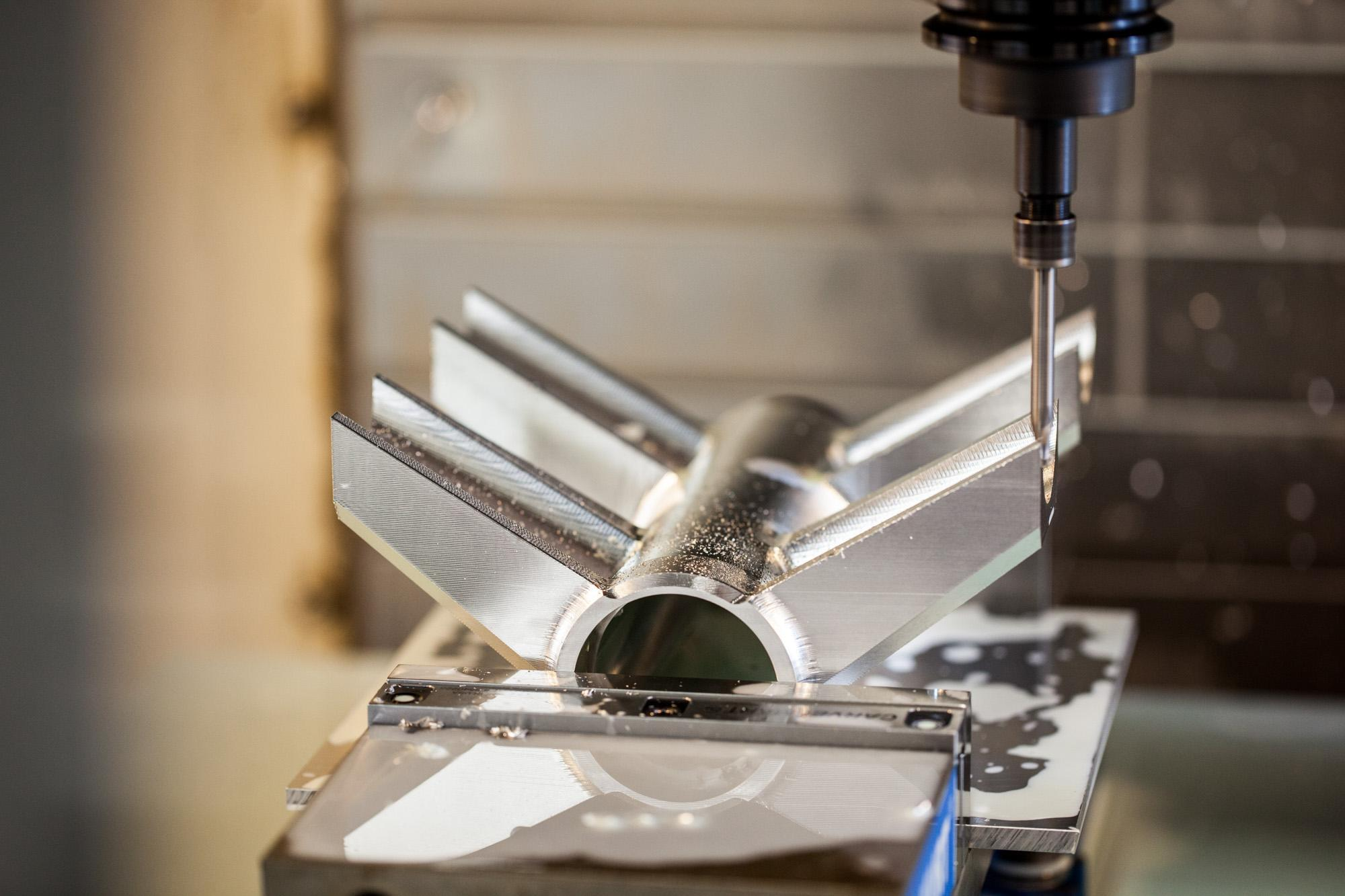
Simply put, higher-strength materials are harder to machine because they have better structural integrity and resist plastic deformation during cutting. Cutting through these materials requires higher cutting forces, leading to greater tool wear or faster tool wear. Higher shear strength, work hardening, and poor heat dissipation all increase cutting forces and tool wear. Cutting strong materials can also create excessive heat.
Titanium, for example, has low thermal conductivity, so heat concentrates at the tool edge rather than dissipating into the material or chip. This leads to faster tool degradation and lower cutting speeds. Some materials, such as stainless steels and nickel superalloys, are also prone to work hardening. If the tool rubs instead of cutting cleanly, the surface becomes even harder to cut on the next pass.
Residual stresses inside strong materials can also cause parts to distort as material is removed, making tight tolerances harder to maintain. Another major challenge with high-strength materials is control of surface finish. Tougher materials tend to produce more burrs and make surface control more challenging, adding extra finishing and inspection steps.
The Low-Volume Injection Molding Guide
 Download Now

Design (DFM) Rules That Minimize Cost for Machining Strong Materials
High-strength materials increase machining sensitivity. Small design decisions can dramatically affect cost, lead time, and scrap rate. The following design rules typically deliver the biggest savings.
Geometry Rules
When working with high-strength materials, geometry decisions have a major impact on cost.
- Avoid deep, narrow pockets that require long tool engagement, which increases deflection and tool wear.
- Add generous internal radii instead of sharp corners so larger, more stable tools can be used at better cutting parameters.
- Reduce long, thin walls that are prone to chatter and distortion under higher cutting forces.
- Most importantly, plan proper tool access. Strong materials punish poor accessibility—awkward tool angles and long-reach setups directly translate into slower machining and higher scrap risk.
Tolerance Rules
Tight tolerances create a multiplier effect in hard materials. The stronger the material, the more time, inspection effort, and process control are required to achieve very tight dimensions. This increases setup complexity and scrap risk.
Tighten tolerances only where function truly depends on them, such as bearing fits or sealing surfaces, and loosen them on noncritical features. Strategic tolerance allocation often reduces cost more than changing the material itself.
Plan for Secondary Operations
High-strength materials often require additional finishing steps. Planning for them early prevents dimensional surprises.
- Reaming or boring for critical fits: Precision holes are more reliable when finished with secondary operations.
- Post-heat-treatment finishing: Heat treatment can introduce distortion. A final finishing pass may be required to restore accuracy.
- Account for surface treatments: Processes such as anodizing or passivation can slightly change dimensions. These thickness changes must be included in tolerance stack-ups.
Cost and Lead-Time Trade-offs for High-Strength Materials
Choosing a strong material makes the entire machining process more demanding. As strength increases:
- Cutting speeds usually decrease
- Tool wear increases, raising tooling costs
- Cycle times get longer
- Inspection requirements become stricter
- Scrap risk is higher, especially during early production
This means stronger materials often lead to higher part costs and longer lead times. The jump from moderate strength to very high strength can significantly change machining strategy, setup stability, and overall production risk.
Higher strength is worth the added cost when the application truly requires it. Examples include:
- Critical weight reduction where material removal cannot achieve the same result
- Corrosive environments in which standard alloys would fail
- High-temperature applications where lower-strength materials would soften or creep
If those conditions aren’t present, selecting the strongest available material can add cost and complexity without adding value. Instead of maximizing strength, the goal is to meet performance requirements in the most manufacturable and cost-effective way possible.
Get Expert Support for High-Strength Material Selection
High-strength materials can enhance a design’s functionality and ensure it withstands extreme environments and applications. However, as we’ve discussed in this article, choosing the right high-strength materials for a design is a critical, sometimes complicated, process.
Selecting the right CNC materials for high-strength applications requires balancing mechanical performance with manufacturability, availability, and cost. Digital manufacturing platforms like Fictiv help engineers evaluate these trade-offs early through automated DFM feedback and material selection guidance.
Fictiv’s global manufacturing network and engineering team help companies select the right CNC materials for high-strength applications while balancing cost, manufacturability, and performance.
Upload your design to Fictiv today for a free quote, with expert guidance on material selection, DFM, and scalable CNC machining.
FAQs About High-Strength CNC Materials
What is the strongest material for CNC machining?
Materials like titanium alloys (Ti-6Al-4V), Inconel 718, and high-strength alloy steels (4340) offer the highest strength for CNC machining applications.
What is the best CNC material for strength-to-weight ratio?
Titanium and 7075 aluminum provide excellent strength-to-weight ratios, making them ideal for aerospace and lightweight structural components.
Why are high-strength materials harder to machine?
High-strength materials resist deformation, require higher cutting forces, generate more heat, and increase tool wear, making machining slower and more complex.
Is stronger material always better for CNC parts?
No. The best material balances strength, cost, machinability, and performance. Over-specifying strength can increase cost and complexity without improving performance.
Can Fictiv machine high-strength materials like titanium and Inconel?
Yes. Fictiv supports CNC machining for a wide range of high-strength materials, including titanium alloys, stainless steels, alloy steels, and high-performance plastics.
How does Fictiv reduce the cost of machining strong materials?
Fictiv helps reduce costs by identifying manufacturability issues early, providing material selection advice, and matching designs with the most efficient manufacturing processes and suppliers.

Injection Molding Design Guide
Download Now