



Time to read: 13 min
Choosing sheet metal for manufacture in aerospace isn’t just a matter of selecting the strongest or lightest alloy. For instance, a stronger material that suits machined components may crack during bending, while one that forms easily may lack the fatigue strength for vibration-loaded structures. An apparently suitable alloy may fail in salt spray, elevated temperatures, or galvanic contact with fasteners.
Aerospace sheet metal material selection is the decision of which alloy—aluminum (3003, 5052, 6061, 7075, 2024), stainless steel, or titanium—best matches a component’s forming requirements, structural load, service environment, and weight budget, evaluated together rather than sequentially. This article discusses how to choose the appropriate material for aerospace applications.
Why Material Selection Is Different in Aerospace Sheet Metal
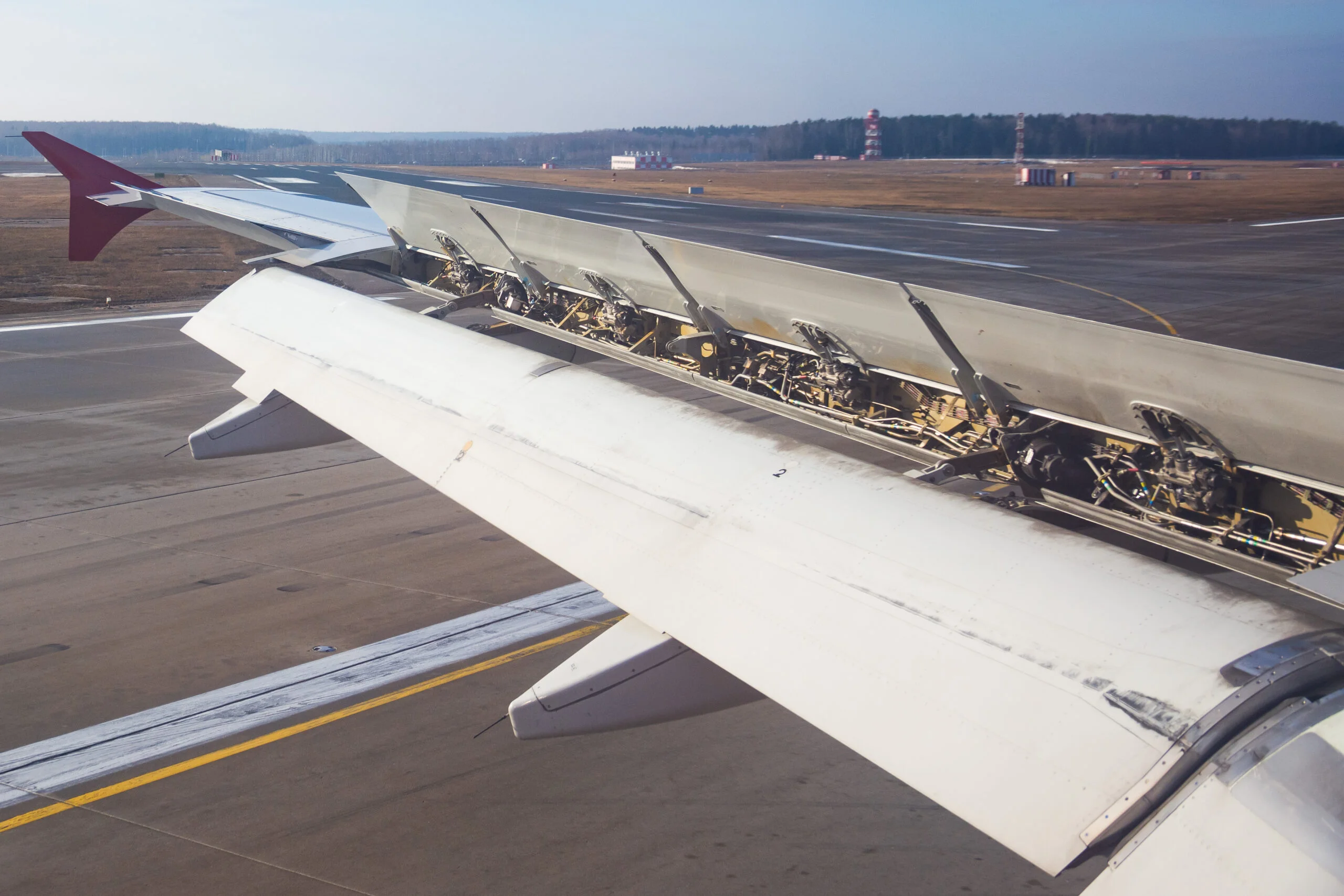
Aerospace components operate in harsh service conditions that make minor material decisions highly consequential.
Vibration-induced fatigue is a major differentiator. Aircraft, launch vehicles, satellites, UAVs, and defense systems experience cyclic loading from engines, aerodynamic forces, acoustic excitation, pressure cycling, and equipment vibration. A bracket that easily supports its static design load may still fail after millions of load cycles, particularly where stress concentrations occur.
Corrosion is equally application-dependent. Aircraft will experience humidity cycling, salt-laden environments, condensation, hydraulic fluids, and contact between dissimilar metals. Aluminum attached directly to stainless steel hardware, for example, will create a galvanic couple when moisture provides an electrolyte at the union. Material and finish selection should therefore be considered together.
Finally, weight has unusually high value in aerospace. Often, every gram matters, but density alone provides an incomplete comparison. Stronger, denser material can sometimes achieve the same structural outcome with less mass, while ultra-high-strength alloys may introduce processing or corrosion-protection burdens. The correct metric is structural performance at the finished-part level.
Aluminum Alloys for Aerospace Sheet Metal
Aluminum is commonly the most appropriate choice for many sheet metal components in aerospace, offering low density, adequate strength, accepted performance, and easy cutting and forming.
3003-H14: Maximum Formability for Low-Stress Parts
3003 has comparatively low strength (typical yield of ~145 MPa) and high ductility, making it suitable for:
- Ventilation and environmental-control ducting
- Covers and interior panels
- Light-duty enclosures
- Simple, nonstructural brackets
Its limitation is straightforward: excellent formability doesn’t make it suitable for primary load-bearing or vibration-critical structures. For vibration-loaded brackets, primary structures, or highly stressed attachments, consider stronger alternatives.
5052-H32: The Practical Forming Alloy
5052-H32 provides a sought-after balance of formability, strength, corrosion resistance, and fatigue performance for formed sheet components. Typical yield strength is approximately 193 MPa. It allows tight bend radii, welds well, and has good inherent corrosion resistance. It is suitable for formed panels, electronics enclosures, brackets, welded assemblies, and vibration-prone components. (Note: H32 is the standard sheet temper.)
For many aerospace components, 5052-H32 is a better choice than 6061-T6, as it tolerates deformation with reduced bend-line cracking. Its moderate strength is less suited to highly loaded parts or when thickness must be minimized. This choice also depends on design and manufacturing constraints, because even a slightly weaker component is preferable to a cracked one that could fail.
6061-T6: Excellent Material, Frequently Misapplied
6061-T6 is widely familiar to engineers because it can be machined extremely well and offers good strength, corrosion resistance, and availability. Typical yield strength is approximately 276 MPa. The difficulty is its T6 temper, which can lead to cracking in 6061 aluminum when bent.
Precipitation hardening gives 6061-T6 its strength, but substantially reduces its ductility. For this reason, 6061-T6 is generally better suited to flat laser-cut sheet parts, machined components, extrusions, structural fittings, and limited forming. Increasing bend radius can reduce strain, but it does not make T6 equivalent to a forming temper.
Where a design requires substantial forming, alternatives include 5052-H32 or forming 6061 in an annealed condition and subsequently applying appropriate heat treatment, where the specification permits. This approach requires a qualified heat-treatment facility with appropriate process documentation and certification—confirm its capability with your manufacturing partner before specifying it on a drawing.
7075-T6: High Strength with Forming Constraints
Where strength-to-weight becomes a dominant factor, 7075 aluminum is a good option. Typical T6 yield strength is around 503 MPa, considerably above 5052 or 6061. Applications can include highly loaded parts, structural reinforcement, fastener plates, structural sheet, and weight-sensitive load-carrying components.
Complex forming normally requires an appropriate softer condition before subsequent aging, or respect for the forming limits of the specified temper. Where corrosion resistance is a priority, 7075 is less durable than 5052, so coatings or cladding may be required.
Alclad material adds a thin corrosion-resistant aluminum-alloy layer, but that layer is not structurally equivalent to the 7075 core. Its thickness must therefore be considered in strength and fatigue calculations.
2024-T3: A Fatigue-Critical Aerospace Standard
2024-T3 is particularly important because of its long history in aircraft skins and fatigue-sensitive structures. Typical yield strength is approximately 345 MPa, and fatigue performance is excellent.
Its weaknesses are corrosion resistance and lower formability than 5052. Consequently, 2024 sheets are often supplied clad or used with protective finishes.
Unlike 5052, which a fabricator may recommend as a manufacturing choice, 2024 frequently enters the supply chain because an OEM drawing or certified design already specifies it.
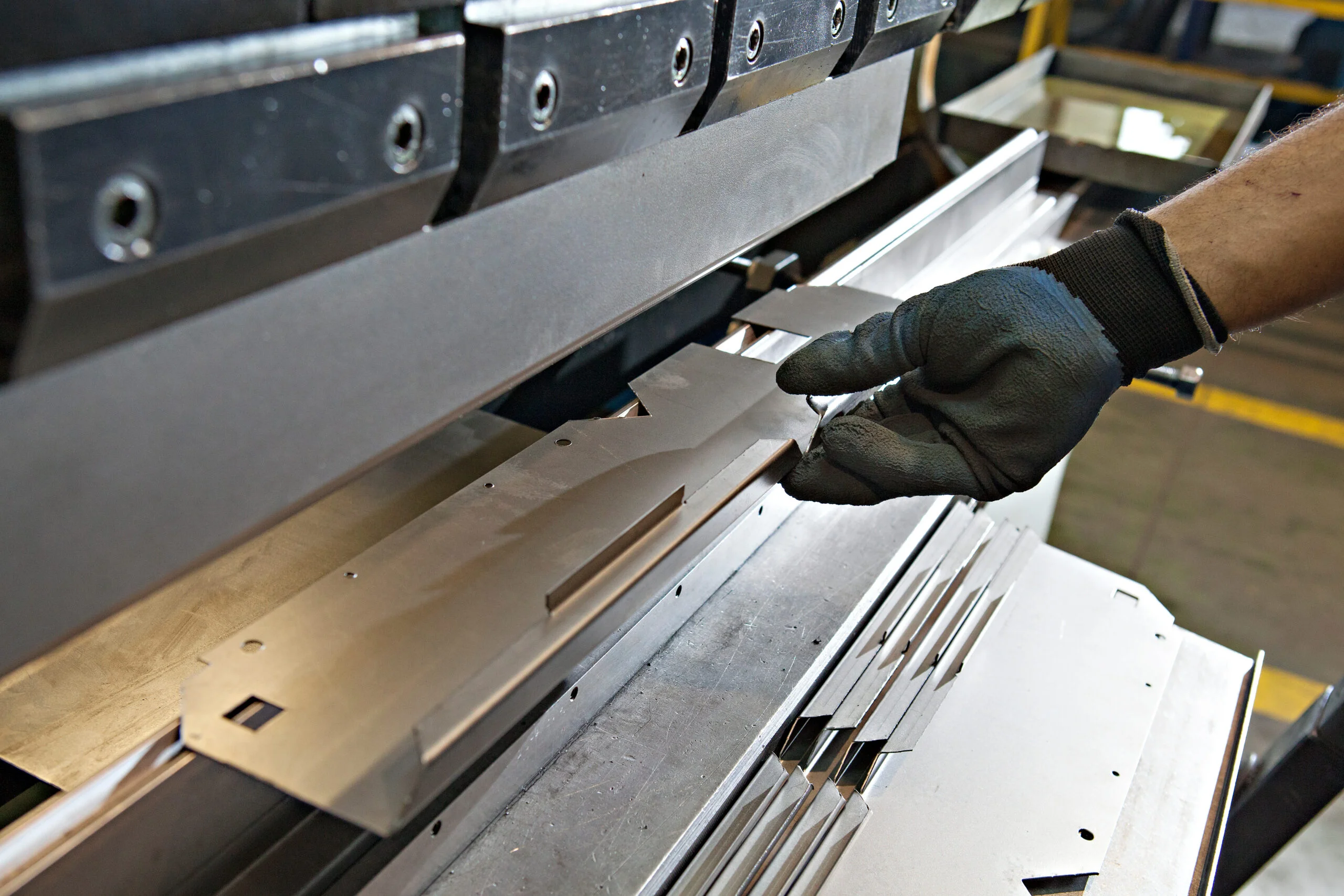
Aluminum Alloy/Temper Comparison Chart for Aerospace Sheet Metal
| Alloy | Typical yield strength | Formability | Corrosion resistance | Vibration Fatigue | Typical aerospace use |
| 3003-H14 | ~145 MPa | Excellent | Good | Moderate | Ducting, panels, light enclosures |
| 5052-H32 | ~193 MPa | Excellent | Very good | High | Formed brackets, panels, welded assemblies |
| 6061-T6 | ~276 MPa | Limited in T6 | Good | Susceptible at formed features | Flat parts, machining, extrusions |
| 7075-T6 | ~503 MPa | Limited | Relatively poor | High | High-load structural parts |
| 2024-T3 | ~345 MPa | Moderate | Poor unless protected | Excellent | Fuselage/ wing skins, fatigue-critical structure |
Generic values shown are typical yield strengths and will vary by gauge, temper designation, governing specification (e.g., ASTM B209, AMS), and test direction relative to grain. They are not minimum guaranteed values. For design and procurement, use the minimum properties from the applicable AMS specification and the material certification for the specific lot and gauge being ordered.
Stainless Steel for Aerospace Sheet Metal
Stainless steel compensates for aluminum’s temperature limitation, corrosion performance, wear resistance, or local strength deficiencies.
304 stainless steel is a common general-purpose austenitic grade with good formability, strength, and inherent corrosion resistance. 316 stainless steel adds molybdenum and provides greater resistance to aggressive chloride environments, making it relevant to marine-exposed aircraft, naval systems, coastal launch facilities, and equipment regularly exposed to salt.
The obvious penalty is weight: stainless has ~ three times the density of aluminum. That can be acceptable in a small fastener plate or hot-zone shield while being prohibitive for a large structural panel.
Fabrication also changes. Stainless work-hardens, requires higher forming forces and greater springback compensation, may demand larger bend radii, and requires more attention to tooling and first-article measurement.
Unlike aluminum, stainless generally does not require anodizing or conversion coating for basic corrosion resistance. Passivation after fabrication is commonly specified to restore and optimize the passive surface after manufacturing disruption.
Titanium Sheet Metal
The case for titanium only becomes compelling when requirements include high strength at low weight, greater temperature capability, and exceptional corrosion resistance.
Grade 2 commercially pure titanium provides high corrosion resistance and better formability than high-strength titanium alloys. Ti-6Al-4V, or Grade 5 (usually for applications requiring maximum strength-to-weight), provides much higher structural performance, but is considerably more difficult to form.
Titanium fabrication is not simply “expensive aluminum fabrication.” High springback, limited room-temperature formability in stronger grades, difficult cutting, and the potential need for elevated-temperature forming mean expert supplier capability is critical.
Material cost can be several times that of aluminum, with fabrication adding further premium. Titanium only fits when its properties solve an actual mission requirement, rather than simply offering a higher-performance option.
DFM Considerations for Aerospace Sheet Metal Material
The design must account for the forming behavior and manufacturability of the selected alloy and temper. Here are some of the main DFM considerations.
Minimum Bend Radius and Temper
Minimum bend radius is a function of thickness and material condition. A starting point for ductile alloys such as 5052-H32 is:
inside radius (r) ≥ material thickness (t)
The actual value is derived from alloy, temper, grain direction, thickness, and material datasheets/certification. Higher-strength tempers require larger radii.
Bend-to-Hole Clearance
Features positioned too close to a bend can distort, as material flows during forming. A practical starting guideline allows a distance of at least 2t + r from the bend centerline for holes under 25 mm. Larger holes can impose greater clearance needs. This is especially important around fastener patterns, where a distorted/displaced hole can become a potential fastener fail point.
Grain Direction
Rolled sheet exhibits anisotropy (directionally-dependent mechanical properties). Bending across the rolling direction minimizes resultant cracking risk. This becomes increasingly critical as material strength rises, or bend radius decreases. For fatigue-critical parts, grain direction is a controlled manufacturing parameter, not driven by nesting optimization.
Springback
Springback in 5052 tends to be comparatively predictable. Hardened aluminum alloys, stainless steel, and especially titanium demand increasing compensation. First-article inspection (FAI) is critical because manually forcing a misbent component into place is forbidden in aerospace applications due to the residual stresses introduced. Angular dimensions must have appropriate tolerance bands based on material type, thickness (t), grain direction, and the forming process limits.
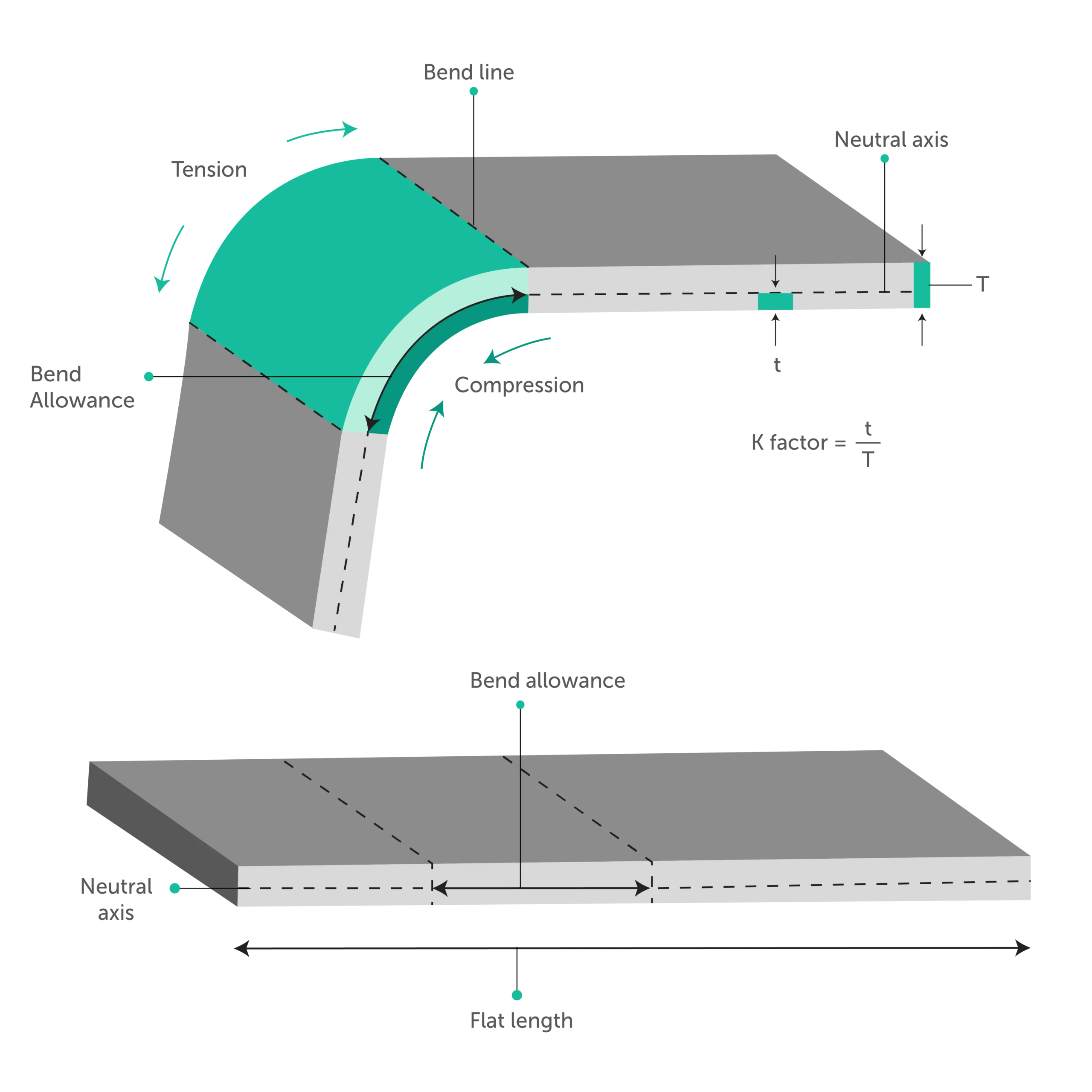
Bend Allowance
Learn more about designing for sheet metal fabrication with our Sheet Metal Design Stack
Surface Finish and Corrosion Protection
Surface treatment should be selected at the same stage as the base material. For aluminum, common aerospace options include:
- Chromate conversion coating for corrosion protection, while retaining electrical conductivity.
- Type II sulfuric acid anodizing, where improved corrosion resistance is required.
- Type III hard anodizing, where surface wear resistance is required.
Chromic acid Type I processes have historically been important, but are increasingly restricted because of hexavalent chromium toxicity. Stainless steel commonly uses passivation, with electropolishing, for cleanliness or smooth fluid-contact surfaces. Titanium generally requires little additional coating for corrosion protection, although anodizing may be used for identification or other functional reasons.
Dissimilar-metal interfaces demand close attention. Aluminum directly contacting stainless steel, steel, or titanium corrodes galvanically in the presence of moisture. Isolation washers, conversion coating, primers, sealants, or other approved isolation systems should be designed into the joint.
Choosing the Right Material for Your Aerospace Sheet Metal Program
The alloy selection process starts with the part and design requirements.
- Is it heavily formed? Start with 5052-H32 for many structural-adjacent parts or 3003 for low-stress geometry.
- Is maximum strength-to-weight required? Consider 7075 or 2024, while accounting for forming and corrosion requirements.
- Is the service temperature too high for aluminum? Stainless steel or titanium may become necessary.
- Is corrosion exposure severe? 5052 and 316 stainless are strong candidates, depending on weight and structural requirements.
- Is fatigue resistance critical? Material, temper, grain direction, bend geometry, fastener details, and surface treatment all need to be evaluated together.
The optimal sheet metal choice is therefore not the alloy with the highest strength or lowest density. It is the material that can be formed consistently, be protected appropriately, be certified to the required aerospace specification, endure the corrosion risks in real use, and survive the actual structural and environmental loads of the application.
Fictiv’s sheet metal manufacturing network covers aluminum, stainless, and titanium across all aerospace-relevant grades and tempers, with DFM feedback that addresses bend radius, grain direction, material certification requirements, and finish selection to help prevent part failures before tooling begins.
With 30M+ parts manufactured and a 95.4% quality success rate, Fictiv’s network is built for programs where material traceability and certification are as important as the part geometry.
Get a quote for your aerospace sheet metal program →
Talk to a Fictiv expert about your project, or upload your parts to start a free quote.
FAQs About Aerospace Sheet Metal Materials
What’s the best aluminum alloy for aerospace sheet metal brackets?
For most formed, vibration-loaded brackets, 5052-H32 is the strongest general-purpose choice — it balances formability, corrosion resistance, and fatigue performance without the bend-cracking risk of 6061-T6. Higher-load brackets may call for 7075-T6, provided forming and corrosion protection are accounted for.
Why does 6061-T6 crack when bent, and how is that different from 6061 in general?
The T6 temper gets its strength from precipitation hardening, which significantly reduces ductility compared to as-annealed 6061. This makes 6061-T6 excellent for flat, laser-cut, or machined parts but prone to cracking along tight bend lines. Forming in an annealed condition and heat-treating afterward (where the spec allows) is one way to use 6061 in formed parts.
When is titanium worth the added cost over aluminum in aerospace sheet metal?
Titanium makes sense when a part genuinely needs high strength at low weight, elevated-temperature capability, or corrosion resistance beyond what aluminum offers — not simply as a “stronger” upgrade. Given its higher material cost and more difficult forming (springback, limited room-temperature ductility in high-strength grades), titanium should be reserved for parts where aluminum or stainless can’t meet the actual mission requirement.
How much heavier is stainless steel than aluminum for the same part?
Stainless steel is roughly three times denser than aluminum, so a stainless part of equivalent geometry will weigh significantly more. That penalty can be acceptable for small components like fastener plates or heat shields, but it’s usually prohibitive for large structural panels where weight budgets are tight.
Why does grain direction matter when bending aerospace sheet metal?
Rolled sheet has directional (anisotropic) mechanical properties, and bending across the rolling direction reduces the risk of cracking at the bend line. This becomes more critical as material strength increases or bend radius decreases, which is why grain direction is treated as a controlled parameter on fatigue-critical parts rather than something left to nesting optimization on the shop floor.
How do I prevent galvanic corrosion between aluminum sheet metal and steel or titanium fasteners?
Galvanic corrosion occurs when aluminum contacts a more noble metal — steel, stainless, or titanium — in the presence of an electrolyte such as moisture or condensation. Standard mitigations for aerospace joints include chromate conversion coating (Alodine, per MIL-DTL-5541) on the aluminum contact surface, PTFE or nylon isolation washers between dissimilar metals, and wet assembly with a corrosion-inhibiting sealant in immersion or salt spray environments. For flight-critical or pressurized-environment applications, isolation alone is typically insufficient, and a combination of coating, isolation, and sealant is required. Specify the mitigation system on the drawing rather than leaving it to the fabricator’s judgment.