



Time to read: 11 min
Food and beverage equipment needs to perform reliably while meeting strict requirements for cleanliness, corrosion resistance, and food-contact safety. A machinery component that corrodes during a clean-in-place (CIP) cycle, traps residue in a machined pocket, or uses an unsuitable polymer can introduce contamination risks, shorten equipment life, and create costly compliance problems. Equipment that produces food and beverage products commonly handles high volumes, and downtime from quality issues directly affects throughput.
For mechanical engineers and machine builders, design of food and beverage equipment requires coordination of material selection, machining, surface finishing, and hygienic design. Requirements depend on the product, cleaning chemicals, temperature, and intended application, making material documentation and equipment-specific standards essential.
Food processing equipment should use documented, application-appropriate materials, smooth and cleanable surfaces, drainable geometries, and components designed to withstand operating and cleaning conditions.
Materials for Food Processing Equipment
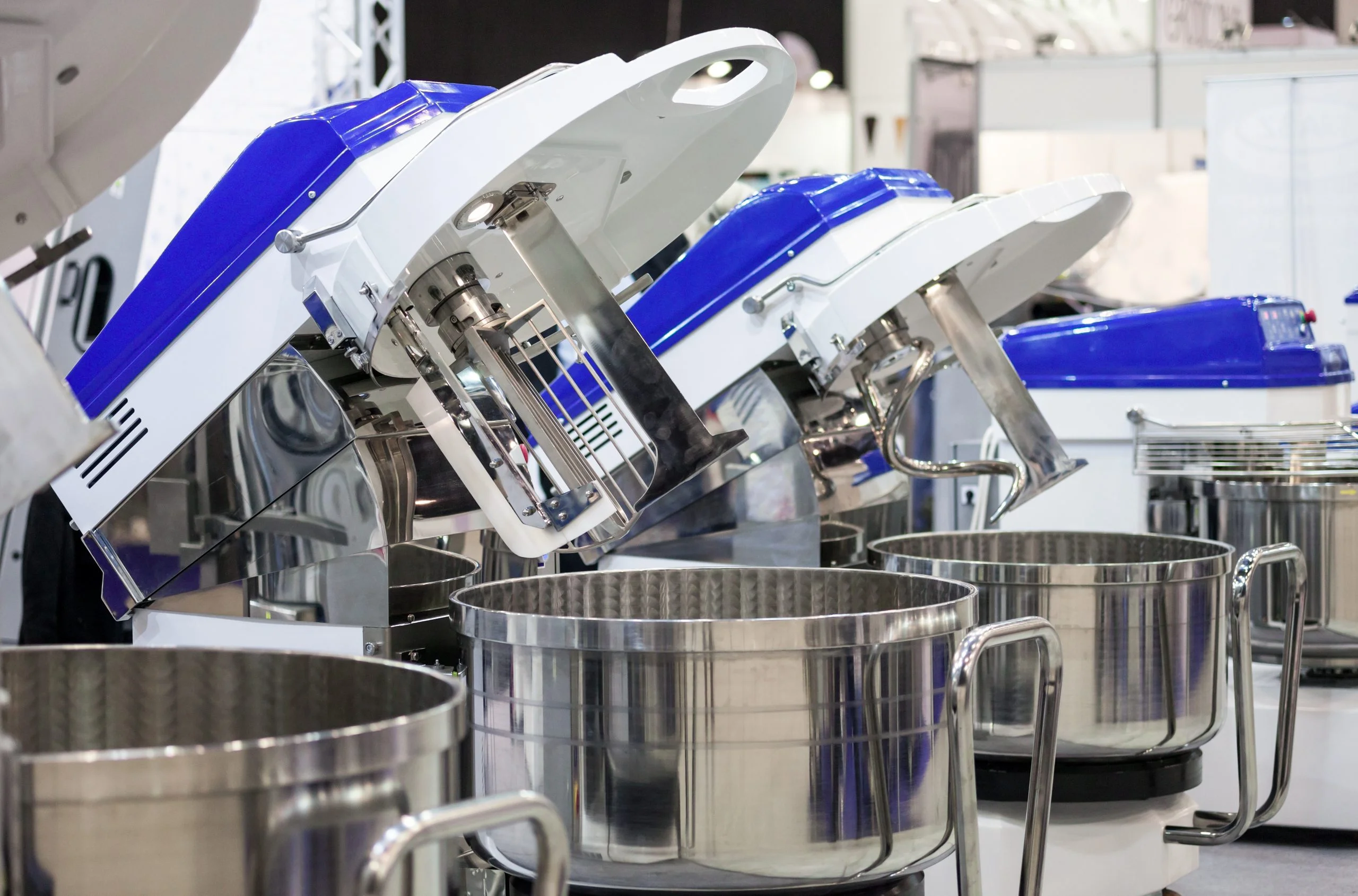
Food processing equipment uses stainless steel, engineering plastics, elastomers, and, in selected applications, aluminum. Material selection depends on food-contact suitability, corrosion resistance, mechanical performance, and cleanability. NSF/ANSI 51 addresses the materials and finishes used in commercial food equipment, but chosen materials must be verified for the specific grade and intended conditions.
316L stainless steel is the default for all food-contact metal components; FDA-compliant grades of acetal, PEEK, and UHMWPE cover plastic wear and structural applications; food-grade silicone handles seals and gaskets. Material selection depends on food-contact suitability, CIP chemical exposure, temperature, and regulatory documentation requirements.
316L Stainless Steel
316L stainless steel is often used for machined and fabricated components that contact food products because of its corrosion resistance. Its low-carbon composition reduces carbide precipitation during welding, which helps preserve corrosion resistance in the heat-affected zone when fabrication is performed correctly.
Compared with 304 stainless steel, 316L generally offers better resistance to chloride-induced corrosion, making it a strong candidate for demanding food processing and washdown environments. However, performance depends on chemical concentration, temperature, and exposure time.
Specify 316L explicitly on engineering drawings and purchase orders. Where required, include material certification, traceability, and welding requirements. Passivation in accordance with ASTM A967 may help restore the passive surface after machining and fabrication.
304 Stainless Steel
304 stainless steel is often suitable for structural frames, supports, and non-product-contact enclosures where its corrosion resistance meets operating requirements. It offers a cost-effective alternative to 316L in less aggressive environments.
Evaluate chloride exposure, cleaning chemistry, and washdown frequency before selecting 304. Neither grade should be approved or rejected solely by name; the application and relevant sanitary requirements determine suitability.
Food-Grade Engineering Plastics
Engineering plastics provide low friction, wear resistance, and design flexibility. Some common options include:
- Acetal (POM): Useful for guides, bearings, and components requiring critical dimensional stability. However, it can degrade when exposed to chlorine and bleach sanitizers.
- PEEK: Suitable for demanding applications requiring high-temperature performance, chemical resistance, and mechanical strength.
- UHMWPE: Commonly used for conveyor guides, wear strips, and low-friction surfaces.
Food-contact compliance depends on the specific formulation, additives, processing conditions, and intended use. Specify the material grade and the applicable 21 CFR regulation on the drawing, and request supporting documentation. Don’t assume every grade within a polymer family is food-safe.
Aluminum
Aluminum can be appropriate for structural components in dry-food environments. Anodizing can improve surface hardness and wear resistance, but aluminum requires particular caution in wet processing environments. Generally avoid alkaline cleaning solutions that may attack the metal or its anodized layer.
Silicone
Silicone is commonly used for food-contact seals, gaskets, and flexible components. Specify a suitable food-contact grade and verify its regulatory documentation. FDA regulation 21 CFR 177.2600 addresses rubber articles intended for repeated food contact. Select Shore A hardness based on the sealing geometry, pressure, temperature, and compression requirements. Silicone is a poor choice for contact with oils and fats, and EPDM rubber is a common alternative.
Food Equipment Material Selection at a Glance
| Material | Typical Applications | Key Consideration |
| 316L stainless steel | Product-contact parts and fittings | Corrosion resistance and finish |
| 304 stainless steel | Frames and supports | Cleaning environment |
| Food-contact acetal | Guides and bearings | Grade-specific compliance |
| Food-grade PEEK | High-temperature components | Chemical resistance and cost |
| Food-grade UHMWPE | Conveyor guides and wear strips | Wear resistance and cleanability |
| Aluminum | Dry-environment structures | Corrosion and chemical compatibility |
| Food-grade silicone | Seals and gaskets | Regulatory documentation and hardness |
Hygienic & Sanitary Design Principles
Hygienic design makes equipment easier to clean, inspect, and maintain while reducing opportunities for product residue and contamination to accumulate. It considers materials, geometry, surface condition, drainage, and accessibility.
EHEDG publishes hygienic design guidance, while 3-A Sanitary Standards provides equipment-specific sanitary requirements. These are separate frameworks, so engineers should identify the standards applicable to their equipment and market.
Remove Dead Legs and Crevices
Dead legs, blind cavities, and narrow crevices can retain product residue, moisture, and cleaning chemicals. Avoid unnecessary blind holes and recessed features in product-contact areas. Where holes are needed, consider hygienically appropriate through-holes or flush-mounted closures.
Design horizontal surfaces and internal passages to drain effectively. A slope of at least 3° can serve as an initial target for applicable surfaces, but final geometry should reflect the equipment orientation, product characteristics (e.g., fluid viscosity), and relevant sanitary requirements.
Specify Smooth, Cleanable Surface Finishes
A commonly cited benchmark for food-contact stainless steel is Ra ≤ 0.8 µm (32 µin). High-hygiene applications may require a smoother surface finish, such as Ra ≤ 0.4 µm, depending on the applicable specification.
General smoothness alone does not guarantee cleanability. Defects such as machining marks, pits, burrs, and scratches can compromise hygiene even when a nominal Ra target is met. Specify measurable surface roughness on the drawing and identify the surfaces it applies to.
Use Appropriate Internal Radii
Sharp internal corners can also retain product. Radiused corners improve cleaning access; a 3 mm internal radius, with 6 mm preferred where practical, can be a useful starting point, subject to the applicable standard and manufacturing constraints.
Manage Dissimilar Metals
Dissimilar metals exposed to moisture or conductive cleaning residues can experience galvanic corrosion. Where mixed metals are necessary, evaluate compatibility and consider polymer isolation components without introducing inaccessible crevices.
Accessibility
Design equipment so relevant surfaces can be cleaned using the intended process and inspected where necessary. Accessible components, removable assemblies, and fewer unnecessary fasteners can simplify maintenance and reduce reassembly errors.
Surface Finishing for Food Equipment
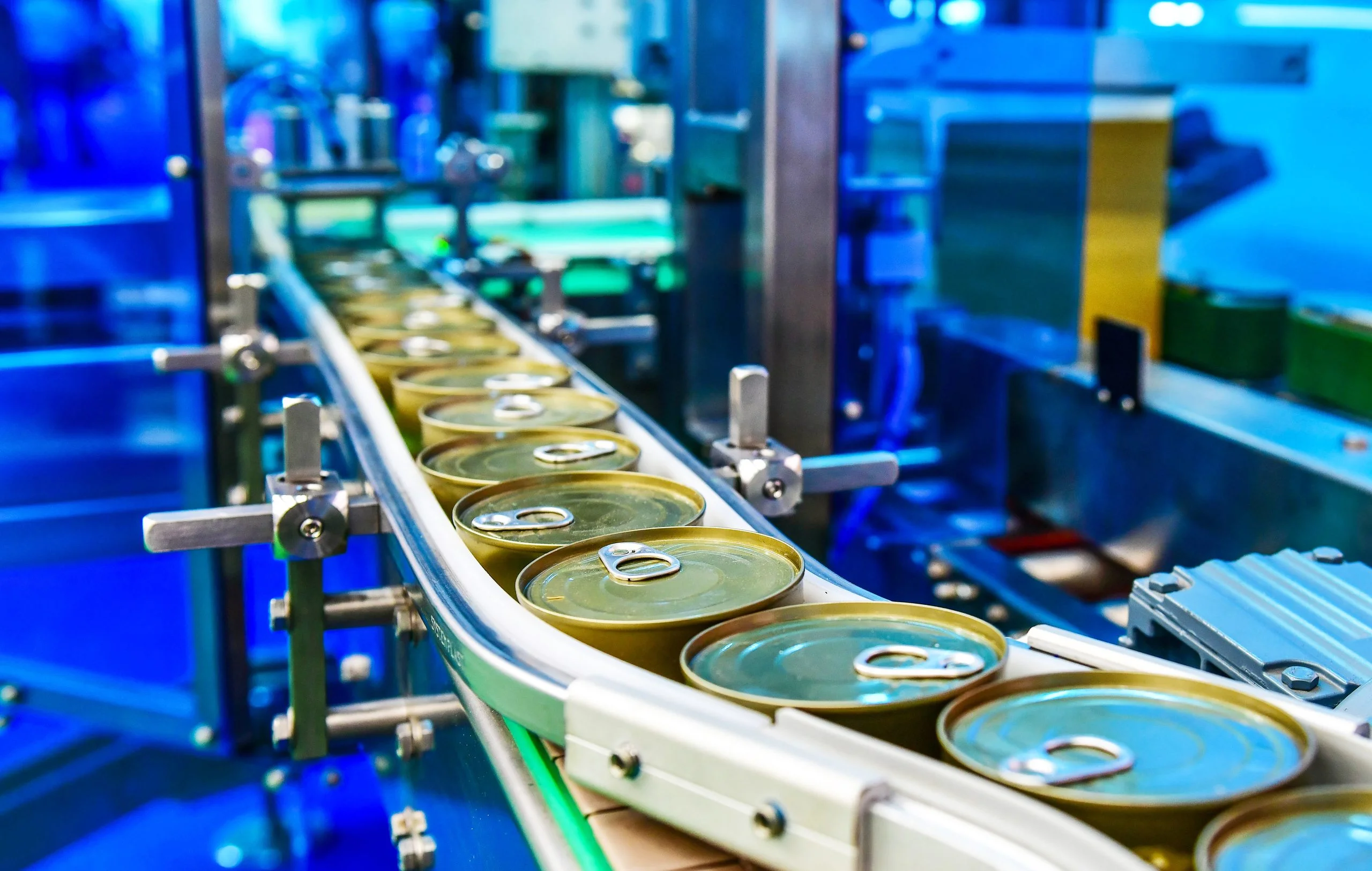
Surface finishing is an essential part of food-grade manufacturing, particularly stainless steel machining. The selected process affects roughness, corrosion resistance, appearance, and the ability to remove product residue. Choose a finish based on the food-contact application and cleaning regime, then specify measurable acceptance criteria.
Electropolishing
Electropolishing removes a thin layer of stainless steel through an electrochemical process. It can reduce roughness, remove some embedded surface contaminants, and improve corrosion resistance when properly controlled. Specify electropolishing per the ASTM B912 standard.
For demanding dairy and beverage applications, engineers may specify a final roughness of Ra ≤ 0.4 µm. This is an application-specific target, not a universal requirement.
An engineering drawing should identify the required finish, Ra value, and any passivation or verification requirements. Confirm the appropriate process standard and sequence with the finishing supplier.
Mechanical Polishing and Passivation
Mechanical polishing followed by passivation is a common approach for stainless steel food equipment. A specified finish of Ra ≤ 0.8 µm may be sufficient for many applications, provided the design, fabrication quality, and applicable sanitary requirements are also satisfied.
Avoid specifying a finish solely by visual descriptions such as “No. 4.” Appearance-based finish designations do not necessarily establish the required roughness on a machined product-contact surface. Include the Ra limit, measurement location, and any requirements for burr removal, weld finishing, or passivation.
Anodizing for Food-Contact Aluminum
Type II anodizing can improve the surface hardness and corrosion resistance of suitable aluminum components, while Type III hard anodizing provides greater wear resistance. However, coating suitability depends on the alloy, process, and intended exposure.
Validate compatibility with food-contact conditions and cleaning chemicals before using anodized aluminum in processing equipment. Note that anodized aluminum should generally be avoided in wet food-processing applications involving alkaline CIP chemicals.
Even with the correct material and finish specifications, design for manufacturing and quality control are also important. Defects like a crack in the inner bend radius of a stainless steel component that holds product can harbor bacteria and cause contamination.
Washdown and IP Rating Design
Washdown equipment design must account for water ingress, cleaning temperature, chemical exposure, and repeated sanitation cycles. Enclosures, bearings, fasteners, and cable entries should be selected as a coordinated system.
IP Ratings for Washdown Equipment
Match the IP rating to the washdown intensity in each zone, including spray pressure, water temperature, chemicals, and cleaning frequency. IP69K is commonly specified for equipment exposed to aggressive high-pressure, high-temperature washdowns, such as enclosures, sensors, and cable glands in direct-spray zones. IP66 and IP67 are often used in general or secondary zones with less intensive cleaning.
Confirm the applicable rating standard and the component’s certification. An IP rating does not automatically establish food-contact suitability, chemical resistance, or hygienic design compliance.
Specify Washdown-Rated Components
- Bearings: Select sealed bearings, such as stainless 2RS variants, with verified resistance to the expected water exposure, temperature, and cleaning chemicals.
- Fasteners: Consider 316 stainless steel fasteners in wet zones. Avoid unprotected carbon steel and zinc-plated hardware, which are prone to corrosion when exposed to CIP chemicals.
- Cable and pneumatic penetrations: Specify IP69K-rated cable glands and hygienic stainless pneumatic fittings suitable for the required protection level.
- Enclosures and drives: Verify the complete installed configuration, including doors, gaskets, connectors, and penetrations.
- Food-Grade Lubricants: Use NSF H1 lubricants in bearings, gearboxes, and moving assemblies near product zones for incidental food contact, and specify it on the drawing or bill of materials.
Many of these components can be sourced off the shelf, with known ratings based on test data. For custom parts, minimize horizontal ledges, exposed threads, and water-trapping interfaces. Ensure components drain after cleaning and that exposed materials tolerate the intended sanitation process.
How Fictiv Supports Food and Beverage Equipment Manufacturing
Food equipment programs require manufacturing partners who understand how material selection, precision machining, and surface finishing work together. Fictiv’s manufacturing network supports custom component programs involving CNC-machined metal parts, sheet metal components, and engineering plastics.
For food and beverage equipment projects, define the required material grade, food-contact documentation, surface finish, and post-processing requirements before requesting a quote. Clear specifications help suppliers assess manufacturability, identify risks, and produce parts that meet the engineering team’s acceptance criteria.
Ready to manufacture a custom component for food and beverage equipment? Upload your part to Fictiv for a free quote and feedback on manufacturability.
Talk to a Fictiv expert about your project, or upload your parts to start a free quote.
FAQs About Food and Beverage Equipment Manufacturing
What is hygienic design for food equipment?
Hygienic design makes equipment easier to clean, inspect, and maintain while limiting places where product residue and contamination can build up. It covers materials, geometry, surface condition, drainage, and accessibility. Engineers should identify which standards apply to their equipment and market, such as 3-A Sanitary Standards or EHEDG guidance.
What is the difference between 316L and 304 stainless steel for food equipment?
316L generally resists chloride-induced corrosion better than 304, so it is often used for product-contact parts and demanding washdown environments. Its low carbon content also helps preserve corrosion resistance in welded areas. 304 is often suitable for frames, supports, and non-product-contact enclosures in less aggressive environments. Suitability depends on chloride exposure, cleaning chemistry, and washdown frequency.
What surface finish does food-contact stainless steel need?
A commonly cited benchmark is Ra ≤ 0.8 µm (32 µin), and high-hygiene applications may require Ra ≤ 0.4 µm, depending on the applicable specification. Smoothness alone does not guarantee cleanability, since pits, burrs, and scratches can still harbor residue. Specify a measurable Ra on the drawing and identify the surfaces it applies to.
Is aluminum suitable for food processing equipment?
Aluminum can work for structural components in dry-food environments. It needs particular caution in wet processing, because alkaline cleaning solutions can attack the metal or its anodized layer. Anodizing improves hardness and wear resistance but should generally be avoided where alkaline CIP chemicals are used. Validate compatibility with the product and cleaning chemicals first.
What IP rating does washdown equipment need?
IP69K is commonly specified for aggressive high-pressure, high-temperature washdowns, while IP66 or dual-rated IP66/IP67 is often used in general or secondary zones with less intensive cleaning. Match the rating to the cleaning method, spray pressure, and temperature in each zone. No IP rating alone establishes food-contact suitability, chemical resistance, or hygienic design compliance, so confirm the applicable standard and the component’s certification.