






Time to read: 13 min
Large-component injection molding demands more than just a bigger machine. Once a molding exceeds typical machine footprints, every process parameter becomes more sensitive: clamping force, shot size, flow length, cooling rate, shrinkage, gating, and supplier capacity all require careful attention and specific strategies.
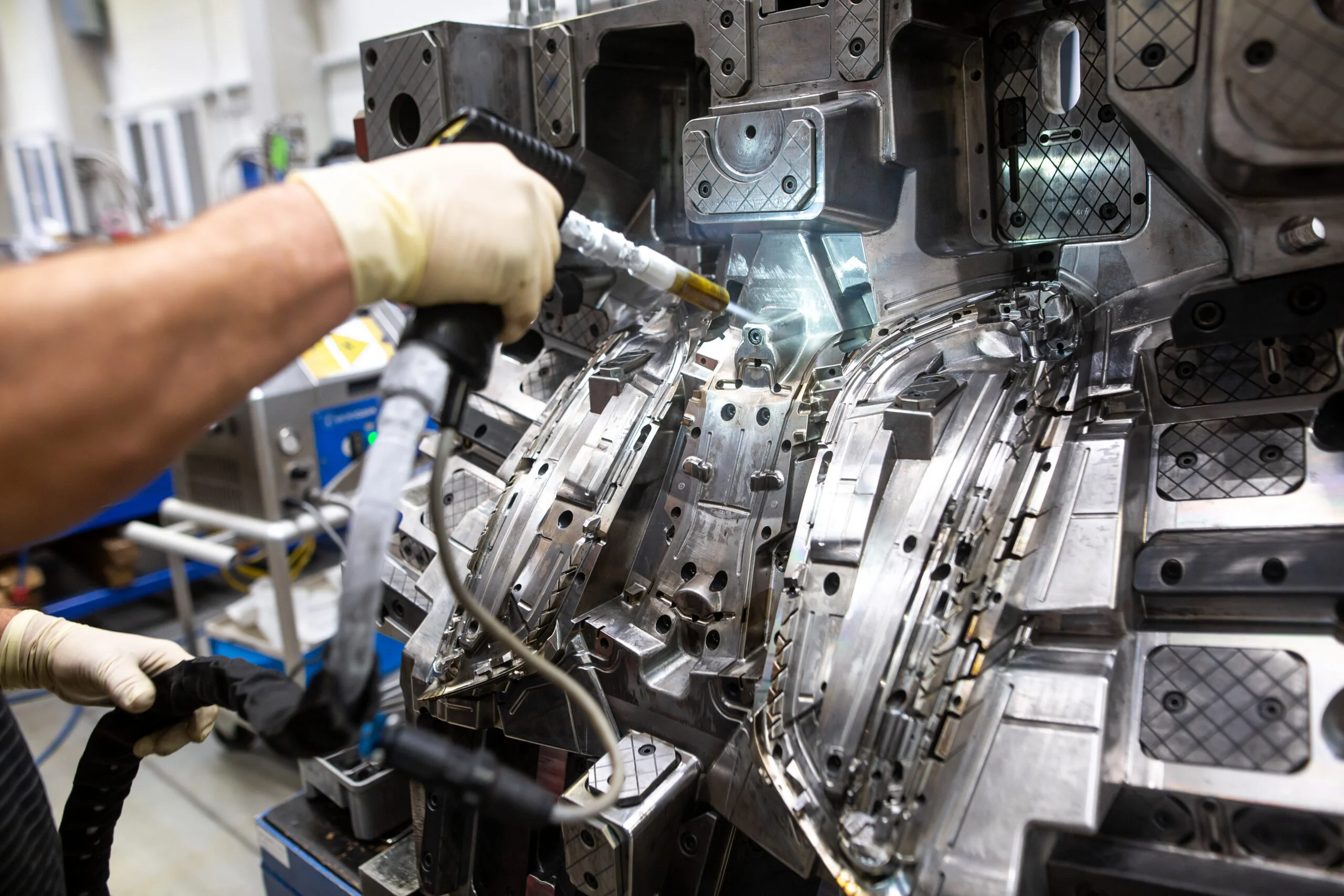
The risks also scale proportionately. Minor DFM errors on a small part may result in modest tool adjustments. The same errors on a much larger mold can trigger disruptive, extensive rework on a multi-ton mold.
What Is Large Part Injection Molding?
Large part injection molding is a specialized process for making big plastic components, requiring high-tonnage molding machines with clamping forces up to 5,000 tons. When part size, structural requirements, or bill-of-materials (BOMs) consolidation make separately assembled components unsuitable, this molding method is necessary.
A molded part may be considered large when it’s longer than one meter in one dimension, shot weight is measured in kilograms, clamping force of 1,000+ tons is required, or elongated flow paths run across broad surfaces. Applications include automotive bumpers and body panels, dashboards, truck beds, medical and industrial enclosures, outdoor housings, aerospace interiors, and appliance covers.
The Mechanics Behind Large-Scale Injection Molding
Large part molding follows the same functional sequence as smaller moldings: resin is melted and injected into a tool cavity, then packed, cooled, and ejected. Larger parts place much higher demands on the machine, mold, and process window.
Clamping Force and Tonnage
Clamping holds the mold closed, resisting opening as molten resin is injected under high pressure. The larger the projected area of the part, the greater the clamping force required.
Clamp force (tons) = projected area (in2) × cavity pressure (tons/in2) × safety factor
Cavity pressure exerted by the molten plastic typically ranges from 2–5 tons/in2, so large panels may require thousands of tons of clamping force. If clamp force is insufficient, the mold will separate, causing flash, dimensional instability, poor surface quality, and possible tool damage.
Shot Capacity
Shot capacity is the volume of molten plastic the machine can inject. Large parts may require several kilograms of resin, so the barrel volume must be sufficient to deliver this under pressure, with an appropriate melt-flow index.
A press can have the required clamp tonnage but be unsuitable if its injection capacity or pressure doesn’t suffice. Poor matching will cause short shots, inconsistent melt, excessive cycle time, weak packing, or material degradation.
Flow Length and Gating
Large components often require resin to traverse long paths, around ribs and bosses, and into remote features before coagulation. This raises the risk of weld faults, hesitation marks, air traps, short shots, and cosmetic defects.
Hot runner systems maintain charge temperature, limiting pressure loss and improving fill consistency. Sequential valve gating allows gates to open in a controlled order, guiding the flow front across longer flow paths. This reduces weld marking, improves pressure distribution and packing, and minimizes cosmetic defects.
Why Large-Scale Molding Is Required: The Power of BOM Consolidation
The common business case for large plastic molding is assembly consolidation. A single molded part can replace multiple panels, brackets, fasteners, bonded joints, and assembly stages. This cuts down necessary labor and potential failure points.
Screws, inserts, clips, welds, and adhesives all add cost and create interfaces that can loosen, crack, leak, corrode, etc. A molded component can integrate various elements directly into the part, delivering a more accurate and reliable outcome.
Large molded parts generally improve structural integrity. Engineers can design continuous load paths, rib networks, curved surfaces, and perimeter returns that distribute stress more uniformly and gradually.
Large Part Injection Molding vs. Standard Injection Molding
| Factor | Standard Injection Molding | Large Part Injection Molding |
| Press tonnage | 50–500 tons | 1,000–5,000+ tons |
| Shot size | Grams to hundreds of grams | Often kilograms |
| Tooling cost | Moderate; easier to iterate | High; upfront DFM is critical |
| Flow length | Shorter; standard gating may work | Long; hot runners or sequential gating often needed |
| Defect risk | Flash, sink, minor warp | Severe warping, knit lines, cumulative shrinkage |
| Supplier base | Broad | Limited high-tonnage capacity |
| Typical parts | Clips, covers, small housings | Panels, enclosures, bumpers, large shrouds |
Large molded parts are harder to prototype and require more complete validation before tooling begins. Design changes are slower, more expensive, and hard to enact in tooling.
Critical DFM Rules for Large Plastic Parts
Maintain Uniform Wall Thickness
Uniform wall thickness is one of the most fundamental rules of molding. It becomes increasingly critical for large parts, as overall distortion consequences are amplified. Thick regions cool more slowly and shrink more than thin regions. The result is sinking, stress warping, voids, and distortion.
Where thickness changes are necessary, transitions must be gradual. Ribs, curvature, edge returns, and local reinforcement counter these risks.
Use Ribs and Bosses Strategically
Ribs add stiffness and allow for reduced overall wall thickness. Size ribs at roughly 40-60% of nominal wall thickness, depending on material, cosmetic requirements, rib height, and process conditions. Ribs need draft, and blended transitions into the main wall.
Bosses should be cored and supported by ribs rather than designed as solid. Poor boss design causes sink marks, cracking, and cosmetic faults on exterior surfaces.
Manage Shrinkage and Warp
Plastics shrink as they cool. In large parts, small percentage shrinkage becomes large absolute dimensional changes. Uneven cooling, poor packing and flow, and unbalanced gating cause twisting, bowing, cupping, or edge distortion.
Warp control depends on balanced wall thickness, smart gate placement, consistent packing, effective cooling channels, and realistic tolerancing. Conformal cooling may be effective, where requirements are high; following part geometry closely delivers greater consistency.
Plan Gates, Parting Lines, and Witness Marks Early
For large visible parts, gate locations are an important critical quality factor. Gate placement controls how the cavity fills, enforces weld line position, improves pressure distribution, and hides gate vestiges.
The same applies to parting lines, ejector marks, slide witness marks, and texture transitions. Cosmetic surfaces should be clearly classified so that unavoidable marks can be applied to hidden and noncritical areas.
Avoid Large Unsupported Flat Areas
Large, flat plastic panels are prone to warping, waviness, and oil-canning. Shallow curvature, rib networks, perimeter flanges, and edge returns can improve stiffness and lower cosmetic sensitivity. Flatness tolerances should be realistic, especially across larger spans.
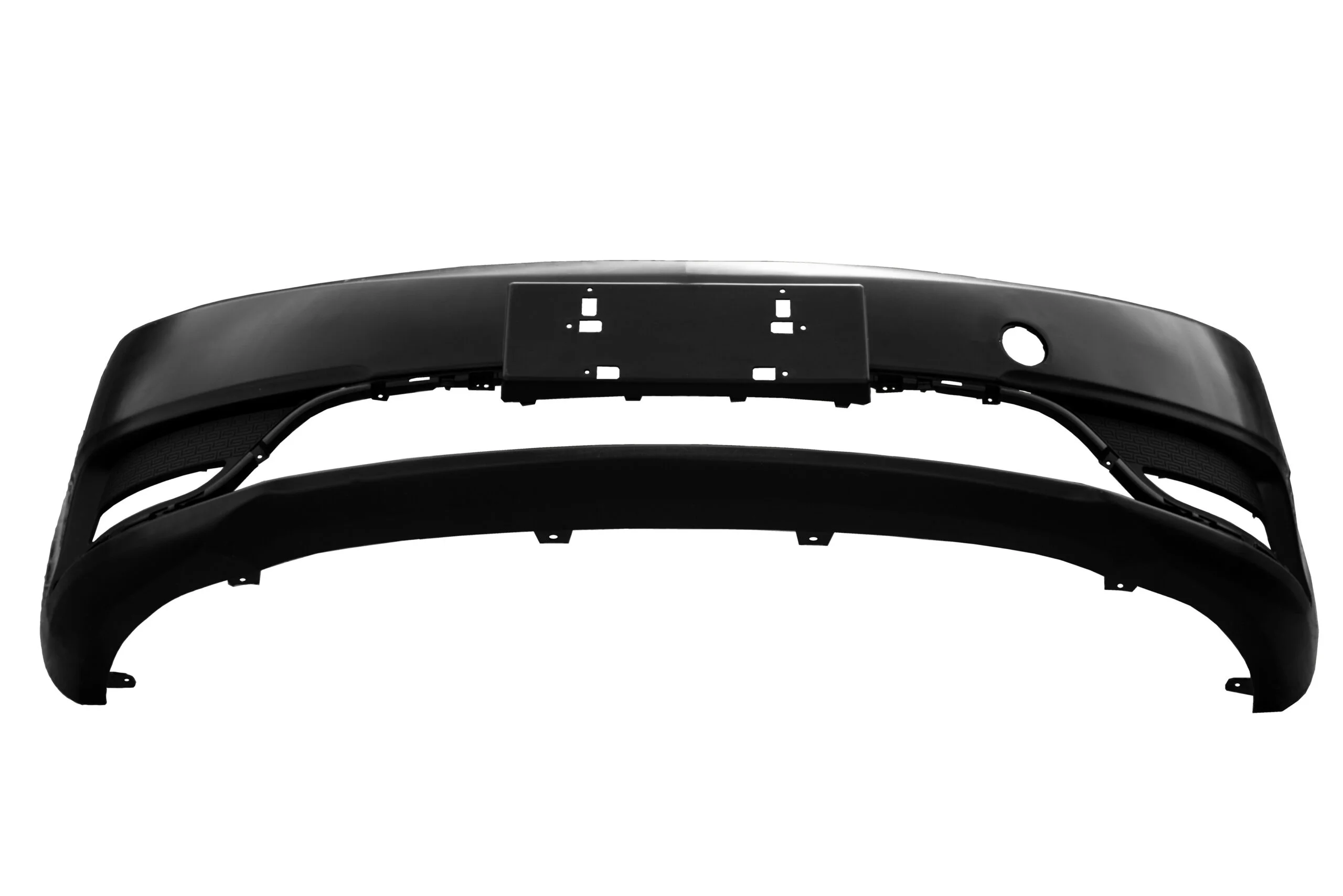
Injection-molded plastic car bumper
Tooling Material Selection for Large Molds
Tooling construction drives cost, lead time, mold life, thermal performance, repairability, and suitability for abrasive resins.
- Aluminum tooling grades such as QC-10 or Alumold can be useful for bridge tooling and low/medium-volume large parts. Both materials machine quickly and dissipate heat well, but have shorter tool life and are unsuitable for abrasive glass-filled materials. A lower-cost 7075-series aluminum may well suffice for a small number of prototypes.
- P20 pre-hardened steel is a common production mold material because of its moderate cost and durability, machinability, and repairability. It is often suitable for mid- to high-volume production, but performs poorly with aggressive materials.
- H13 post-hardened steel is used for high-volume, abrasive materials, or extended operational life. It costs more and is harder to modify, so it is suited to mature part design.
Large molds also create logistical issues. They may require heavy-lift handling, specialized freight, longer setup time, and suppliers with suitable maintenance systems and tool-trial capacity.
Alternatives to Large Part Injection Molding
Injection molding isn’t always the optimal route to quality parts. The decision must be made early in design, as it impacts many downstream design decisions.
- Structural foam molding (low-pressure injection molding) can produce large stiff parts with much lower clamping force. It’s useful for industrial housings, bins, pallets, and thick-wall components, but unsuited to premium surface finish.
- Thermoforming or vacuum forming offers much lower tooling cost and shorter lead time. However, it offers limited feature integration, no variable wall thickness, and lower dimensional precision.
- Large-format 3D printing is useful for prototypes, fixtures, and low-volume functional testing. It avoids hard tooling but is too costly for volume production.
- Rotational molding works well for large hollow parts such as tanks, bins, and outdoor products, but comes with lower precision, fewer material options, and longer cycle times.
The Sourcing Challenge
High-tonnage injection molding capacity is relatively uncommon. Most suppliers operate below 800 tons, leaving a capacity deficit for projects requiring 1,000+ tons.
A suitable supplier must have:
- The correct press size
- Shot capacity
- Tool-handling infrastructure
- Process engineering experience
- Inspection systems and quality controls
Common causes of engineering change orders (ECOs) and tool mods include late wall-thickness changes, poor gate placement, draft/ejection issues, sinks/warping, unrealistic tolerances, detrimental weld lines, and cooling issues.
Best Practices for Successful Large Injection Molding
Go through early and ongoing DFM thoroughly with your manufacturing partner.
- Review wall thickness, ribs, bosses, draft, gates, flow length, cooling, material choice, cosmetic surfaces, and inspection requirements.
- Use mold-flow analysis for fill behavior, pressure requirements, welding, air traps, shrinkage, and warpage. Simulation must inform gate locations, runner strategy, valve-gate timing, material, and cooling layout.
- Prototype progressively through large-format 3D printing, mold-flow simulation, bridge tooling, production steel tooling, first article inspection, and controlled production ramp.
- Specify tolerances selectively. Large plastic parts cannot hold machined tolerances. Drawings should reflect both critical and noncritical dimensions.
- Large components may require CMM FAIR, dedicated fixtures, go/no-go gauges, or functional assembly checks.
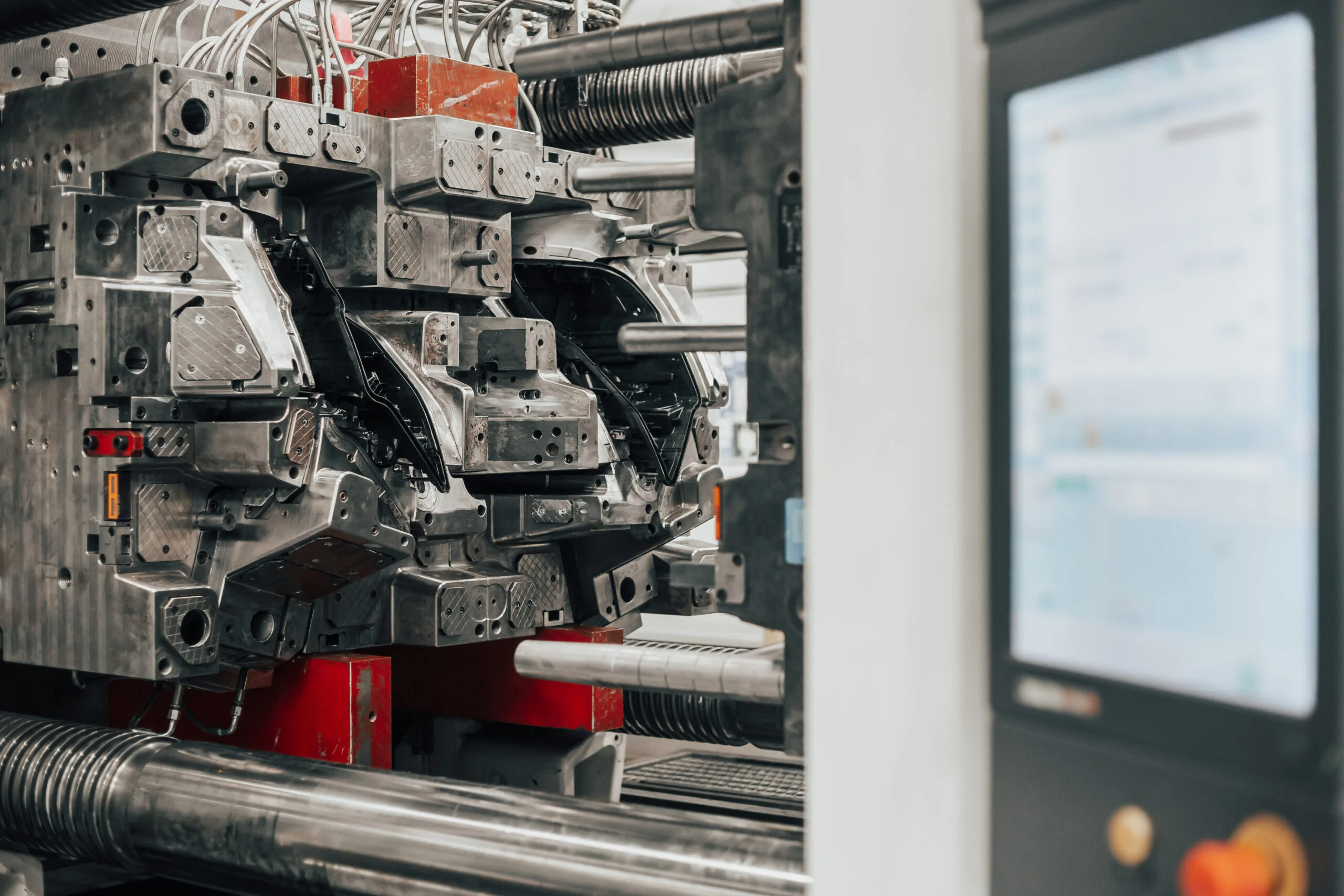
De-Risk Large Part Injection Molding with Fictiv
Large part injection molding can provide valuable advantages: assembly consolidation, reduced labor, improved structural continuity/integrity, repeatability, and lower overall costs. But it also introduces higher technical and sourcing risk, compared with standard-size parts. Success depends on effective DFM, tolerance realism, mold flow analysis, gate and cooling modeling, and access to the right molding partner.
Large part molding requires appropriate suppliers, cautious DFM, relevant expertise, and disciplined quality systems. Fictiv helps address these challenges through a digital manufacturing platform and a thoroughly vetted network of manufacturing partners.
Fictiv provides early DFM feedback for specialized molding services to identify wall thickness issues, flow restrictions, thick regions, unmoldable features, draft problems, and tooling risks.
Start a free quote for your large injection molding components.
Talk to a Fictiv expert about your project, or upload your parts to start a free quote.
Large Part Injection Molding FAQs
What exactly qualifies a plastic component as a “large part” in injection molding?
Classification depends on a combination of dimensions, weight, and machine requirements. A part is generally considered “large scale” when it meets any of the following criteria:
- Dimensions: It is longer than one meter in at least one direction.
- Weight: The shot weight is measured in kilograms rather than grams.
- Machine Tonnage: It requires a high-tonnage press with a clamping force between 1,000 to 5,000+ tons.
- Geometry: It features elongated flow paths across broad surfaces, such as automotive bumpers, dashboards, truck beds, or large industrial enclosures.
Why choose large part injection molding over assembling multiple smaller components?
The primary business case is Bill of Materials (BOM) consolidation. Manufacturing a single large part instead of an assembly offers several advantages:
- Reduced Costs: It eliminates the labor, time, and inventory associated with managing fasteners, adhesives, and secondary assembly steps.
- Fewer Failure Points: Eliminating joints reduces the risk of components loosening, cracking, leaking, or corroding over time.
- Superior Structural Integrity: A single molded component allows engineers to design continuous load paths and integrated rib networks, which distribute mechanical stress more uniformly.
What are the most critical DFM rules to prevent warping and defects in large parts?
Because of the sheer scale, minor design oversights can result in massive, expensive tooling reworks. To de-risk the process, prioritize these DFM rules:
- Maintain Uniform Wall Thickness: Large parts amplify shrinkage variation. Thick sections cool slower than thin ones, leading to severe warping and sink marks. Keep walls uniform and transition necessary thickness changes gradually.
- Design Ribs and Bosses Safely: Use ribs to add stiffness instead of thickening walls. Size them to 40–60% of the nominal wall thickness, and ensure bosses are cored out to avoid localized mass accumulation.
- Avoid Large, Flat Areas: Large flat panels are highly susceptible to twisting and “oil-canning.” Introduce shallow curves, rib networks, or perimeter flanges to add structural rigidity.
How do tooling material options compare for multi-ton large molds?
Choosing the right mold material depends on your production volume, budget, and choice of plastic resin:
- Aluminum (e.g., QC-10 or 7075): Best for prototypes, bridge tooling, or low-to-medium production volumes. It machines rapidly and dissipates heat efficiently, but it has a shorter lifespan and wears down quickly with abrasive materials.
- P20 Pre-Hardened Steel: The industry standard for mid-to-high volume production. It offers a great balance of durability, machinability, and relative ease of repair.
- H13 Post-Hardened Steel: The premium choice for high-volume production or when molding highly abrasive, glass-filled resins. It provides maximum operational life but comes with high upfront costs and is difficult to modify later.
Why can’t standard runner systems and gating be used for large parts?
In large-scale molding, molten plastic must travel massive distances before it cools and solidifies. Standard gating creates severe pressure drops, causing defects like short shots, hesitation marks, and prominent weld lines.
To overcome this, large part molding relies on hot runner systems to maintain optimal resin temperature throughout the tool, alongside sequential valve gating. Sequential gating opens specific gates in a precisely timed, controlled order. This guides the flow front smoothly across long paths, balances cavity pressure, and minimizes cosmetic defects.